

Photo by Alex Safareli on Unsplash
In the midst of an increasingly uncertain global economic landscape, traditional risk management strategies focusing solely on mitigation and protection are reaching their saturation point. We need a new paradigm called Antifragility. This concept, popularized by Nassim Nicholas Taleb, describes systems that benefit from chaos, volatility, and stress. In the business world, an antifragile company doesn't just design emergency plans to survive a crisis; it builds an organizational structure that is inherently capable of absorbing energy from market shocks to improve itself. This is the fundamental difference between being "robust" (which merely resists change) and being "antifragile" (which loves change).
"A resilient business simply withstands the blow, but an antifragile business requires that blow to evolve to a higher level."

Photo by Chris Liverani on Unsplash
Technically, building an antifragile business demands a decentralized system design. Organizations that are overly centralized and hierarchical tend to be very fragile to a single point of failure; if the center falters, the entire structure collapses. Conversely, companies that grant significant autonomy to small units within them allow for constant experimentation. Small failures in one unit become valuable data for others without threatening the survival of the entire company. This structure creates a fast feedback mechanism where errors are viewed as nutrients for innovation. Antifragile businesses intentionally place themselves in challenging conditions to test their limits and discover new opportunities invisible in stable conditions.

Photo by JESHOOTS.COM on Unsplash
A key pillar of this strategy is having "optionality." In finance and operations, this means not putting all resources into a single future scenario. Antifragile companies invest in various small opportunities with limited risk but unlimited upside potential (convexity). When technological disruption or changes in consumer behavior occur, they already have seeds of innovation ready to scale. They don’t try to predict the future accurately—since predictions are often wrong—but they prepare themselves to remain in an advantageous position regardless of what happens. This strategy shifts the mindset from "how do we avoid risk" to "how do we harness risk."
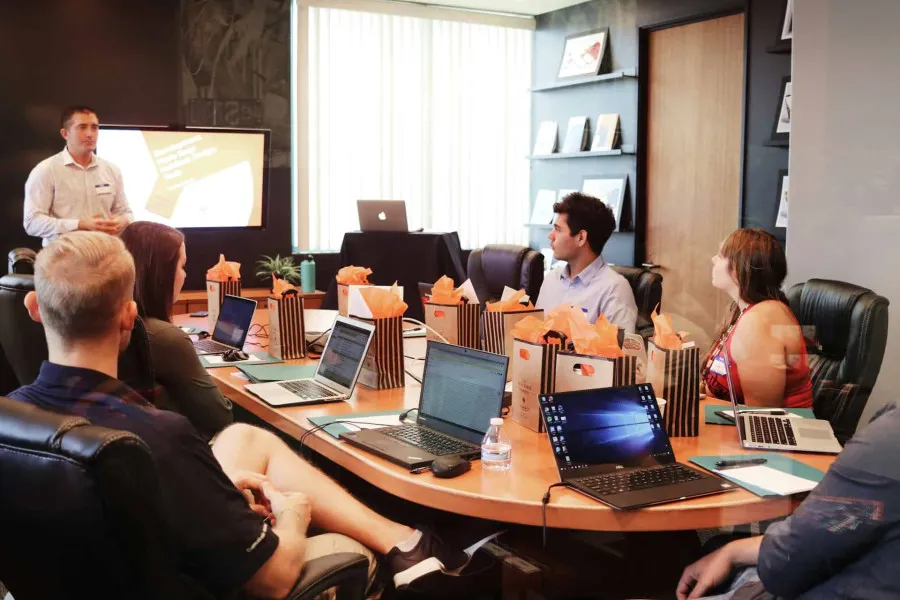
Photo by Campaign Creators on Unsplash
The long-term impact of adopting an antifragile mentality is the formation of a highly adaptive corporate culture. Employees no longer fear change or technical failures; instead, they see them as part of the system-strengthening process. Such organizations have a much higher resistance to Black Swan events—rare occurrences with massive, unpredictable impacts. In an era where disruption is the only certainty, the ability to grow stronger through pressure is the ultimate competitive advantage. An antifragile business is one that can dance in the middle of a storm, turning obstacles into stairs toward broader and more sustainable market dominance.

Photo by Charles Forerunner on Unsplash
"Uncertainty is not an enemy for those who know how to build systems that are hungry for challenge and thirsty for evolution."
Wrap-Up! – Antifragility is the ultimate evolution of strategic management in the 21st century. Start delegating decision-making to front-line teams and conduct small experiments regularly; let your organization learn from small mistakes to avoid a major collapse. Deepen your understanding of business adaptability and visionary leadership at alinear.id.