


Photo by Pawel Czerwinski on Unsplash
Modern music is undergoing a fascinating aesthetic shift, where the dependence on conventional instruments is beginning to coexist with the exploration of Field Recording—the practice of capturing authentic environmental sounds to serve as the primary elements in musical composition. Composers and sound artists are no longer confined to soundproof studios; they travel with sensitive microphones to capture the sound of melting glaciers, the colorful clamor of traditional markets, or the rhythmic hiss of power lines in the middle of a forest.
These sounds are not merely used as static backgrounds; they are curated and rearranged rhythmically and harmoniously to create a powerful sonic narrative. This is a form of "ethnographic" music that documents the state of the world through the ears, providing a highly immersive, emotional, and contextual listening experience for the audience.
"When the world is no longer just to be seen, but to be heard as an honest composition."

Photo by Carlos Santos on Unsplash
This trend is increasingly popular among listeners seeking a depth of meaning in audio beyond standard pop structures. Music derived from field recordings possesses an organic texture that is impossible for any synthesizer—no matter how advanced—to replicate, because it carries the "soul" and physical resonance of its original location. With the help of spatial audio technology, the impression that the listener is standing in the middle of the recording site becomes even more vivid, creating a deep sense of space within the ears.
The hobby of recording environmental sounds is also gaining traction among the general public as a personal way to archive the memories of their living environments, which are constantly changing due to urbanization or climate change. Appreciating field recording-based compositions is a form of auditory empathy exercise; it invites us to become more sensitive, to slow down, and to appreciate the natural symphony that actually happens around us every day but is often drowned out by the noise of our own thoughts.
"Every recording is a time capsule; an eternal effort to freeze a moment through the vibration of air."
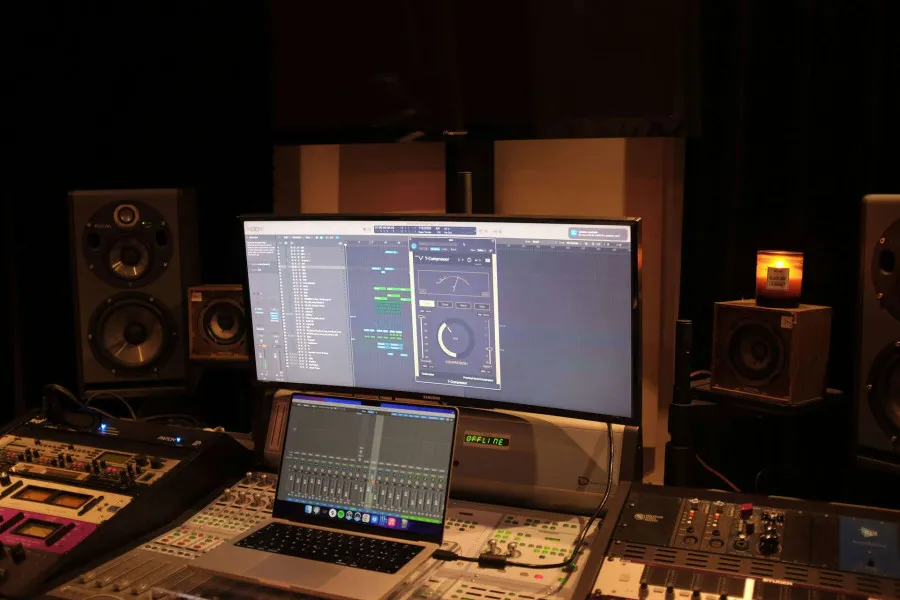
Photo by Techivation on Unsplash
Furthermore, field recording serves as a form of Acoustic Ecology, where the sounds of endangered natural environments are documented as a historical heritage for future generations. By merging elements of real-world sound into musical structures, composers succeed in creating a bridge between physical reality and artistic imagination.
It is a statement that music does not always have to be born from measured scales but can grow from the rustling of leaves, the roar of city machinery, or the silence of a cave. Through the art of field recording, we are reminded that the entire universe is a giant instrument that never stops playing, and our task is simply to provide the time to listen with profound respect.
Photo by Yassine Khalfalli on Unsplash
WRAP-UP!
Field recording transforms the listener from a passive consumer into a historical witness of the sounds that shape our world. Tomorrow morning, try not to listen to music during your commute. Activate your "microphone ears" and discover the unique rhythm of your daily journey.
Looking to feature your brand and business through Alinear Indonesia’s Smart Publication & Smart Activation? Share your experience and consult with us today. Click here!

![Alinear Indonesia [Brand/Business Registration] Smart Publication & Smart Activation](https://www.alinear.id/assets_web/images/qr-codes/3e23e7dab43d2e72854ba48a3a09cf75.jpg)