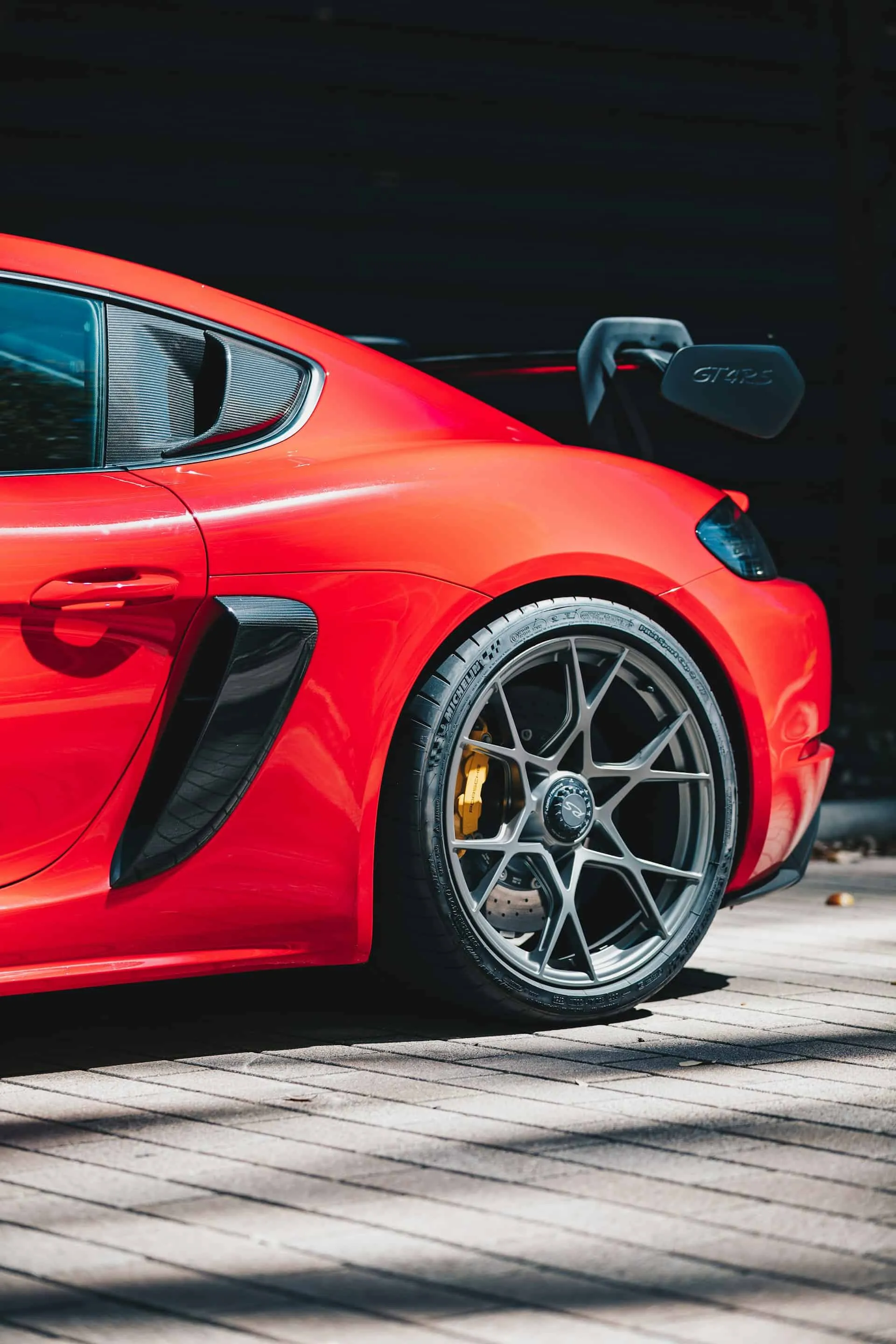

Photo by Austin Hervias on Unsplash
The world of high-performance cars is increasingly relying on Active Aerodynamics technology to push new boundaries in speed and stability. Unlike traditional static wings that provide fixed downforce but often add unnecessary drag, these active systems utilize components that move automatically based on real-time driving data.
The integration of high-speed computer sensors and high-precision actuators allows the car to act as if it has "muscles" reacting to airflow. Components such as spoilers that change angles, flaps on the front air intakes, and rear diffusers that adjust themselves, work in harmony to ensure the vehicle remains in optimal aerodynamic condition every second of the journey.
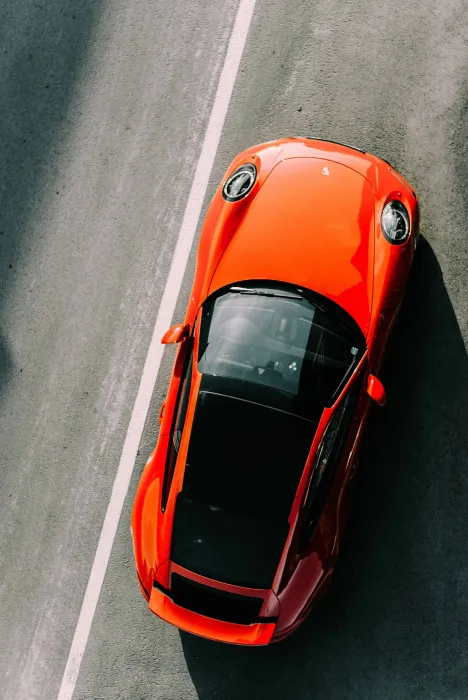
Photo by Marek Pospíšil on Unsplash
Downforce and Stability at High Speeds
When a car travels at high velocity, the primary challenge is keeping the tires firmly pressed against the asphalt—counteracting the phenomenon known as "lift." This is where Active Aerodynamics proves its worth. The rear wing automatically adjusts its angle of attack to increase downward pressure (downforce) during high-speed cornering, providing maximum traction that allows the driver to maneuver with absolute confidence.
However, this innovation is not solely for acceleration. During sudden braking from high speeds, components like the rear wing can deploy to their maximum vertical angle, acting as an Air Brake. This technology not only assists the mechanical brakes but also maintains the vehicle's weight balance, significantly shortening stopping distances and enhancing overall safety.

Photo by Yuvraj Singh on Unsplash
Energy Efficiency and Drag Reduction
Technically, this innovation is also crucial for energy efficiency, especially in the era of transition to Electric Vehicles (EVs). When cruising on long straights or highways, the system retracts or flattens its aerodynamic components to reduce air resistance (drag) to a minimum.
This drag reduction directly impacts:
•• Fuel Consumption: Internal combustion engines work lighter as they don't have to fight massive air pressure.
•• EV Battery Range: Airflow efficiency can significantly extend battery range—a vital factor for the future of electric sportscars.
•• Aero-Acoustics: Reducing wind noise within the cabin, providing enhanced driver comfort without sacrificing performance.
This technology proves that extraordinary performance is not born solely from raw engine power or large electric motors, but from how intelligently a vehicle can conquer the invisible barriers surrounding it.

Photo by Martin Zdrazil on Unsplash
"Speed is not about fighting the wind, but about how we dance with it to reach peak performance."
Artificial Intelligence in Airflow Control
Entering mid-2026, AI algorithms have begun taking a leading role in predicting airflow changes before the car even reaches a specific point. By combining GPS data and weather sensors, Active Aerodynamics systems can prepare in advance for crosswinds or shifts in road elevation. This is a level of automotive intelligence that unites fluid mechanics with high-level computation.

Photo by Stefano Romanello on Unsplash
"In the future, the fastest car won't just be the one with the strongest engine, but the one with the deepest understanding of the air it pierces through."
WRAP-UP!
Active Aerodynamics is the technological pillar that enables the perfect balance between extreme speed, cornering stability, and energy efficiency. It is living proof that aerodynamic innovation is the heart of modern sportscar performance. For collectors and enthusiasts, pay close attention to how these active mechanisms operate during a test drive. The smoothness of a wing's transition is a primary indicator of the engineering quality behind the brand.
Looking to feature your brand and business through Alinear Indonesia’s Smart Publication & Smart Activation? Share your experience and consult with us today. Click here!