
Photo source by Alinear Indonesia Docs. (Adobe FireFly - Gemini AI)
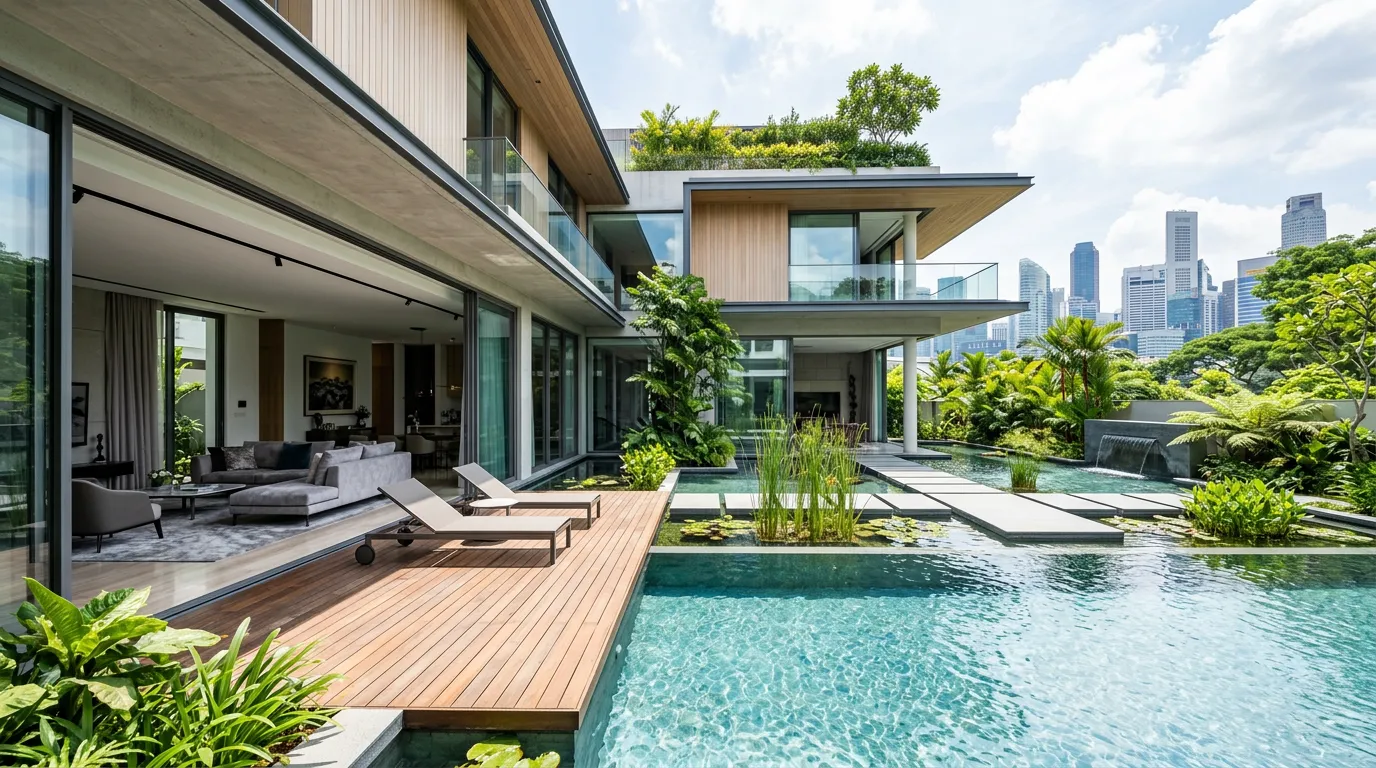
In densely populated urban landscapes filled with massive digital stimuli, modern homes are challenged to transform into calming sanctuaries. Integrating passive water elements into landscape architecture is not merely an aesthetic choice, but a profound biophilic approach to restore human connection with nature.
Through the design of reflective pools and tranquil flowing water features, outdoor living spaces shift functions into psychological transition zones that mitigate daily fatigue, delivering visual harmony alongside sustainable thermal balance.
The presence of water bodies around family room transition zones acts as a natural temperature regulator through evaporative cooling. When hot urban air interacts with calmly moving water surfaces, latent heat exchange occurs, significantly lowering air temperatures around terraces and home openings.
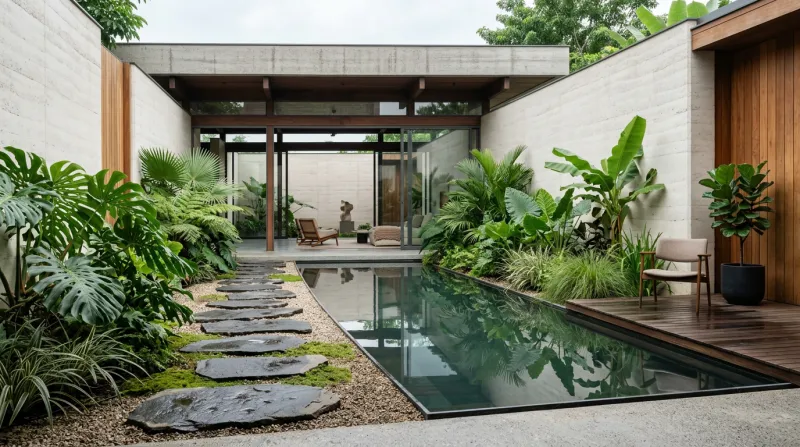
Photo source by Alinear Indonesia Docs. (Adobe FireFly - Gemini AI)
"Water in modern architecture is not merely a decorative element, but a visual therapy that purifies the mind from city noise."
Pool designs paired with layered shading vegetation create cooler micro air circulation without requiring energy-intensive mechanical interventions. This makes aquatic architecture a smart, ecologically efficient urban climate adaptation strategy.
Traffic noise and city activities are major triggers of chronic stress for urban communities. Passive water features with precisely engineered water flow produce natural sound frequencies that function as acoustic masking.
Consistent water trickling effectively covers high-frequency noise spectra from the outside, turning the home's auditory background into a soothing soundscape. This arrangement not only creates better acoustic privacy but also helps measurably lower residents' heart rates and cortisol levels.
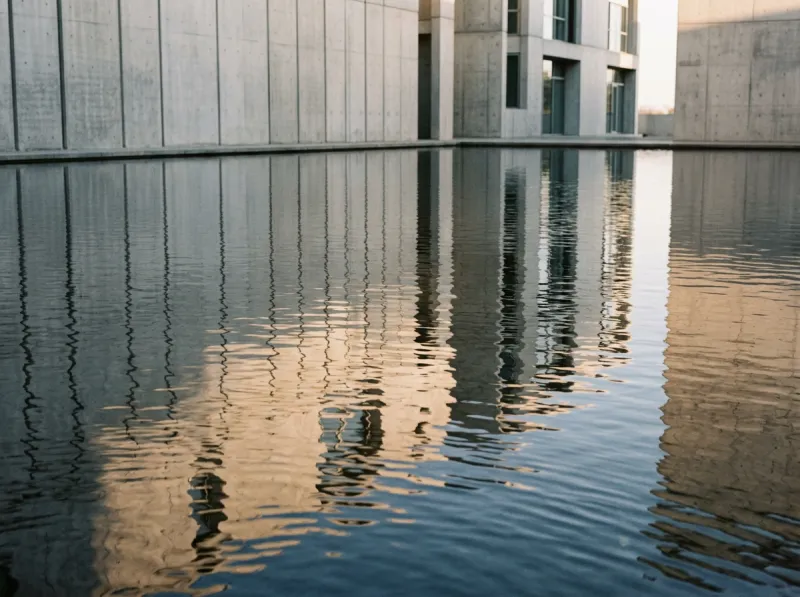
Photo source by Alinear Indonesia Docs. (Adobe FireFly - Gemini AI)
"True serenity is engineered through the thermal and acoustic balance of nature merging with your living space."
From a spatial aesthetic perspective, reflective pools serve a dual function as architectural mirrors reflecting the sky and building structures, providing an illusion of expansiveness on limited residential plots.
The use of dark-textured natural stone on pool floors deepens the reflective effect while conveying quiet luxury. By placing water elements along main sightlines from interior areas, boundaries between indoor and outdoor spaces dissolve, creating a fluid visual experience that merges entirely with the surrounding landscape.
The integration of passive water elements in residential architecture emphasizes that true luxury in the modern era is the space's ability to nurture residents' mental and physical health. Through mature landscape planning, urban homes can become independent, peaceful, and sustainable micro-ecosystems.
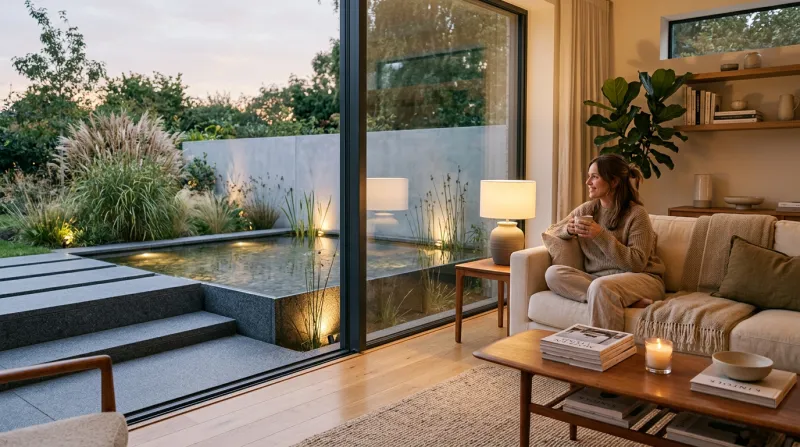
Photo source by Alinear Indonesia Docs. (Adobe FireFly - Gemini AI)
"Reflective pools bring wide expanses of sky right to the doorstep of your living room."
WRAP-UP!
Integrating passive water elements via reflective pools and flowing water features provides an architectural solution to lower microclimate temperatures, suppress urban noise, and restore residents' mental well-being
Map out wind directions and noise paths on your residential site, determine visual focal points for reflective pools, and consult energy-efficient passive water circulation systems with professional landscape architects.
Discover how SR Digital - Alinear Indonesia’s Smart Publication & Smart Activation combine AI-driven intelligence with high-impact human storytelling to amplify your business visibility. Share your vision and consult with us today. Ready to elevate your brand in the era of AI? Click here!