


Photo source by Alinear Indonesia Docs. (Adobe FireFly – Gemini AI)
Contemporary residential interiors are experiencing a profound reaction against generic mass production and cold, emissive digital displays. In an era where time is displayed as a sterile number on glowing screens, the rhythmic tick and warm acoustic chime of a mechanical movement represent a rare luxury. Aligning with the spatial curations of Love Happens Magazine, urban homeowners are actively seeking objects that possess authentic soul, historical provenance, and uncompromised craftsmanship.
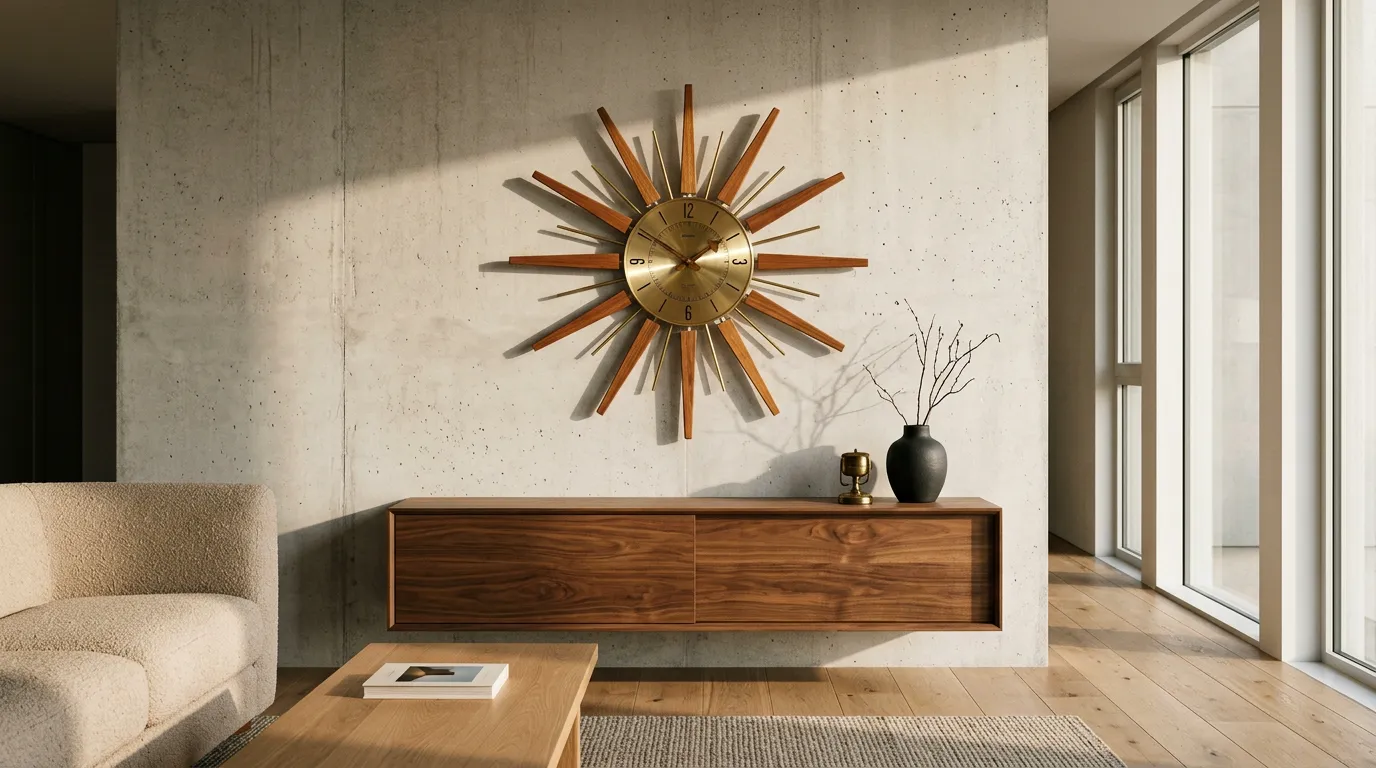
This search for authenticity has birthed The Neo-Vintage Horology. Mechanical wall clocks created by Mid-Century masters from the 1950s through 1970s are no longer relegated to antique storage. They are brought into the heart of the home, positioned as primary architectural anchors (furniture objects) that command attention across clean, minimal wall planes.
Teak, Brass, and Mid-Century Geometry
The artistic equity of mid-century wall horology rests on honest material composition and daring geometric profiles that remain timeless.
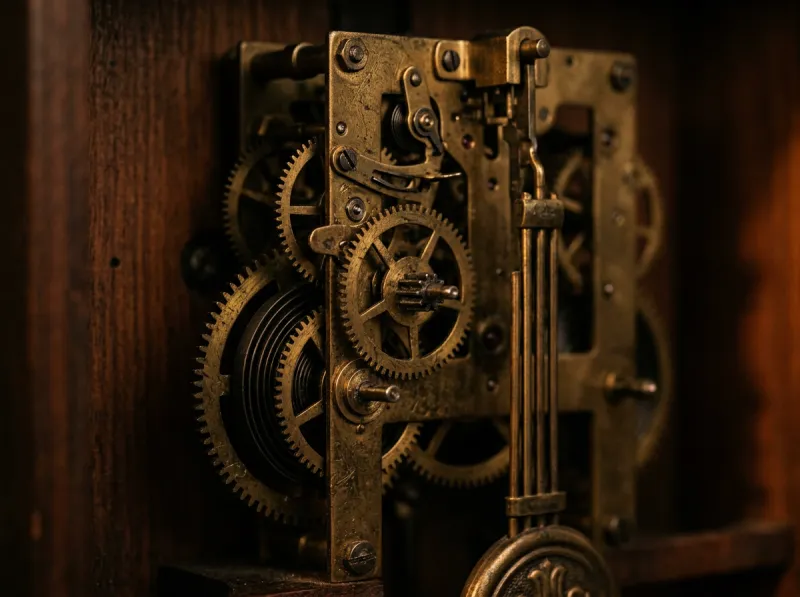
Photo source by Alinear Indonesia Docs. (Adobe FireFly – Gemini AI)
The use of solid teak, American walnut, and hand-worked brass supplies an organic warmth that stands out against clean architectural plaster. Sunburst profiles, geometric petals, and sculptural wood latticework confirm these objects were engineered as fine art. Internally, brass gear trains powered by gravity weights or hand-wound mainsprings deliver multi-generational durability completely independent of modern electronic components.
Curation and Mounting Protocols for Modern Interiors
Staging a mid-century horological masterpiece within a minimalist interior requires precise spatial calculations and targeted lighting to maximize its visual weight.
The clock is mounted intentionally above a low-slung credenza or minimal architectural ledge, aligning the dial center precisely with standing eye-level lines. Dedicated architectural spotlights casting warm light illuminate the hand-wrought brass and rich wood grains, highlighting the natural patina developed over decades of history.
Asset Duality: Aesthetic Pleasure and Capital Appreciation
Evaluating this shift through the art curation and wealth management lens of Vogue Culture, collecting vintage mechanical wall clocks represents a sophisticated Smart Investing strategy. The extreme scarcity of original European and Japanese mid-century units in pristine working condition drives steady value growth across international auction houses and private galleries.
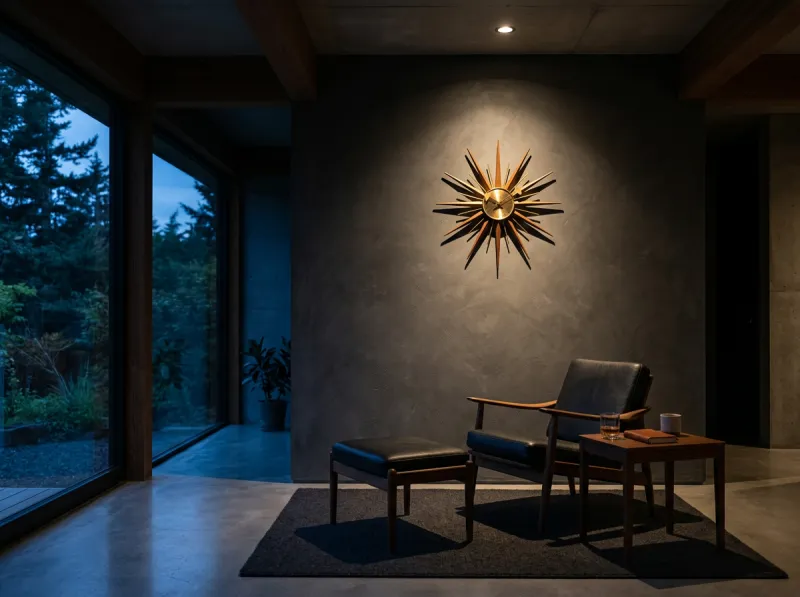
Photo source by Alinear Indonesia Docs. (Adobe FireFly – Gemini AI)
"A mid-century mechanical wall clock is not a mere utility for tracking hours; it is an architectural wall sculpture that houses the warm pulse of history within its brass gears."
Unlike modern consumer electronics that depreciate immediately upon purchase, rare mechanical wall clocks function as resilient tangible assets. Collectors enjoy daily aesthetic and acoustic pleasure in their private spaces while securing capital inside a physical asset class with a shrinking global supply.
Craftsmanship Heritage and Spatial Grandeur
Ultimately, The Neo-Vintage Horology demonstrates that true domestic luxury is not defined by modern technological complexity, but by respect for enduring heritage craftsmanship.
Pairing minimal architecture with the gentle mechanical pulse of a vintage wall clock represents the height of Quiet Luxury. As the brass gears turn, the clock does not merely count passing seconds; it anchors the home to history, design excellence, and a deep sense of spatial peace.
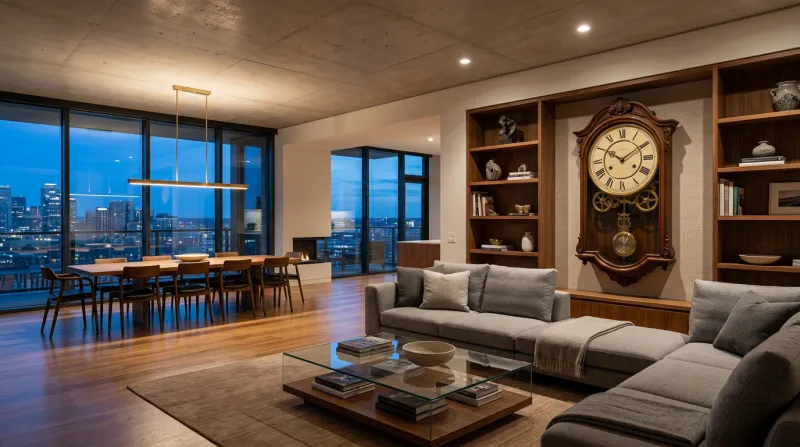
Photo source by Alinear Indonesia Docs. (Adobe FireFly – Gemini AI)
"When 1950s brass movements tick against a minimal concrete wall, your home is not just displaying exquisite furniture; it is holding a timeless, appreciating investment asset."
WRAP-UP!
The expansion of The Neo-Vintage Horology represents a perfect convergence of spatial design, horological appreciation, and alternative asset investing. Mid-century mechanical wall clocks elevate modern home interiors with warm historical character while delivering a resilient, appreciating physical asset class for discerning collectors.
Collectors entering this market should prioritize units from renowned Mid-Century manufacturers with documented original movements, engage certified horologists for mechanical servicing to preserve natural patinas, and select mounting walls with stable humidity levels to protect internal gear trains and solid wood housings.
Looking to feature your brand and business through Alinear Indonesia’s Smart Publication & Smart Activation? Share your experience and consult with us today. Click here!



![Alinear Indonesia [Brand/Business Registration] Smart Publication & Smart Activation](https://www.alinear.id/assets_web/images/qr-codes/3e23e7dab43d2e72854ba48a3a09cf75.jpg)