


Photo source by Alinear Indonesia Docs (Gemini AI - Generated Image)
Have you ever felt like you worked all day, yet by nightfall, not a single major decision or important strategy was formulated? In an era where screens glow endlessly and notification pings hijack attention every few minutes, the primary problem is often not a lack of time, but a lack of mentally quiet space.
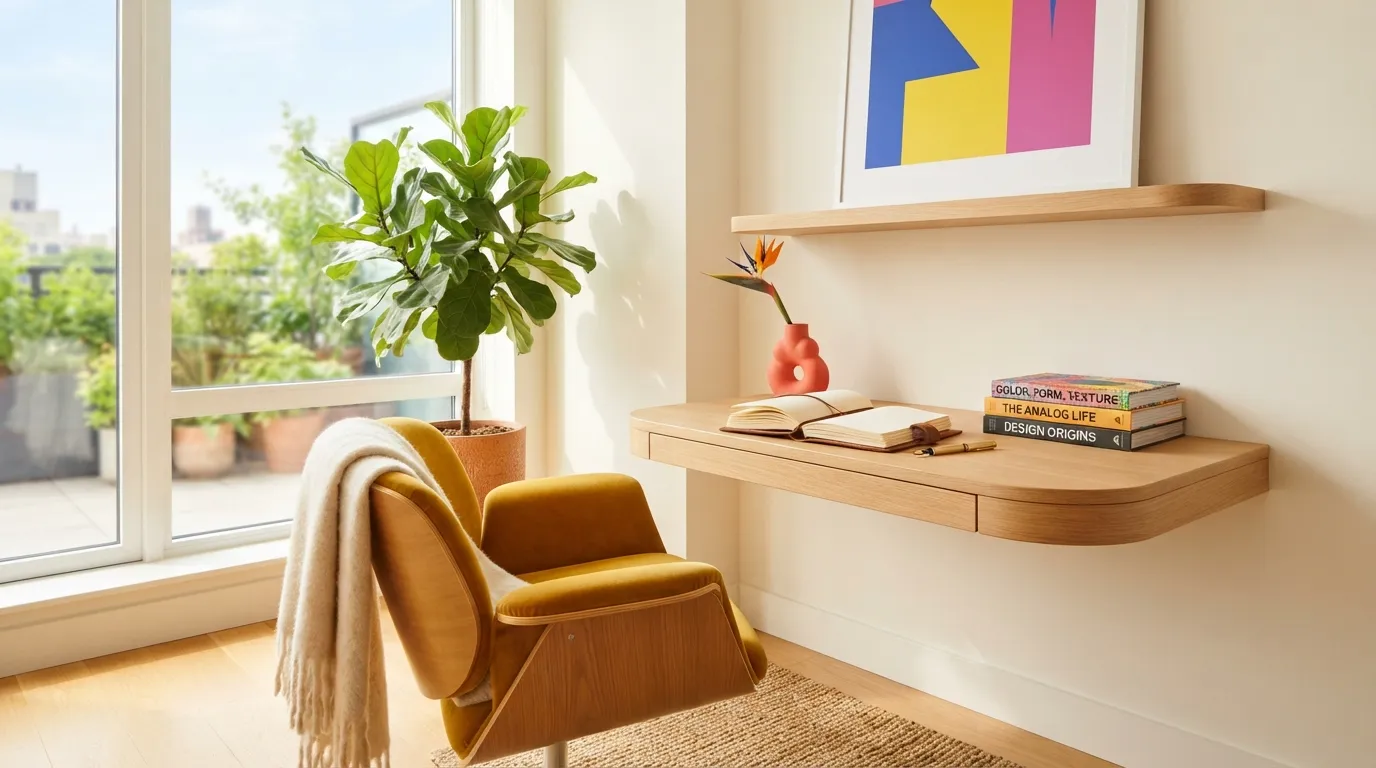
This is where Quiet Zone Architecture takes its place. More than just a quiet corner, it is a deliberate spatial psychology approach to create "signal-free zones"—a place where technology is set aside so the brain can perform deep, high-level cognitive work.
"Your attention is your most valuable business asset. If you do not design space to protect it, the environment will destroy it."
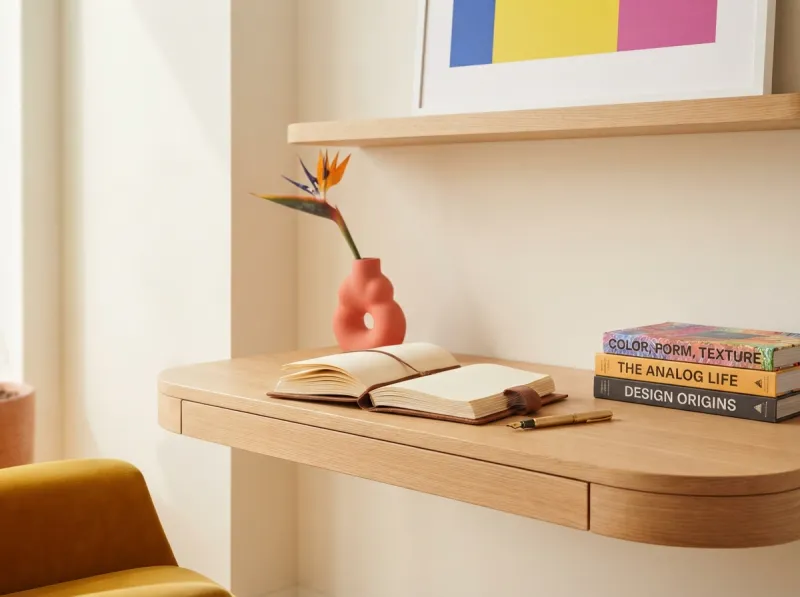
Photo source by Alinear Indonesia Docs (Gemini AI - Generated Image)
The human brain reacts instantly to its physical environment. When a space is designed with distraction-minimization principles, psychological shifts occur automatically:
Reducing Cognitive Load
The mere presence of a smartphone on a desk—even in silent mode—subconsciously drains working memory. Removing these devices from physical sight immediately lowers micro-anxiety levels.
Calming Geometry
The use of clean straight lines, soft natural lighting, and warm neutral color palettes signals to the nervous system that the area is safe for contemplation and long-term planning.
"Strategic thinking is never born from flickering screens, but from the intentional silence of a dedicated space."
You do not need a new building to design this zone of tranquility. Intelligent integration can be done in professional workspaces or home corners:
1. The "No-Screen Zone" Rule
Define one specific corner in your workspace or living room where gadgets, laptops, and digital screens are strictly prohibited. Keep only physical notebooks, pens, and a warm cup of tea.
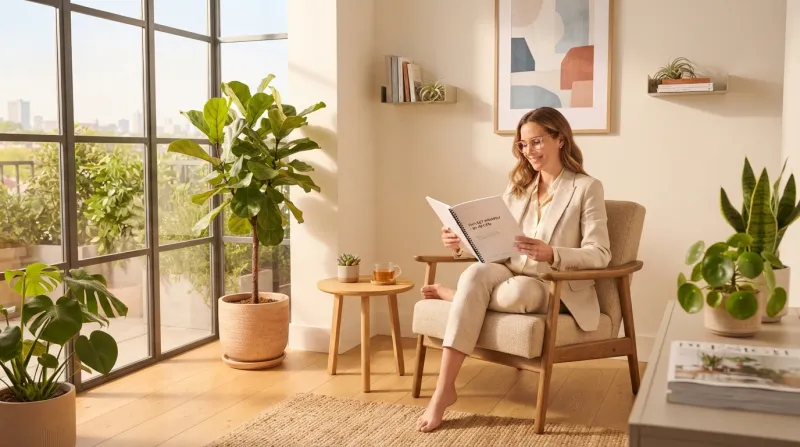
Photo source by Alinear Indonesia Docs (Gemini AI - Generated Image)
2. Acoustics and Visual Boundaries
Use soft-patterned transparent partitions, soundproof curtains, or furniture layouts that turn away from main crowds. The goal is to create psychological privacy without extreme isolation.
3. Focused Lighting
Avoid blinding overhead spotlights. Use a desk lamp with a warm spectrum to focus vision solely on the documents or strategy sheets being worked on.
For business leaders and creative professionals, strategic thinking is never born in the middle of loud meetings or incessant message pings. It requires a vacuum—a mental pause that can only be facilitated by a quiet physical environment.
"A signal-free zone does not mean you are falling behind; it is the most elegant way to take full control of your focus."
By routinely taking 30 to 45 minutes in a quiet zone without gadget interference, the brain’s capacity to see the "big picture" and formulate long-term solutions increases drastically.
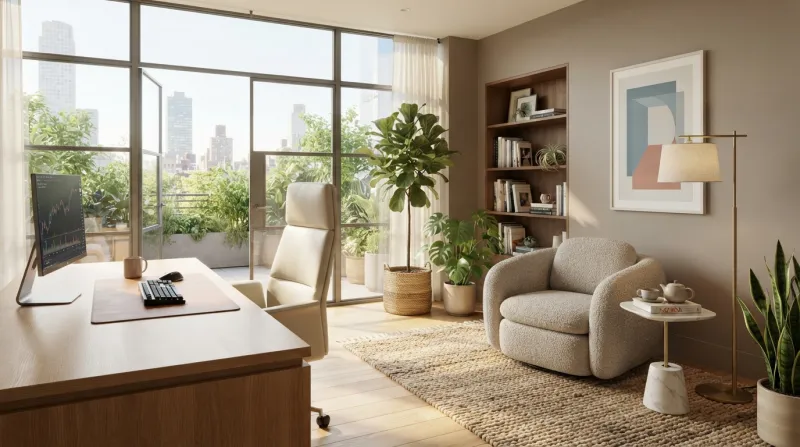
Photo source by Alinear Indonesia Docs (Gemini AI - Generated Image)
In the future, the ultimate luxury in the workplace will not be about how sophisticated your devices are, but about how well you protect your time and mind from digital noise. Quiet Zone Architecture is a tangible investment to ensure that in the midst of a noisy world, you retain full control over the direction of your strategic steps.
WRAP-UP!
Implementing Quiet Zone Architecture through signal-free and distraction-minimized corner design is crucial for optimizing workflows, clearing the mind, and producing sharp strategic decisions. Start identifying one small corner in your office or home today, clear it of digital devices, and make it your personal sanctuary for strategic reflection.
––
Discover how SR Digital - Alinear Indonesia’s Smart Publication & Smart Activation combines AI-driven intelligence with high-impact human storytelling to amplify your business visibility. Share your vision and consult with us today.
Ready to elevate your brand in the era of AI? Click here!



![Alinear Indonesia [Brand/Business Registration] Smart Publication & Smart Activation](https://www.alinear.id/assets_web/images/qr-codes/3e23e7dab43d2e72854ba48a3a09cf75.jpg)