

Photo by Łukasz Rawa on Unsplash
Following a prolonged period of experimenting with fully remote and hybrid structures, the dynamics of global corporate management are experiencing a significant directional shift. The Return to Office directive is being re-established systematically by C-suite executives worldwide. This transition is not driven by a lack of trust in digital efficiency, but rather by an growing awareness that fundamental values within corporate culture fade when interactions are restricted entirely to virtual environments.
For executive leadership, the physical corporate office is no longer viewed merely as a place to monitor attendance, but as a strategic ecosystem where a company’s identity, vision, and core energy are generated. This movement introduces a new chapter in the modern professional world, where physical proximity is positioned as the primary tool for maintaining a long-term competitive advantage in an increasingly demanding market.

Photo by Redd Francisco on Unsplash
Why the Physical Workspace Matters
The decision to recall teams back to the office floor is anchored in critical operational factors that directly influence internal performance and organizational stability:
–– The Return of "Serendipitous Innovation"
Internal evaluations indicate that groundbreaking business ideas and creative solutions rarely emerge from rigidly scheduled meetings on video conferencing applications. Instead, they are sparked through casual, unplanned interactions in office pantries, hallway paths, or over shared lunches. These spontaneous exchanges foster cross-departmental collaboration and organic creativity that are exceptionally difficult to replicate digitally.
–– Strengthening Corporate Belonging and Mentorship
Building employee loyalty, transmitting core corporate values, and providing effective guidance to junior talents are significantly more successful when executed in person. Face-to-face communication allows for a natural transfer of knowledge, fosters deeper professional empathy, and builds cohesive teams through an uncompressed understanding of context.

Photo by Olena Bohovyk on Unsplash
–– Productivity Assimilation and Clear Psychological Boundaries
A physical workspace offers a definitive psychological boundary between professional responsibilities and personal life. Returning to a dedicated office environment helps professionals re-establish structured daily routines, mitigating the risk of burnout associated with the blurred work-from-home boundaries that often stretch professional availability into personal resting hours.
"Digital platforms excel at facilitating administrative tasks, but the physical office remains the true crucible where corporate culture, mutual trust, and genuine innovation are born."
Professional Presentation and Workplace Relevancy
The revitalization of the physical corporate office naturally brings back the importance of visual professionalism in the real world. The way an executive presents themselves in a physical boardroom serves as a silent yet powerful instrument for building credibility and projecting leadership. This shift aligns seamlessly with contemporary corporate style trends that emphasize immaculate cuts, premium fabrics, and an understated elegance, as explored in [Executive Quiet Luxury Tailoring].
"Returning to the office isn't about reclaiming attendance control; it's about reclaiming the organic collaborative friction that was lost behind the screen."
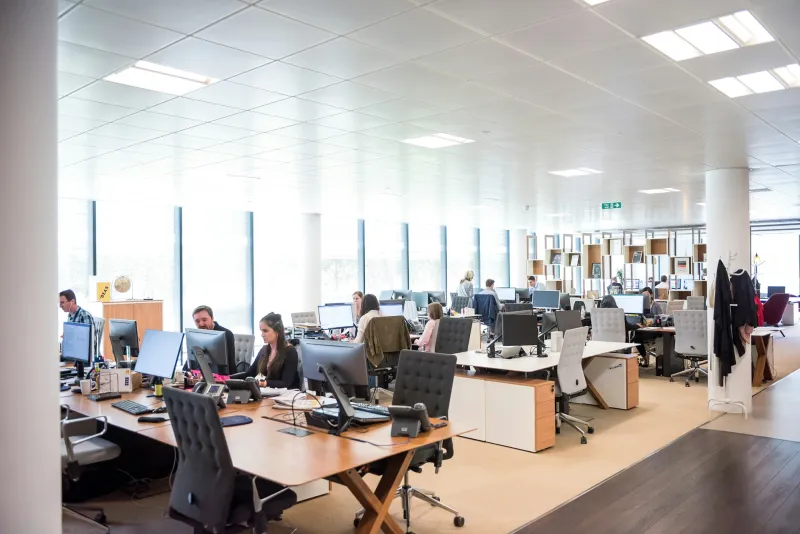
Photo by Arlington Research on Unsplash
WRAP-UP!
The contemporary Return to Office movement demonstrates that human elements and direct collaboration remain the foundational pillars of sustainable business growth. The modern office is being redefined from a rigid place of labor into a dynamic hub for innovation, teamwork, and corporate identity. Achieving a balance between technological infrastructure and the strength of physical relationships will dictate a corporation's ability to retain top-tier talent and drive impactful market solutions.
For team leaders and executives, utilize this momentum to design transition strategies focused on the employee experience. Reconfigure office layouts to support open dialogue and collaborative breakout zones, while prioritizing physical attendance for strategic brainstorming and major reviews. For professionals, look at the physical workplace as an opportunity to expand internal networks organically and display your optimal professional presentation in every real-world business interaction.
Looking to feature your brand and business through Alinear Indonesia’s Smart Publication & Smart Activation? Share your experience and consult with us today. Click here!
![Smart Publication+ 3.0: Build Authority. Drive Growth. [Technical Specification]](https://www.alinear.id/assets_web/images/qr-codes/bd48cb0acb2d9586570edb8a7303cee1.jpg)