



Eleven PM in a minimalist apartment in Jakarta's Golden Triangle district. A young professional lies on a velvet sofa, his right thumb moving monotonously upward, swallowing news of global crises, geopolitical conflicts, and economic tragedies one after another. Unconsciously, two hours vanish. His body is tired, eyes strained, and chest tight with baseless existential anxiety. This phenomenon is not merely a personal bad habit; it is the result of persuasive engineering techniques operating with precision within the palm of our hand.
Aligning with sharp technology investigations from Wired, the modern software industry has perfected the art of exploiting human evolutionary flaws. Our ancient brain defense mechanisms, always alert to threats (threat detection), are hijacked by the algorithm feeding bad news. The result is doomscrolling—a digital vicious cycle where information seeking turns into a destructive compulsion that systematically drains mental health.
Neurobiological Anatomy of Infinite Scroll Design
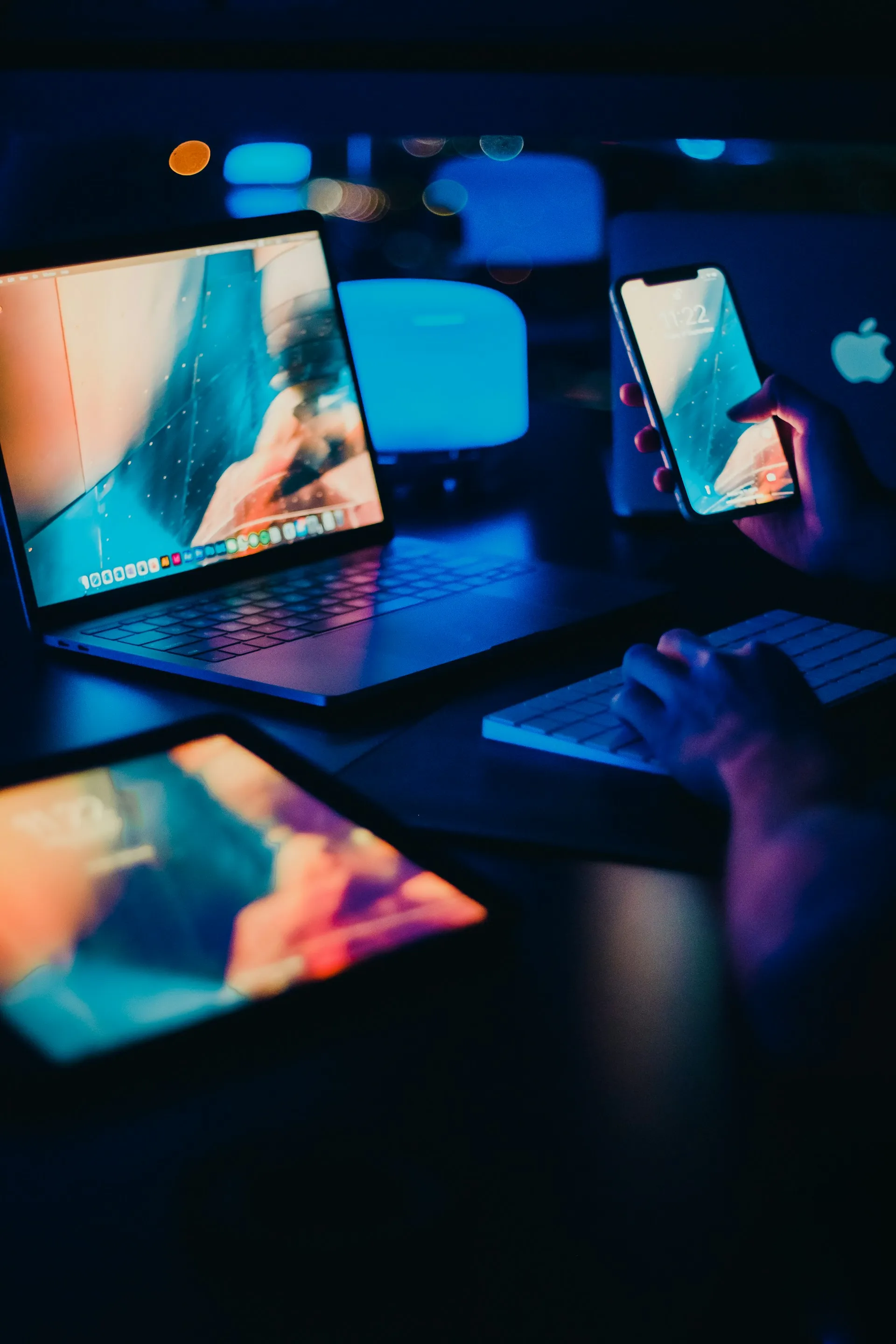
To understand why stopping doomscrolling feels so difficult, we need to look inside the neurochemical mechanisms deliberately engineered by digital product architects. Features like infinite scroll, pull-to-refresh, and flashing red notifications utilize operant conditioning principles similar to casino gambling machines.

Photo by Wang Sheeran on Unsplash
When the brain receives a stream of bad news interspersed with random interesting tidbits (variable reward), the dopamine system responds with a surge of pseudo-satisfaction. However, instead of feeling satisfied, the nervous system overproduces the stress hormone cortisol, triggering a fight-or-flight response without any real physical threat being resolved. Tech corporations profit from attention duration (attention economy), while urban dwellers pay the price through chronic mental fatigue.
Algorithm Hygiene and Analog Spaces
Combating this attention hijacking requires more than good intentions; it demands a structured, systemic defense approach. This article introduces The Anti-Doomscrolling Protocol, a three-layer operational guide to reclaiming cognitive sovereignty.
•• Algorithm Hygiene: Consciously retrain your digital feed. The mute, unfollow, and not interested buttons are primary defense weapons. Delete accounts that trigger only anger or anxiety, and replace them with educational content, calm visual aesthetics, or positive, constructive narratives.
•• Grayscale Mode: Change your device's screen color settings to black and white. Without the visual dopamine stimulation of bright red, blue, and yellow, the phone suddenly loses its hypnotic allure, causing you to get bored faster and close applications.
•• Analog Sanctuary: Establish tech-free zones within the home—specifically the bedroom and dining table. Replace glowing digital alarm clocks with analog mechanical clocks, and place physical hardcover books by the bedside to shift evening rituals from glass screens to paper pages.

Photo by Marco Palumbo on Unsplash
Digital Ethics and the Sociology of Urban Attention
Evaluating this phenomenon through the urban cultural sociology lens of The Atlantic, the shift toward digital detox is no longer merely an alternative lifestyle, but a form of cultural resistance. Urban dwellers are beginning to realize that attention is the most valuable mental resource they possess. Surrendering that attention to advertiser machines is equivalent to surrendering self-autonomy.
"Algorithms are designed to keep you glued to the screen; the decision to close it is the most radical form of cognitive resistance in the modern era."
Modern digital ethics demand new awareness regarding interaction boundaries with screens. Just as we choose organic food to protect physical health, we are obligated to filter digital information intake to protect the inner ecosystem. Building firm boundaries between the online and offline worlds is an absolute prerequisite for survival amidst the harsh noise of modern metrics.
Peace of Mind in the Age of Information Overload
Ultimately, The Anti-Doomscrolling Protocol proves that technology does not always have to be a cognitive prison. When we take back control over how software interacts with us, devices can function again as productive work tools, not masters dictating daily emotions.

Photo by Adrian Swancar on Unsplash
Through the discipline of algorithm hygiene, the creation of calm analog spaces, and mindful living, urbanites can break the chain of digital anxiety. Peace of mind is not an impossible luxury, but a cognitive human right reclaimed through conscious daily choices.
"Your mental health is not a product to be traded on the attention economy's free market; take back control of your screen today."
WRAP-UP!
The doomscrolling phenomenon exploits human neurobiology through addictive interface designs. To combat it, The Anti-Doomscrolling Protocol offers a comprehensive tactical approach via algorithm hygiene, grayscale activation, and the establishment of tech-free zones at home.
Readers are advised to immediately reset their social media feeds today, activate grayscale mode on primary devices, and dedicate one corner of their home as an analog sanctuary completely free from digital notification disturbances.
Looking to feature your brand and business through Alinear Indonesia’s Smart Publication & Smart Activation? Share your experience and consult with us today. Click here!


![Alinear Indonesia [Brand/Business Registration] Smart Publication & Smart Activation](https://www.alinear.id/assets_web/images/qr-codes/3e23e7dab43d2e72854ba48a3a09cf75.jpg)