


Photo source by Alinear Indonesia Docs. (Adobe Firefly – Gemini AI)
The structural pastry sector is observing a significant shift in core production methods. For a considerable period, standard high-output baking relied primarily on fast-acting single-strain leavening agents combined with chemical texturizers to secure rapid dough volume. While highly efficient for high-volume manufacturing, this rapid production model often compromises the underlying structural complexity of the grain. Fast-leavened dough formulas frequently yield pasty, under-developed interiors that lack structural endurance once baked.
In response to these structural limitations, premium pastry programs are pivoting toward production methods that respect biological timelines. Development teams are looking past simple surface adjustments and focus instead on the fundamental science of dough engineering. This shift highlights the integration of mature microbial cultures into highly complex laminated dough programs, establishing The Artisan Sourdough Pastry as a framework for high-utility baking. This methodology balances technical execution with clean structural refinement.
The mechanical strength of an artisan sourdough pastry relies on the interactions within a diverse starter culture, where indigenous wild yeast strains co-exist with complex lactic and acetic acid bacteria. When introduced into a multi-layered laminated dough program, an extended cold fermentation window—often stretching between twenty-four to forty-eight hours—allows these micro-organisms to systematically alter the flour's protein matrix.
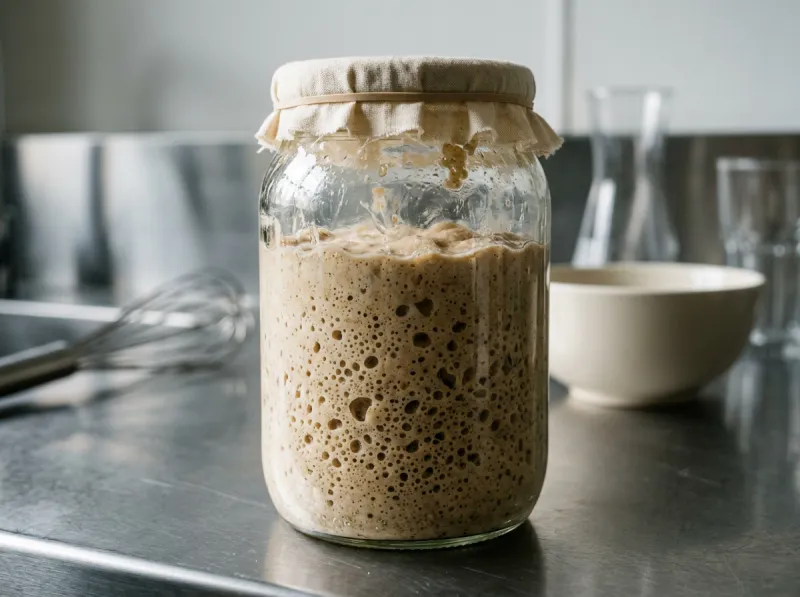
Photo source by Alinear Indonesia Docs. (Adobe Firefly – Gemini AI)
During this long cooling phase, the organic acids produced by the culture lower the dough's pH level. This mild acidification strengthens the gluten network, providing the elasticity required to hold hundreds of micro-thin layers of fat without structural collapse. Concurrently, enzymes break down complex starches and phytic acid—a compound known to restrict mineral absorption. This natural breakdown alters the carbohydrate architecture, enhancing overall bio-availability and producing a final baked item that is much lighter on the human metabolic system.
The clean acidity and multi-layered texture of wild yeast pastries match effectively with modern beverage programs that emphasize precise origin sourcing and customized preparation methods. In these tasting environments, food and beverage components are built to function as a unified sensory experience.
The subtle sharpness of a long-fermented dough balances the rich, creamy profile of high-grade pasture butter, preventing flavor fatigue. This acidity clears the palate cleanly, sharpening the sensory receptors to identify delicate, nuanced notes within highly light-roasted single-origin beverages or complex anaerobic extractions. The interaction between the structured crunch of the pastry and the clean finish of the beverage illustrates an integrated service model where every element is refined through careful planning.
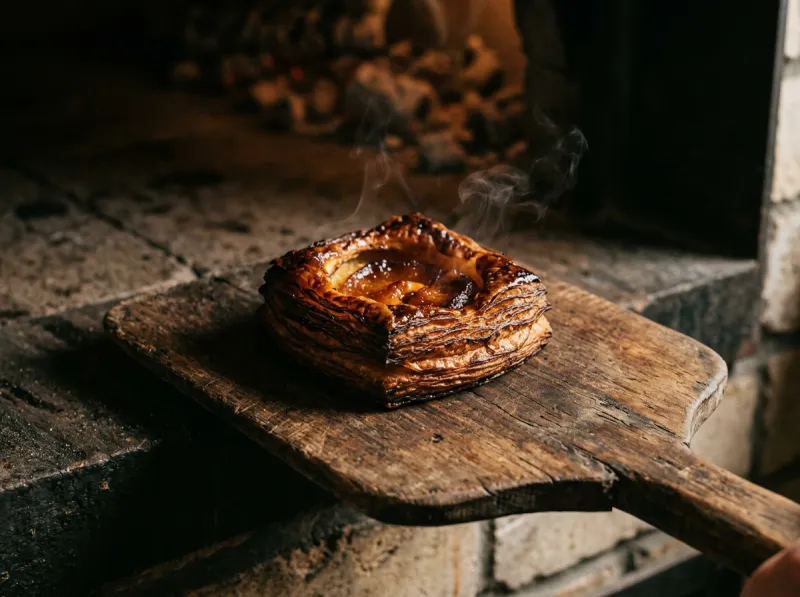
Photo source by Alinear Indonesia Docs. (Adobe Firefly – Gemini AI)
Visually and texturally, the structural wild yeast pastry displays distinct characteristics that differ sharply from uniform commercial options. When the cold-aged dough enters a high-temperature deck oven equipped with targeted steam injection, the trapped moisture between the laminated layers expands rapidly, pushing the delicate pastry sheets upward to create a dark, caramelized outer shell that shatters easily upon compression.
"The true asset of a wild yeast pastry program is not found in superficial additions, but in the slow biological hours that restructure the grain matrix for optimal structural stability."
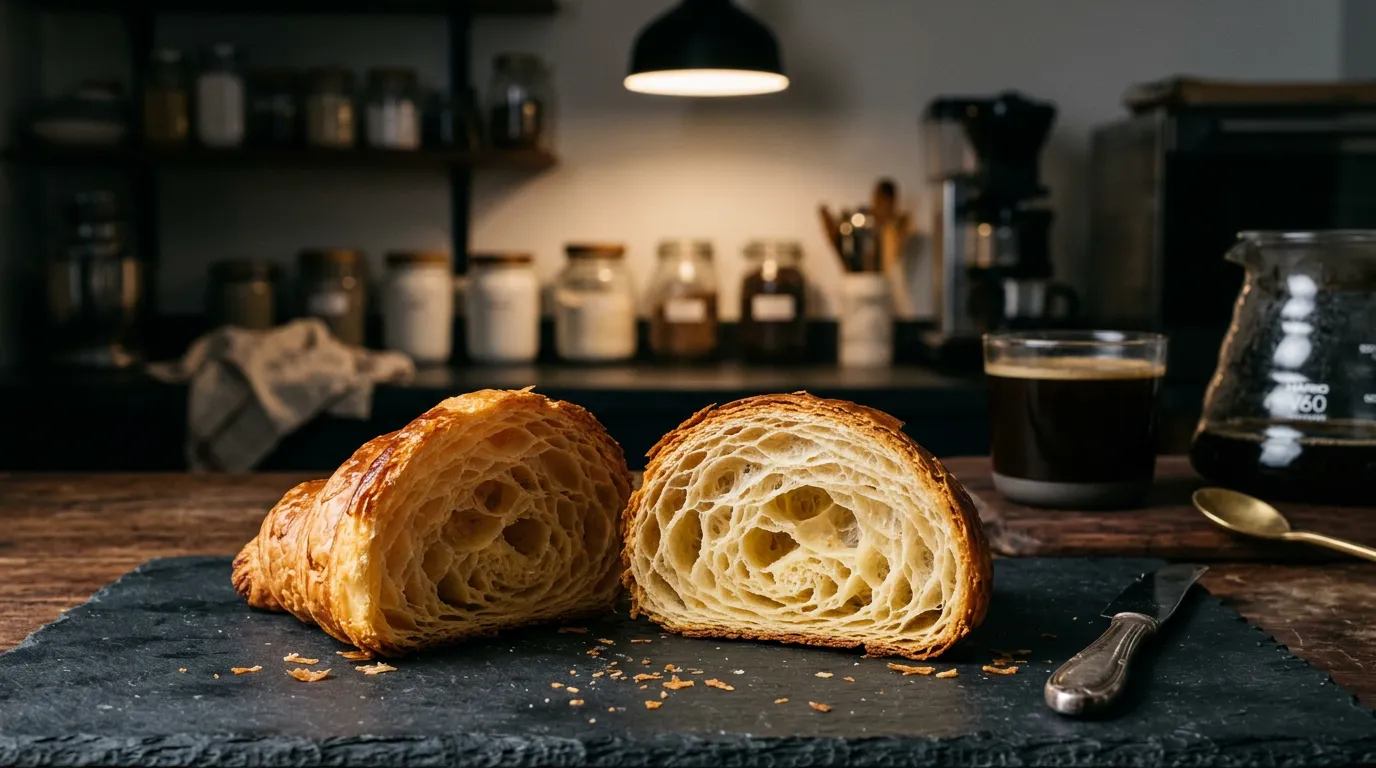
An interior cross-section reveals a highly organized honeycomb structure, defined by large, open, and irregular air cells (alveoli). This specific cell structure indicates a well-managed fermentation process, where the natural gas generated by the wild yeast is held securely by the reinforced gluten framework. The interior offers a balanced texture—light and airy, yet providing a clean, elastic bite that enhances the overall eating experience.
Looking at the development of high-end bakery operations, the adoption of wild yeast lamination programs reflects a broader industry movement toward traditional grain management techniques. Baking teams that maintain dedicated, long-standing starter cultures preserve deep technical skills that elevate the overall standard of the craft.

Photo source by Alinear Indonesia Docs. (Adobe Firefly – Gemini AI)
This operational shift reconfigures market expectations toward substantive production metrics. Pastry operations are moving away from superficial flavor variants and focusing instead on core fermentation skills, flour quality optimization, and long-term functional value. By prioritizing precise internal processes over instant output, the baking sector evolves into a discipline where structural excellence and metabolic balance operate in complete sync.
"When engineered lamination intersects with a precisely calibrated beverage program, the tasting experience transitions from a simple utility into a sophisticated display of sensory design."
WRAP-UP!
The integration of wild yeast starters within premium laminated pastry lines highlights how classical baking science addresses modern performance demands. Through extended cold aging, these dough formulas achieve superior cell structures and clear flakiness while enhancing overall bio-availability. When paired with specialized beverage matching systems common in advanced service templates, this approach establishes an updated standard for culinary programs that value structural quality and physical balance.
Review the technical parameters of your current dough programs; assess the viability of introducing long-cold wild yeast steps to your lamination schedules, and evaluate the resulting structural improvements in your final baked line.
Looking to feature your brand and business through Alinear Indonesia’s Smart Publication & Smart Activation? Share your experience and consult with us today. Click here!



![Alinear Indonesia [Brand/Business Registration] Smart Publication & Smart Activation](https://www.alinear.id/assets_web/images/qr-codes/3e23e7dab43d2e72854ba48a3a09cf75.jpg)