


Photo source by Alinear Indonesia Docs. (Gemini AI - Generated Image)
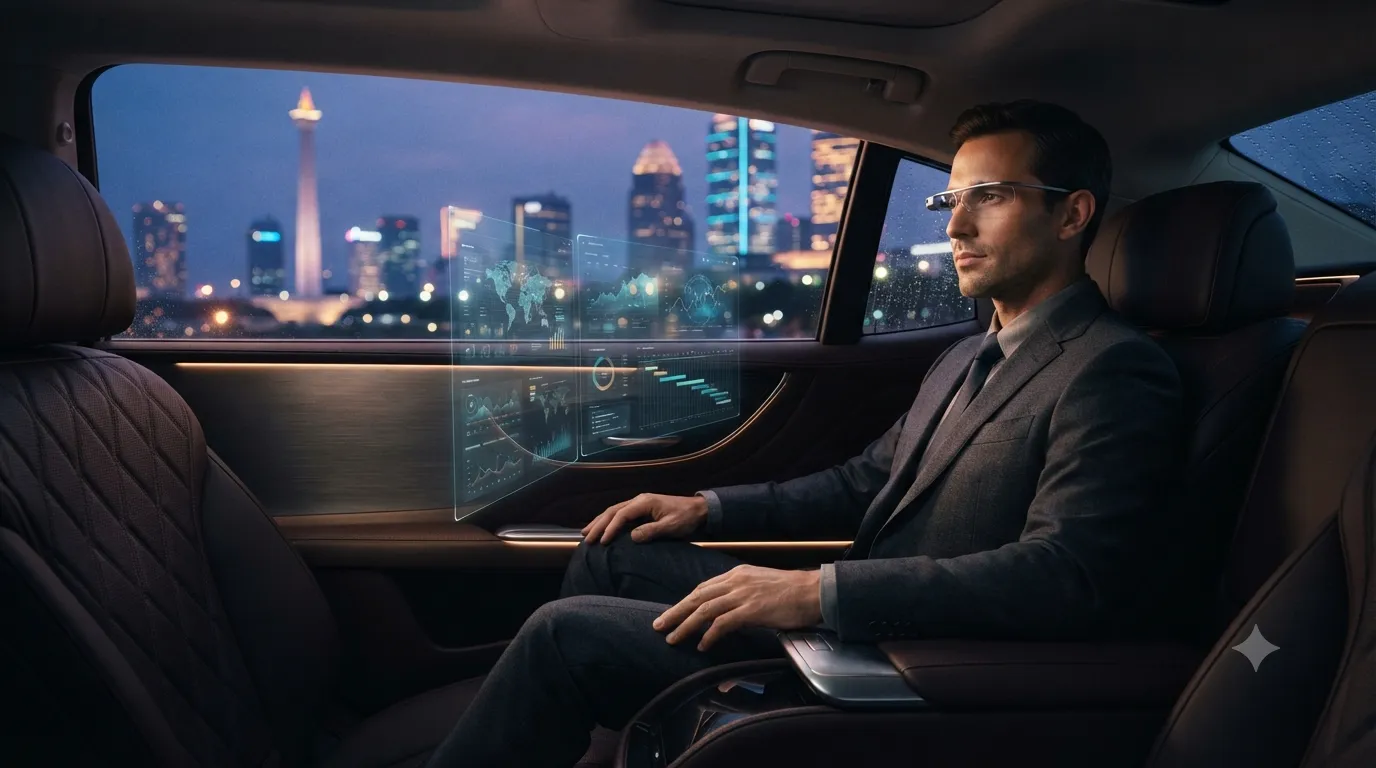
At 8:15 AM along Jakarta’s Inner Ring Road, traffic crawls at a snail's pace amid thousands of commuter vehicles. In the back seat of a hybrid SUV, a creative director from a global advertising firm sits calmly. Instead of hunched over a smartphone with a posture that induces fatigue, they wear a pair of thin-rimmed Augmented Reality (AR) glasses resembling designer eyewear. Hovering before them are three high-resolution transparent virtual screens: one displaying a 4K video editing timeline, another a Kanban project board, and a third hosting a team video conference window.
Aligning with future-tech investigations from Wired magazine, the boundary between physical office spaces and daily transit time has officially collapsed. The spatial computing commute phenomenon is no longer merely a Silicon Valley sci-fi experiment, but an everyday operational reality for a handful of high-performance elite professionals across Southeast Asian megacities.
High-Performance Anatomy: From Conventional Laptops to Spatial Canvases
Analyzing this shift through the lens of contemporary gadget culture, the physical screen limits of 14-inch laptops are now viewed as archaic bottlenecks by knowledge workers. Next-generation AR glasses offer boundless freedom to stretch digital workspaces into open air.
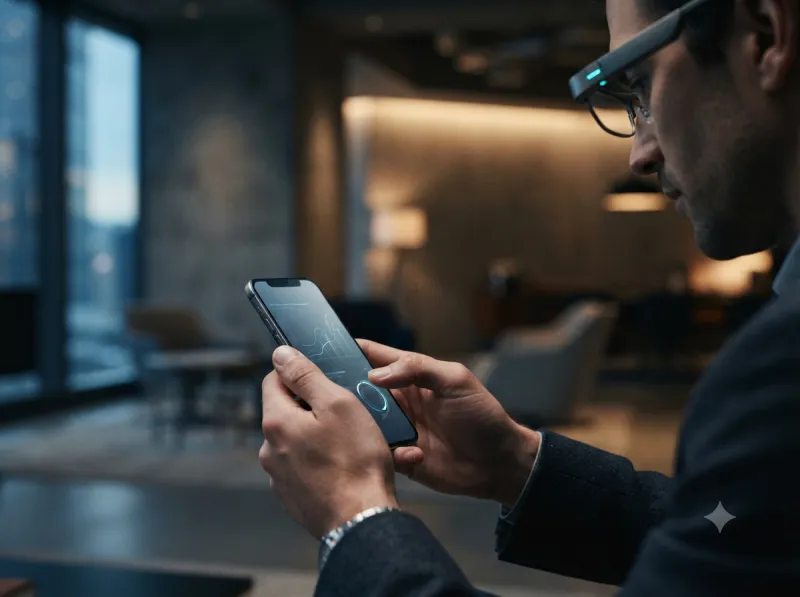
Photo source by Alinear Indonesia Docs. (Gemini AI - Generated Image)
Drawing references from Mashable's digital trend reports, this device adoption has birthed a new subculture: "commuter nomads." They no longer rely solely on office desks or coffee shop tables to complete complex tasks. Leveraging ultra-low latency 5G connectivity, AR glasses turn car or commuter train travel time—otherwise wasted—into the day's most productive workflow optimization session.
Workflow Optimization Framework: Discipline Amidst Mobility
Integrating spatial computing technology into daily routines demands strict operational discipline. Below is the framework for professionals to maximize efficiency without compromising safety:
•• Transport Role Delegation: This technology is strictly intended for passengers—whether executives in the back seat of chauffeured vehicles or commuters on public transit. Driving a vehicle while wearing visually sealed AR glasses is a severe transport safety violation.
•• Core App Curation (Workflow Integration): Limit virtual displays to two or three high-priority windows to prevent cognitive overload from sensory clutter.
•• Battery and Thermal Energy Management: Utilize external processing units or high-performance portable power banks to ensure hardware stability during long journeys.
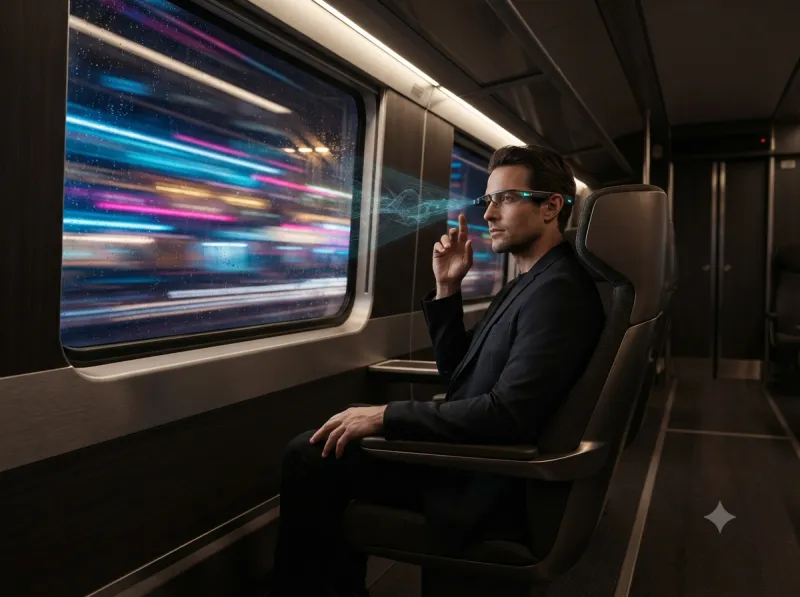
Photo source by Alinear Indonesia Docs. (Gemini AI - Generated Image)
Gadget Subculture Sociology: Privacy in Crowded Public Spaces
Evaluating this trend from urban cultural anthropology, AR glasses act as a "psychological shield" amidst noisy city crowds. When individuals don spatial computing eyewear inside public transit cars or shared vehicles, they literally manifest a digital private bubble in public spaces.
"Ketika kemacetan kota menahan laju kendaraan Anda, komputasi spasial memastikan pikiran dan produktivitas Anda tetap melesat tanpa batas."
Surrounded by hundreds of people, their gaze remains locked onto virtual workspaces visible solely to them. This triggers fascinating debates regarding the future of public social interaction: do these devices isolate humanity, or do they salvage the sanity of modern workers amidst metropolitan chaos.
Welcoming a New Era of Urban Digital Ecosystems
Ultimately, The Spatial Computing Commute proves that technological evolution is no longer measured by how large hardware is built, but by how seamlessly devices melt into human lifestyles.
By converting exhausting urban traffic jams into serene, multi-dimensional workspaces, these technology pioneers are unlocking a new chapter of work civilization: where an office is no longer defined by an access-card room, but by wherever your mind chooses to focus.
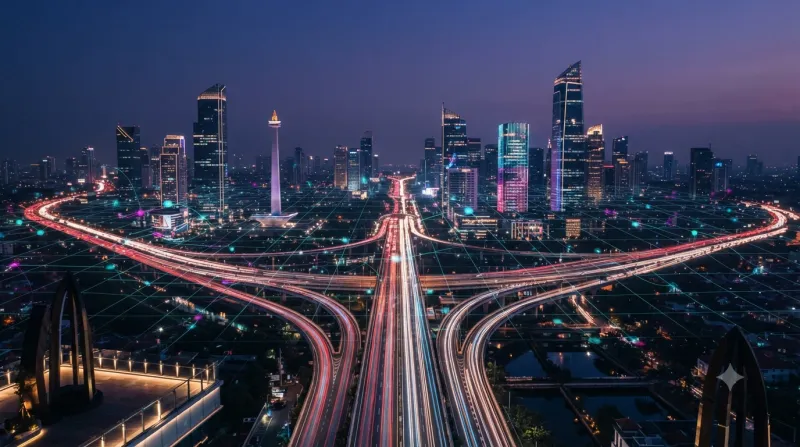
Photo source by Alinear Indonesia Docs. (Gemini AI - Generated Image)
"Masa depan kantor bukanlah sebuah gedung pencakar langit ber-AC sentral, melainkan sepasang kacamata tipis yang mengubah udara kosong di hadapan Anda menjadi meja kerja tak terbatas."
WRAP-UP!
The adoption of spatial computing glasses among urban professionals successfully converts wasted transit time into highly efficient workflow optimization sessions while establishing a new subculture of digital privacy protection in public spaces.
Executives and creative workers are advised to respect transport safety ethics, select lightweight, ergonomic AR hardware specs, and align daily task management with secure cloud computing ecosystems.
Looking to feature your brand and business through Alinear Indonesia’s Smart Publication & Smart Activation? Share your experience and consult with us today. Click here!



![Alinear Indonesia [Brand/Business Registration] Smart Publication & Smart Activation](https://www.alinear.id/assets_web/images/qr-codes/3e23e7dab43d2e72854ba48a3a09cf75.jpg)