

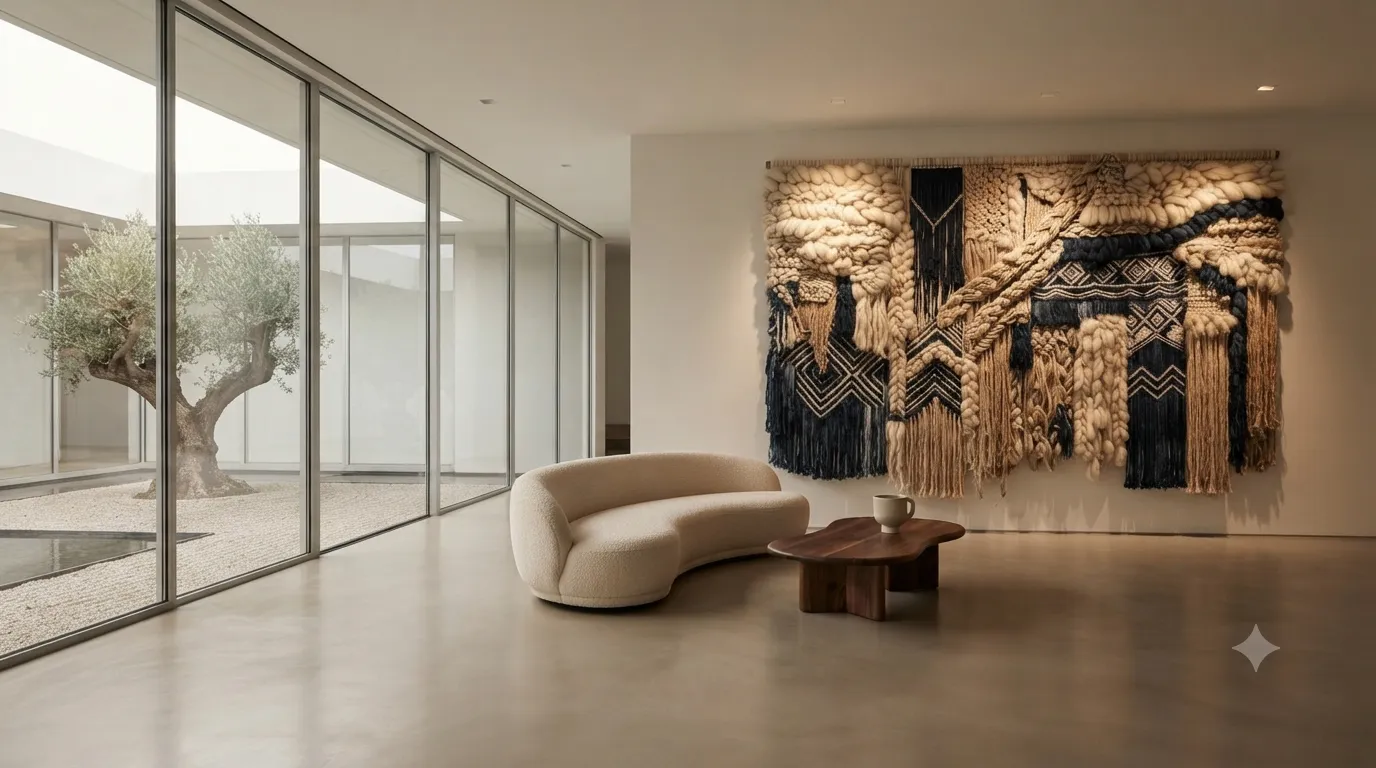

Photo source by Alinear Indonesia Docs. (Gemini AI - Generated Images)
Step inside a contemporary art gallery in South Jakarta, and the immediate visual impression is striking: the absence of cold, glossy glass frames and pristine digital displays. Instead, towering installations of raw abaca fibers, knotted cotton cords, and heavily textured natural indigo-dyed fabrics cascade from the ceiling, commanding the room with quiet authority. Visitors find themselves naturally leaning in, not just to look, but to feel the fibrous topography with their eyes, and occasionally, with an appreciative brush of fingertips.
Aligning with cultural critiques from The Atlantic and artistic curation from Love Happens Magazine, a sensory counter-revolution is underway. In a world hyper-saturated by glass-paneled smartphones and ultra-flat digital screens, modern society is experiencing tactile starvation. To combat this, contemporary artists and visionary interior designers are turning backward to move forward—resurrecting ancient fiber arts and raw organic textures to ground human consciousness back into the physical realm.
Exhibition: The Rise of Fiber Art in Modern Galleries
Analyzing recent major art exhibitions through the lens of modern curation, textile and fiber art (fiber art) has transitioned from traditional handicraft categories into the avant-garde of contemporary fine art.
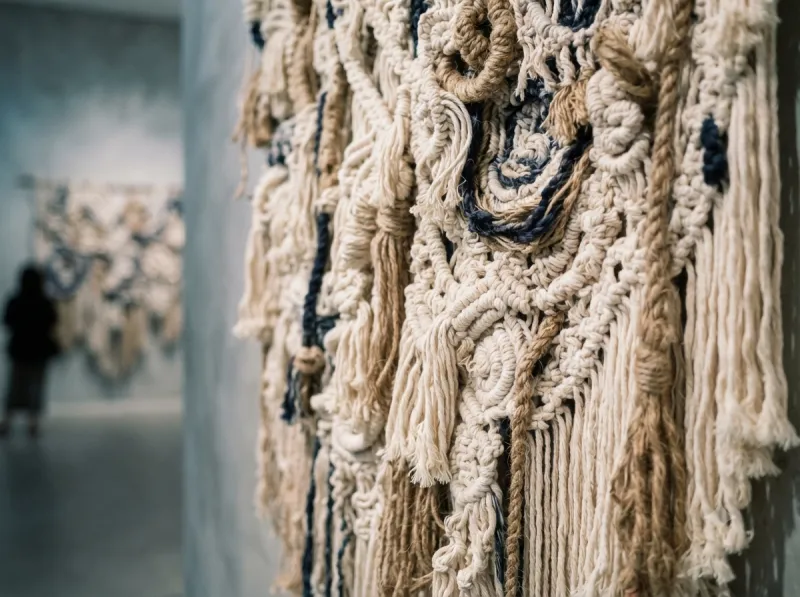
Photo source by Alinear Indonesia Docs. (Gemini AI - Generated Images)
Indonesian contemporary artists are redefining local weaving traditions—from Batak ulos threads to East Javanese natural cotton loops—into monumental sculptural installations. These works do not merely occupy space; they absorb sound, diffuse ambient light, and inject organic warmth into minimalist architectural shells. The gallery space transforms from a sterile white cube into an intimate sanctuary of human touch.
Interior Curation: Integrating Large-Scale Textile Art
For homeowners and interior designers seeking to translate museum-grade tactile art into residential living rooms, a structured curation approach ensures spatial harmony:
•• Leverage Scale and Proportion: A large-scale textile wall hanging acts as a soft architectural anchor in a living room featuring polished concrete floors or glass walls, instantly breaking up hard lines.
•• Embrace Material Contrast: Pair heavy woolen or knotted hemp artworks against smooth neutral plaster walls to create visual depth and tactile richness.
•• Incorporate Specialized Lighting: Use narrow-beam warm spotlights angled precisely at a forty-five-degree angle to cast dramatic shadows across the layered threads, turning the textile piece into a living sculpture throughout the day.
"In an era where everything on our screens is completely flat, true luxury is walking into a room wrapped in the warm, textured embrace of human hands."
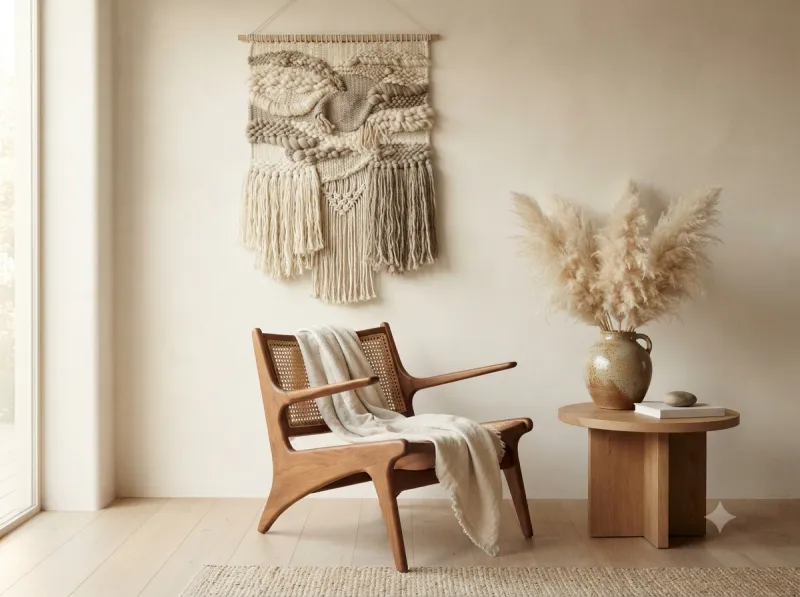
Photo source by Alinear Indonesia Docs. (Gemini AI - Generated Images)
The Sociology of Craft: Reconnecting with Human Labor
Evaluating this aesthetic shift from the perspective of cultural sociology, the soaring popularity of textile art is deeply tied to a psychological yearning for transparency. In an economy dominated by mass-produced, algorithmic furnishings, owning a hand-knotted fiber sculpture means owning hundreds of hours of human patience, intention, and labor.
Every knot tied by an artist carries an autobiographical rhythm. When integrated into a modern living room, these works serve as quiet reminders of our shared humanity, transforming a domestic interior from a mere styling exercise into a personal museum of meaningful stories.
Embracing the Tactile Future of Living Spaces
Ultimately, The Tactile Art Experience proves that the evolution of interior design and contemporary art is moving toward emotional grounding.
By welcoming fiber art, woven sculptures, and raw natural materials into our contemporary spaces, we construct environments that do not just look immaculate on camera, but genuinely feel alive to inhabit.
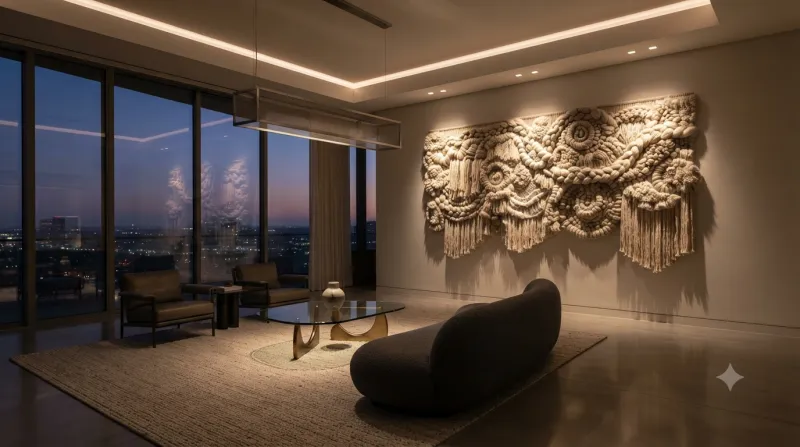
Photo source by Alinear Indonesia Docs. (Gemini AI - Generated Images)
"Textile art does not merely decorate a wall; it absorbs the noise of modern life and gives your living space a beating heart."
WRAP-UP!
The resurgence of textile and fiber art in contemporary galleries and modern living rooms offers an essential tactile antidote to digital saturation, combining ancestral craftsmanship with high-end interior architecture.
Art collectors and interior designers are encouraged to commission large-scale woven installations, emphasize material contrast in living spaces, and highlight textures through precise architectural lighting.
Looking to feature your brand and business through Alinear Indonesia’s Smart Publication & Smart Activation? Share your experience and consult with us today. Klik di sini!



![Alinear Indonesia [Brand/Business Registration] Smart Publication & Smart Activation](https://www.alinear.id/assets_web/images/qr-codes/3e23e7dab43d2e72854ba48a3a09cf75.jpg)