


Photo source by Alinear Indonesia Docs (Gemini AI - Generated Image)
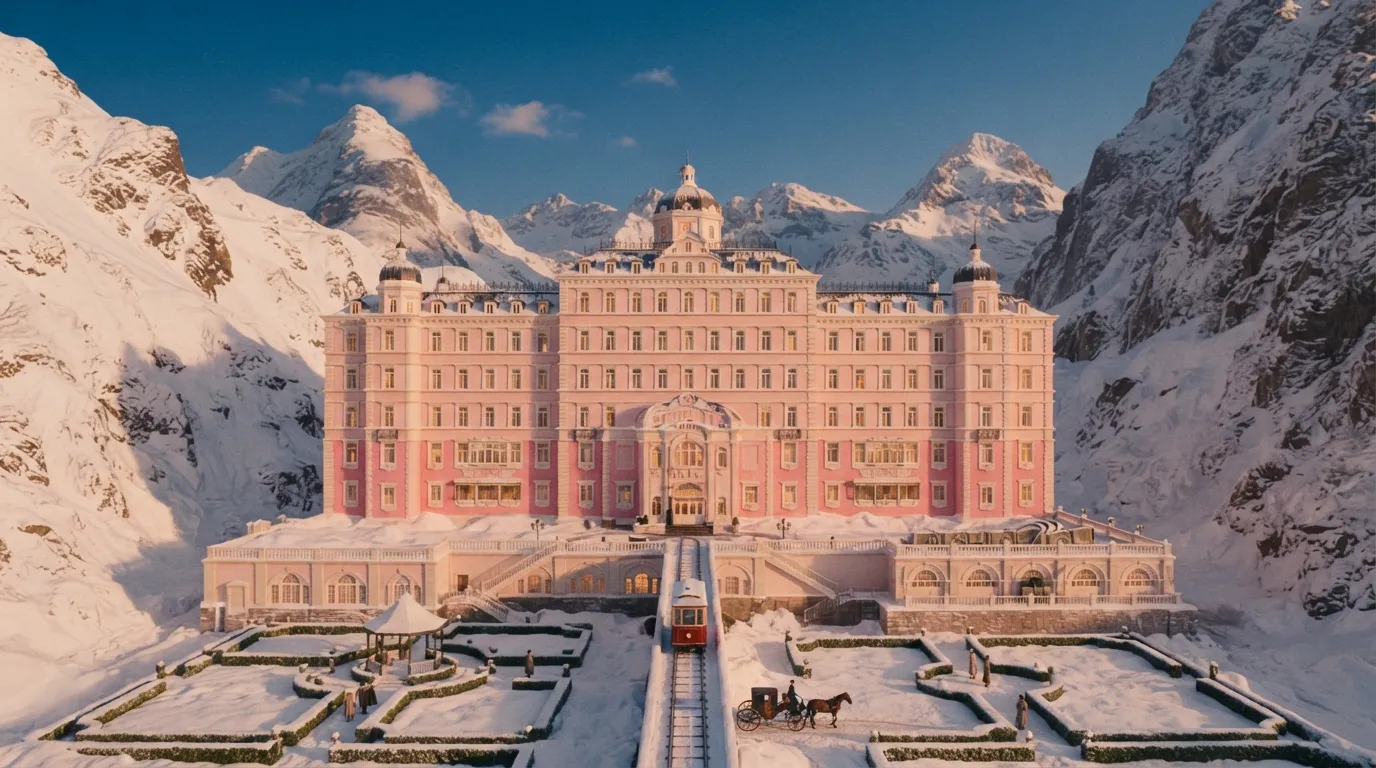
Within the landscape of modern cinema, very few directors possess a visual fingerprint as distinct as Wes Anderson's. Through The Grand Budapest Hotel, Anderson does not merely narrate a comedic, satirical adventure; he constructs an entirely cohesive aesthetic universe.
Every presented frame is designed with mathematical precision, treating the cinema screen like an art gallery where living paintings surge to pull audiences into a captivating fictional world.
Video source by 20th Century Studios (YouTube)
Architectural Set Design and Aspect Ratio Shifts
The film's visual strength rests upon spatial management and layered visual narrative structures:
1. Miniature Scale Architecture Aesthetics
The fictional Zubrowka hotel is visualized through a combination of grand architectural sets and precision-scaled miniature models. Its interior design radiates classical European luxury underscored by dominant pastel tones.
2. Chronological Aspect Ratios
Anderson employs varying aspect ratios (1.37:1, 1.85:1, and 2.35:1) to distinguish story timelines spanning the 1930s, 1960s, and the present day, delivering an authentic spatial experience for viewers.
Video source by FilmNow Movies (YouTube)
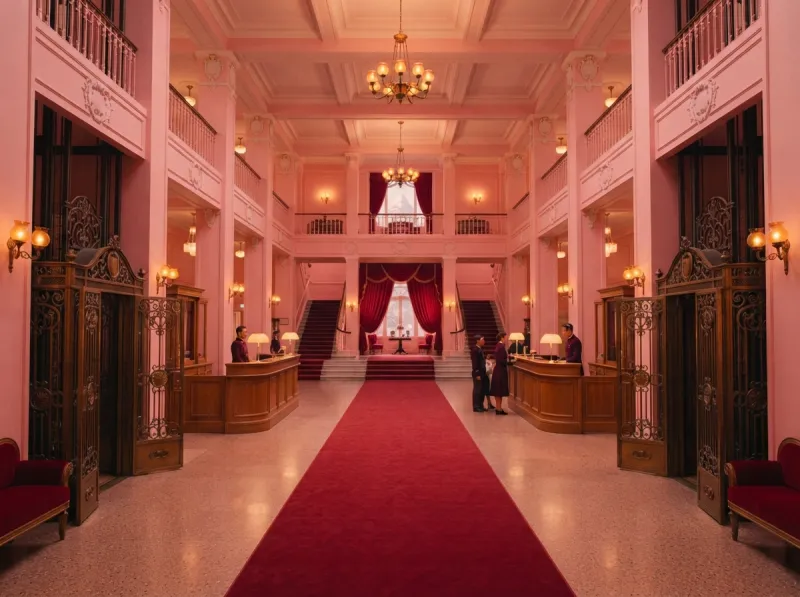
Photo source by Alinear Indonesia Docs (Gemini AI - Generated Image)
"Wes Anderson does not merely record images; he weaves architectural symmetry and color into living visual poetry."
The Contrast Between Hotel Warmth and Snowy Cold
The color palette in this film plays a crucial role in conveying emotions and scene dynamics:
–– Dominance of Warm Pastels
The hotel interiors are suffused with gradients of pink, soft purple, and vibrant red, conveying a theatrical, welcoming, yet grand ambiance.
–– Alpine Landscape Contrast
These warm tones are dramatically pitted against outdoor landscapes filled with pristine white snow and grey mountain skies, creating visual tension that reinforces the fairytale nuance of the film.
Video source by Rotten Tomatoes Trailers (YouTube)
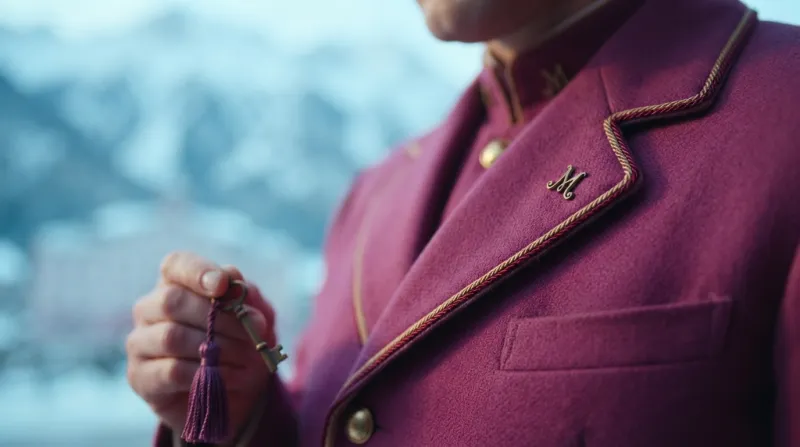
Photo source by Alinear Indonesia Docs (Gemini AI - Generated Image)
"Inside The Grand Budapest Hotel, every single frame is a masterpiece painting that refuses to simply pass by."
Center-Framed Composition and Linear Movement
Anderson's directorial style relies heavily on strict camera discipline:
•• Total Symmetrical Composition: Most scenes are captured using static center-framed techniques, placing subjects squarely in the center of the frame to achieve hypnotic visual balance.
•• Dynamic Tracking Shots: Precise sideways or straight tracking shots guide viewers down hotel hallways, creating a rhythmic and whimsical visual tempo.
"When pastel hues and mathematical symmetry unite, cinema transforms into a boundless art gallery."
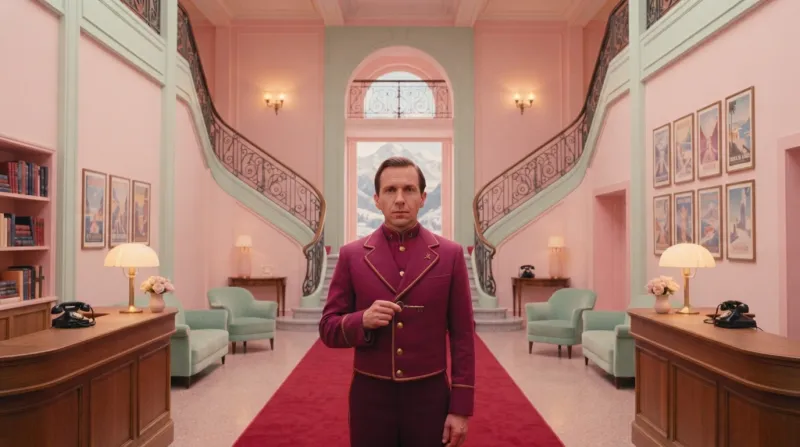
Photo source by Alinear Indonesia Docs (Gemini AI - Generated Image)
A Legacy Beyond Time
The Grand Budapest Hotel proves that cinema is a majestic fusion of literary narrative and fine art discipline. It remains a pinnacle benchmark in production design and color grading, inspiring generations of filmmakers and visual designers worldwide to continue celebrating beauty within the smallest details of every frame.
Video source by シネマトゥデイ (YouTube)
WRAP-UP!
The Grand Budapest Hotel sets a new standard for cinematic aesthetics through its mastery of visual symmetry, chronological aspect ratio shifts, and iconic pastel color palettes. Revisit key scenes from this film to inspire the color palettes and spatial compositions of your next creative design project.
––
Discover how SR Digital - Alinear Indonesia’s Smart Publication & Smart Activation combines AI-driven intelligence with high-impact human storytelling to amplify your business visibility. Share your vision and consult with us today.
Ready to elevate your brand in the era of AI? Click here!



![Alinear Indonesia [Brand/Business Registration] Smart Publication & Smart Activation](https://www.alinear.id/assets_web/images/qr-codes/3e23e7dab43d2e72854ba48a3a09cf75.jpg)