


Photo source by Alinear Indonesia Docs. (Adobe FireFly – Gemini AI)
Modern theater design is shedding its traditional skin. Borrowing the high-energy tech enthusiasm of Mashable Culture, a major evolution is altering the relationship between a performer and their stage backdrop. The era of pre-rendered video loops playing statically behind a live performer is drawing to a close.
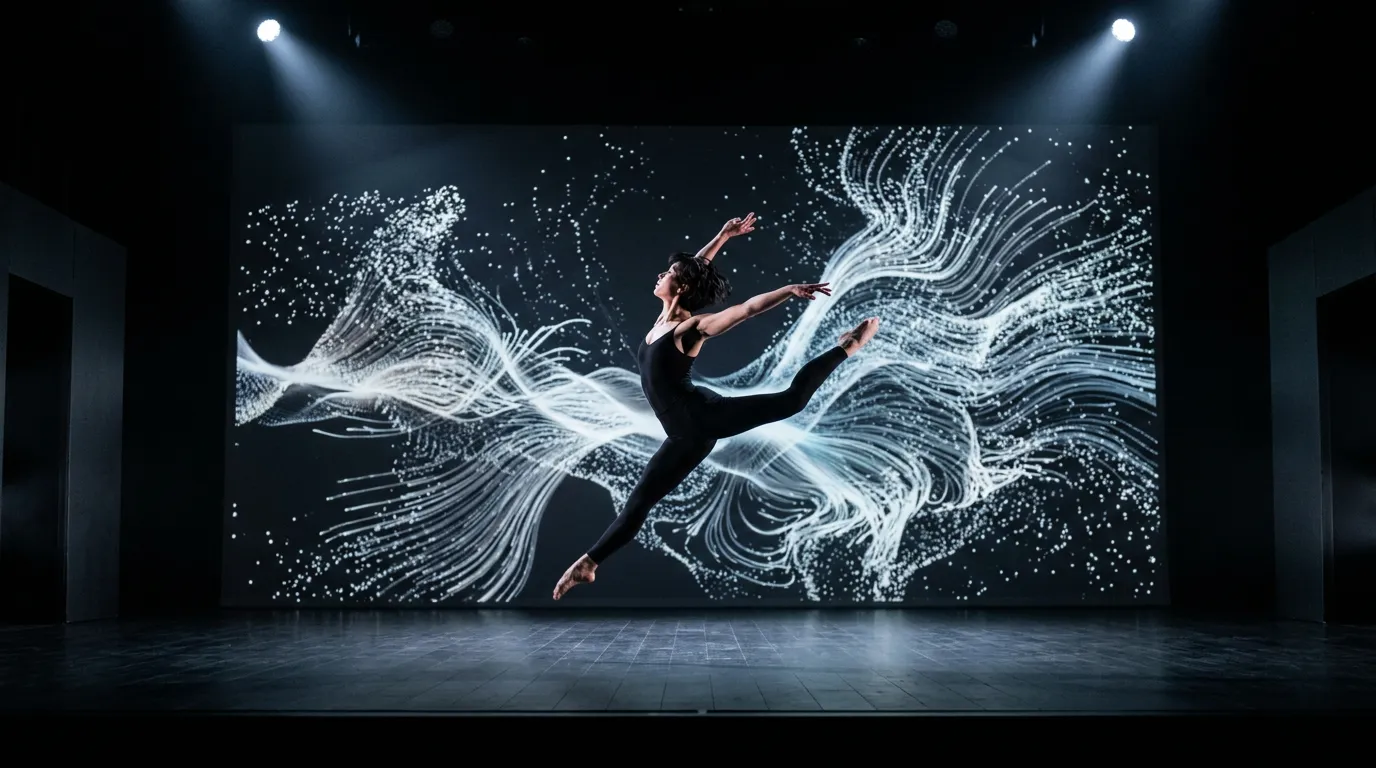
Contemporary digital set designers are opting for something entirely organic: living code. By converting the stage space into a live computer vision environment, creators ensure that the backdrop is no longer a separate, passive wallpaper. Instead, it acts as a dynamic visual extension of the performer's body, capturing every flex, leap, and turn to compile art on the fly.
To ensure that a dancer’s rapid spin translates into an instant digital ripple without noticeable lag, performance spaces utilize arrays of specialized depth-sensing hardware linked directly to generative design engines.
Depth-sensing camera rigs ignore traditional stage illumination and focus entirely on measuring infrared distance fields. These sensors map the human body into a moving point cloud. A central graphics computer processes these spatial coordinates at high frame rates, translating skeletal data into instantaneous interactive vectors—such as dispersing digital light paths or warping abstract geometric patterns behind the performer.
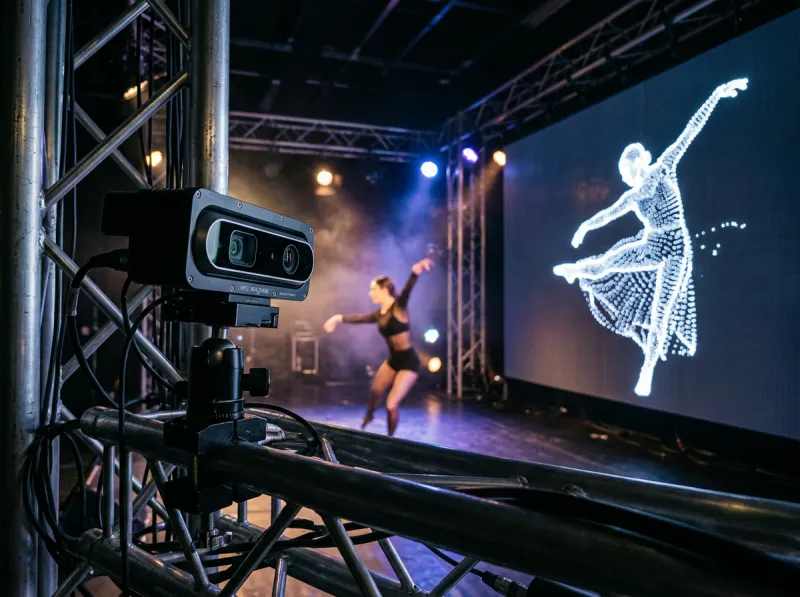
Photo source by Alinear Indonesia Docs. (Adobe FireFly – Gemini AI)
This technological union fundamentally shifts the balance of control on the stage. Traditionally, a dancer had to synchronize their steps perfectly with a pre-recorded video track; a single delay ruined the entire visual illusion.
With generative tools running live, the physical choreography entirely commands the digital environment. When a performer sweeps their arm across the dark space, the algorithm computes the speed and direction instantly, creating a thick gust of digital mist that curls around their hands. If the movement stops, the graphic settles. The performance becomes a literal dialogue between flesh and mathematics.
"The stage is no longer a frame for the performance; it is a live, computational canvas that breathes, reacts, and mutates in tandem with the human body."
Drawing from the clean, tech-focused design perspectives celebrated by Wired, the most impactful interactive performances practice intense restraint. Ramping up digital effects to maximum output creates overwhelming, confusing visual noise that detracts from the human narrative.
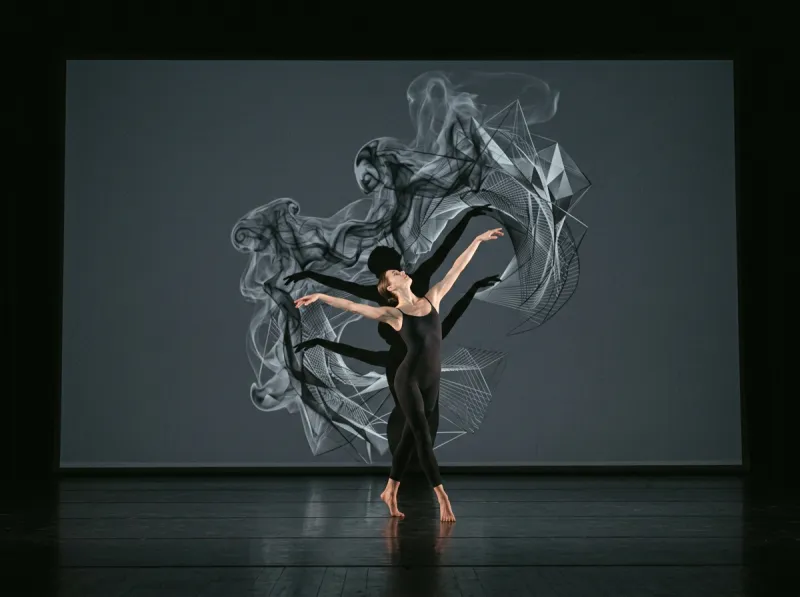
Photo source by Alinear Indonesia Docs. (Adobe FireFly – Gemini AI)
The gold standard relies on a disciplined, minimalist color palette. By pairing pure monochromatic backgrounds—deep obsidian charcoal tones—with thin, razor-sharp vector lines or fine luminous point clouds, the digital canvas remains sophisticated. The technology serves to amplify the physical tension of the human silhouette, turning complex computing into an elegant asset of architectural minimalism.
As interactive infrastructure becomes faster, more accessible, and more accurate, the division between digital art and traditional live performance will continue to blur.
The generative live-visual stage represents a permanent shift toward hyper-reactive art. It proves that technology is at its best not when it tries to replace human expression, but when it serves as a sensitive, real-time mirror to physical emotion—proving that the clean code of tomorrow can be just as expressive as the classic movements of the human body.
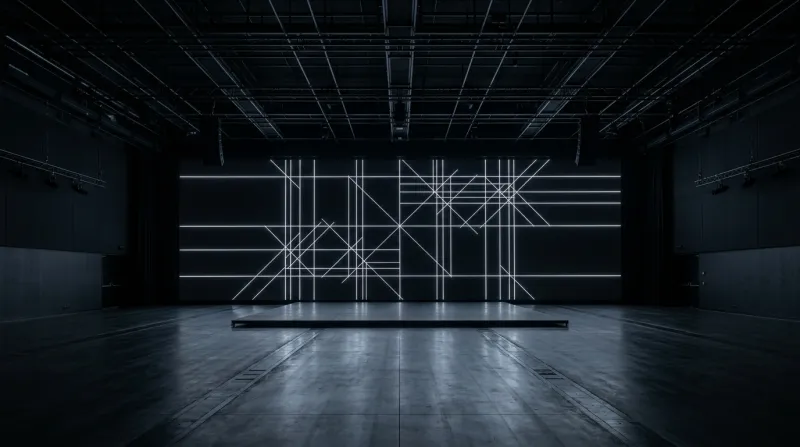
Photo source by Alinear Indonesia Docs. (Adobe FireFly – Gemini AI)
"When data meets the stage with absolute immediacy, pixels lose their artificial identity and become as raw, fluid, and unpredictable as live human muscle."
WRAP-UP!
The adoption of motion-tracking, generative stage environments marks a pivotal evolution in contemporary performance art. By combining advanced depth-sensing hardware with real-time vector processing, modern theater projects a sophisticated blend of movement and media.
Creative directors aiming to deploy these interactive systems should utilize high-bandwidth infrared depth arrays to isolate tracking from stage lights, rely on nodal creative coding environments to map data with latencies below 15 milliseconds, and implement matte, ultra-flat projection fabrics to prevent light bounce from softening the digital vectors.
Looking to feature your brand and business through Alinear Indonesia’s Smart Publication & Smart Activation? Share your experience and consult with us today. Click here!



![Alinear Indonesia [Brand/Business Registration] Smart Publication & Smart Activation](https://www.alinear.id/assets_web/images/qr-codes/3e23e7dab43d2e72854ba48a3a09cf75.jpg)