

Photo by Ervo Rocks on Unsplash
For nearly a decade, the premium portable audio market functioned under a singular, unchallenged mandate: absolute silence. Active Noise Cancellation (ANC) was engineered and marketed as the ultimate sensory luxury, capable of artificially flattening the roaring frequencies of the modern metropolis to cocoon the user in a private sonic void. From airport executive lounges to crowded franchise coffee shops, blocking out the external world with airtight silicone tips became a visual shorthand for uninterrupted productivity and elite focus.
Yet, as contemporary urban lifestyles evolve toward more active, outdoor, and socially integrated frameworks, the limitations of complete acoustic isolation have surfaced. Within the unpredictable currents of a major city, being completely deaf to your immediate environment is no longer an asset—it is a distinct operational hazard. This realization has sparked a profound subcultural shift among urban audiophiles, driving a collective demand for devices that deliver crystal-clear audio fidelity without severing the user’s sensory connection to the spatial reality surrounding them.

Bone-Conduction Mechanics: Streaming Audio Without Blocking the Airway
The resolution to this urban safety dilemma lies in a radical departure from traditional acoustic delivery: open-ear engineering, spearheaded by bone-conduction technology. While conventional earphones rely on speaker drivers to push soundwaves through the air column of the ear canal to vibrate the tympanic membrane (eardrum), bone-conduction bypasses this pathway entirely.
These sophisticated devices clip or wrap around the user's head, positioning specialized electromechanical transducers precisely on the cheekbones, just forward of the ear canal. The hardware translates audio signals into micro-vibrations that travel through the cranial bones directly to the cochlea (the inner ear). Consequently, a podcasts or an intricate musical arrangement sounds as if it is floating naturally inside the listener's consciousness with high-fidelity precision, while the physical ear canal remains unobstructed to receive ambient sounds from the real world.

Photo by Point Normal on Unsplash
Navigating the Urban Grid: Sharpening Real-Time Situational Awareness
For urban commuters, city cyclists, and cross-district runners, adopting open-ear architecture is a calculated tactical decision that redefines how they navigate the urban landscape. When cycling through unpredictable city traffic, maintaining absolute situational awareness is a non-negotiable metric of personal safety.
Hearing the sudden blast of a horn, tracking the low-frequency rumble of a transit bus entering a blind spot, or catching real-time safety announcements from traffic wardens are critical, life-saving sensory inputs. Open-ear hardware facilitates a flawless duality of focus. An executive can digest a complex macroeconomic podcast with absolute vocal clarity while remaining entirely responsive to the fluid variables of their physical route. Music and the city no longer compete; they merge into a balanced, multi-layered soundscape.

Photo by Daniel Fontenele on Unsplash
Creative Communities and the Etiquette of Open Acoustics
This transition toward open audio also signals a deeper sociological transformation among urban creatives. Modern gadget users are increasingly rejecting the "antisocial" aesthetic associated with bulky, isolating headphones. They choose instead to remain approachable and plugged into spontaneous public interactions. This frictionless hardware aligns perfectly with weekends spent exploring local creative hubs, independent bookshops, or curated local vendors at [Artisan Markets: Local Craft Market].
In the vibrant, conversation-rich environment of an independent design market, wearing open-ear headphones allows you to overlay a curated personal soundtrack onto your visual exploration. Crucially, you retain the ability to greet an artisan barista, converse with a local craftsman, or absorb the ambient energy of the creative gathering without the clunky etiquette of repeatedly removing an earbud. The technology no longer separates you from the urban fabric; it weaves your digital layer into the physical social landscape organically.
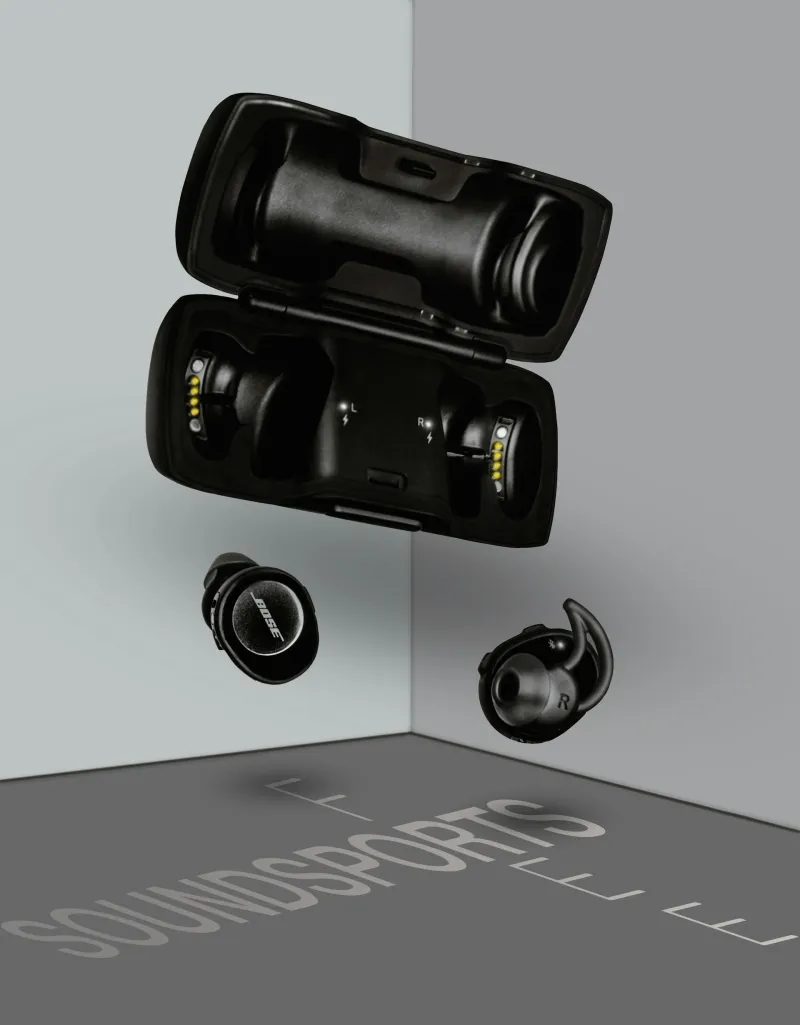
Photo by Mudit Jain on Unsplash
The Future of Portable Acoustics: Structural Comfort and Sensory Sovereignty
Beyond immediate safety benefits and social connectivity, long-term ergonomics form the backbone of the open-ear ascension. Prolonged use of traditional in-ear silicone tips frequently induces ear canal fatigue, moisture retention, and localized pressure pain.
"The true luxury of a modern gadget is no longer measured by how brutally it silences the external world, but by how intelligently it integrates your personal harmony into the natural rhythm of the city."
Modern open-ear frames, crafted from featherlight, flexible titanium wrapped in medical-grade silicone, offer a pressure-free fit that completely eliminates canal irritation. These devices can rest securely through an entire day of continuous movement, acting as a natural sensory extension of the body. As open-acoustic engineering continues to refine its acoustic projection and privacy seals, we are entering a new era where premium technology no longer demands that humans dull their natural senses, but rather amplifies our sensory sovereignty to experience urban life safely, intelligently, and with uncompromised style.

Photo by Angelo Rechichi on Unsplash
"By leaving the ear canal free to breathe, you do more than protect your long-term hearing health; you preserve your right to authentic human connection amidst daily urban transit."
WRAP-UP!
The Open-Ear Audio Trend and bone-conduction hardware have successfully shifted the paradigm of portable audio from sensory isolation to spatial integration. By prioritizing safety through real-time situational awareness without sacrificing acoustic fidelity, these devices have become the gold standard for active urban demographics. Their accessible design fosters healthy social connectivity, making them the ultimate tech companion for exploring the vibrant creative economies blossoming across modern urban platforms [Artisan Markets: Local Craft Market]
Transition to an open-ear audio framework for your daily outdoor athletic routines or city commutes; experience a brand-new sensory matrix where your favorite audio tracks blend safely and harmoniously with the heartbeat of the city.
Looking to feature your brand and business through Alinear Indonesia’s Smart Publication & Smart Activation? Share your experience and consult with us today. Click here!