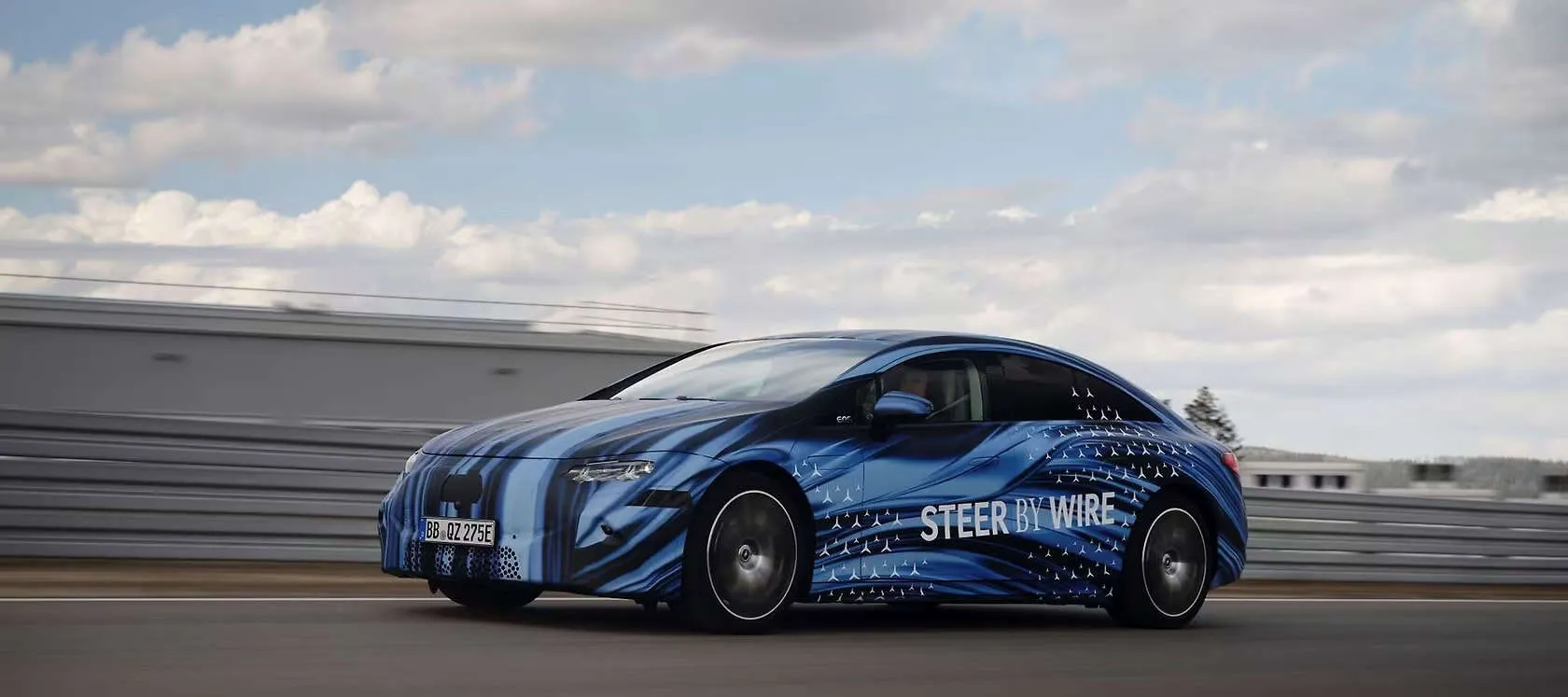

Photo source by Mercedes-Benz (Web)
In 2026, the global automotive industry is in the midst of a control revolution through Steer-by-Wire technology. Unlike conventional steering systems that rely on a mechanical iron rod (steering column) to physically turn the wheels, this system completely severs that physical link.
Instead, Steer-by-Wire utilizes high-grade electronic sensors and precision actuators to send inputs from the steering wheel directly to the wheels via data cables. The absence of this physical mechanical connection allows for extraordinary cabin design flexibility—for example, steering wheels that can retract when autonomous mode is active—creating a more spacious and futuristic interior environment.
Precision Personalized by Software
Technically, the primary advantage of Steer-by-Wire lies in its ability to adjust steering ratios instantaneously through software. This provides a highly adaptive driving experience:
•• Low Speed: The steering feels incredibly light and responsive, making tight parking maneuvers effortless without needing multiple rotations of the wheel.
•• High Speed: The system automatically adds weight and extra stability, ensuring maximum safety while cruising on highways.

Photo source by Mercedes-Benz (Web)
This technology also filters out unwanted road vibrations from harsh asphalt surfaces before they reach the driver’s hands, providing a significantly smoother driving experience without losing essential control.
"The future of mobility is a moment when control is no longer limited by iron, but by the speed of light and the precision of data."
While it initially sparked debate among automotive purists regarding the loss of "steering feel," the development of force-feedback systems in 2026 has reached a point of perfection. The latest haptic technology can accurately simulate road surface information to the driver’s hands, providing feedback that remains intuitive but cleaner, stripped of disruptive noise.
Beyond comfort, Steer-by-Wire is a crucial step toward full smart vehicle integration. With lighter vehicle weights due to the removal of heavy mechanical components, energy efficiency—especially in Electric Vehicles (EVs)—increases significantly.
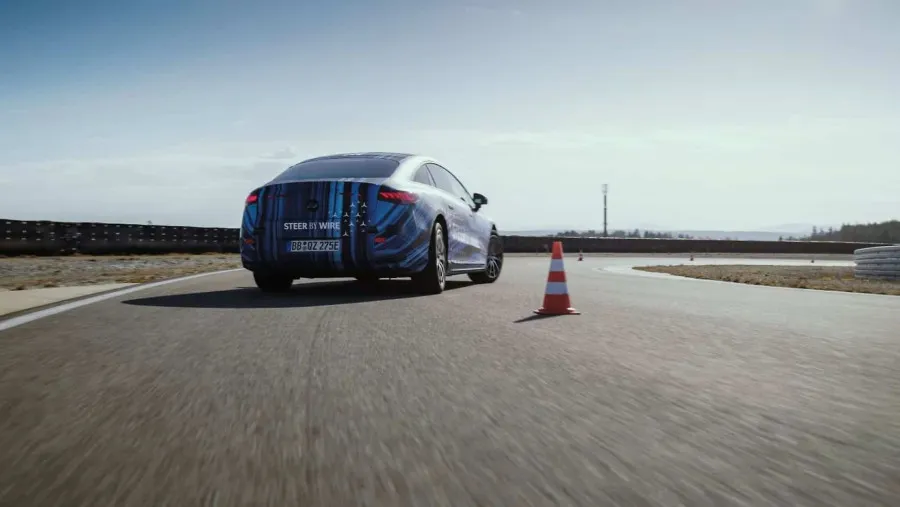
Photo source by Mercedes-Benz (Web)
Safety Through Digital Redundancy
The classic question regarding safety—what happens if the electronics fail?—has been answered through dual redundancy systems. Vehicles equipped with Steer-by-Wire feature multiple backup circuits and independent power sources that ensure control remains functional even if the primary system fails.
This system isn't just about lifestyle; it’s about active safety. Sensors can correct a car's direction faster than human reaction time during skids or crosswinds, making the car more adaptive to various extreme road conditions.
"Technology does not exist to distance us from the road, but to give us smarter control over every inch of the journey."
WRAP-UP!
Steer-by-Wire is the foundation for the evolution of autonomous and electric vehicles. By removing mechanical limitations, we open the door to more flexible interior designs, higher efficiency, and a level of driving precision never felt before.
Curious which manufacturers have fully adopted this technology in Indonesia? Stay tuned on Alinear Indonesia!
Looking to feature your brand and business through Alinear Indonesia’s Smart Publication & Smart Activation? Share your experience and consult with us today. Click here!
![Smart Publication+ 3.0: Build Authority. Drive Growth. [Technical Specification]](https://www.alinear.id/assets_web/images/qr-codes/bd48cb0acb2d9586570edb8a7303cee1.jpg)