

Photo by Muskan Bhan on Unsplash
The global horological architecture is undergoing a structural correction driven by a highly disciplined demographic of emerging collectors. For the past two decades, luxury watch manufacturing leaned heavily into hyper-modern industrial hyperbole—characterized by aggressive over-sized case geometry, aggressive skeletonization, and synthetic avant-garde composites. While these references demonstrated engineering prowess, they frequently oversaturated the eye, resulting in a collective design fatigue within the premium space.
This exhaustion has birthed a deep appreciation for the "Neo-Vintage" window—a transitional horological era spanning from the late 1980s to the close of the 1990s. In this narrow historical window, horological houses operated at a masterclass intersection: leveraging advanced computer-aided manufacturing to secure highly reliable, water-resistant movements, while strictly adhering to classical mid-century proportions. Collectors are turning away from loud, immediate statements, choosing instead instruments that trade on historical intelligence, functional longevity, and spatial discretion.
Specifying a Neo-Vintage chronograph as an active asset requires an understanding of its unique technical architecture. Unlike pure vintage references from the 1960s, which are structurally fragile, prone to moisture contamination, and difficult to service daily, 90s chronographs were engineered with sapphire crystals, solid end-link bracelets, and robust workhorse base calibers.

Photo by Phuong Nguyen on Unsplash
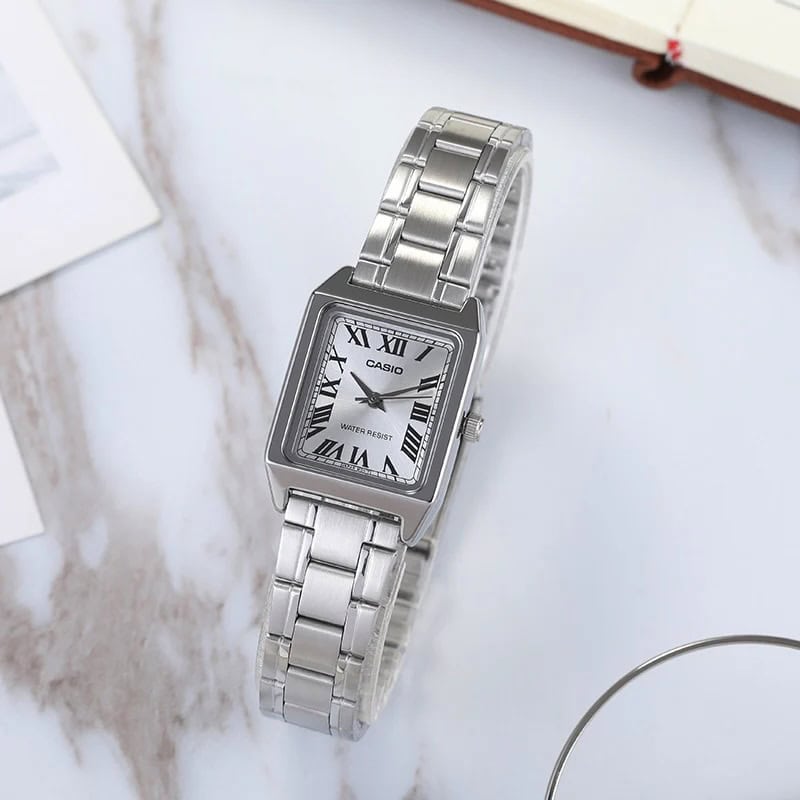
The structural mastery of these 90s sports models lies in their classic sub-40mm diameter. Case footprints measuring 37mm to 39mm sit closer to the wrist profile, delivering a streamlined silhouette that slides effortlessly under a cuff. This intentional spatial economy acts as a direct horological translation of high-tier, low-profile fashion systems. The seamless interaction of a brushed 38mm steel oyster-style case with an unbranded, double-faced cashmere sleeve creates a cohesive textural dialogue; neither element competes for attention, yet both project absolute material sovereignty. The timepiece functions not as a decorative distraction, but as a balanced mechanical continuation of an understated, tailored silhouette.
The premier variable driving the asset valuation of Neo-Vintage chronographs is the organic chemical composition of their dials. The 1990s marked the final phase of horological utilization of Tritium-based luminous paint before the industry standardized non-aging, synthetic Super-LumiNova compounds.
Over a thirty-year timeline, the atmospheric exposure of Tritium causes it to degrade from a stark white into a deep, warm cream or rich pumpkin patina. This material decay cannot be artificially simulated in a factory without looking hollow. For the contemporary minimalist, this subtle variation adds an essential layer of visual soul to a strict wardrobe. Surrounded by a clean layout of monochrome black, grey, or navy fabrics, the soft, amber glow of an aging dial acts as an organic focal point—an authentic indicator of time elapsed, preserved within a highly disciplined package.

Photo by Anubhav Sonker on Unsplash
Beyond immediate visual aesthetics, the Neo-Vintage market operates on highly favorable economic fundamentals. Many prominent chronographs from this transitional era were built immediately prior to the massive consolidation of independent horological houses into corporate conglomerates.
"True mechanical prestige is no longer measured by the complexity of an avant-garde skeleton dial, but by the understated confidence of a 38mm steel chronograph showing flawless, unrepeatable tritium patina."
As a result, these references carry unique, localized production variations—ranging from subtle dial typography shifts to distinct lug beveling profiles that were discarded during modern mass-standardization. Acquiring a 90s chronograph means owning a specialized piece of manufacturing history that will never be reproduced. This historical scarcity provides a resilient buffer for capital allocation, making these references highly stable assets that continuously appreciate as the contemporary market grows more homogenous.
Looking toward the future of luxury asset curation, the Neo-Vintage chronograph is securely positioned as the permanent anchor of an intelligent collection. It answers the contemporary cultural demand for objects that carry true substance, rejecting temporary technological obsolescence in favor of enduring mechanical systems.

Photo by Audrey Langlois on Unsplash
By synthesizing structural reliability with historical design restraint, these transitional instruments move past simple timekeeping to function as standard-bearers for a refined lifestyle. They reinforce the philosophy that the highest tier of sophistication is reached not when there is nothing left to add, but when there is nothing left to strip away—transforming the daily act of checking the wrist into a quiet appreciation of enduring craft, material honesty, and calculated visual calm.
"In an era of disposable digital interfaces, a transitional 90s timepiece serves as the ultimate anchor for a minimalist wardrobe—proving that absolute material discretion outlives any temporary trend."
WRAP-UP!
The systematic migration of collectors toward Neo-Vintage chronographs validates a broader cultural shift favoring long-term material integrity over contemporary industrial volume. The mechanical reliability and classic proportions of 90s horology deliver an authentic, wear-anywhere luxury experience. This structural restraint mirrors the design discipline explored in, establishing that true aesthetic power is realized when precise micro-mechanical heritage and refined, understated wardrobe tailoring operate in absolute alignment.
Analyze the case profiles in your active collection; target a premium transitional reference featuring verified tritium indices and an unpolished sub-40mm geometry to secure a foundational horological asset for the future.
Looking to feature your brand and business through Alinear Indonesia’s Smart Publication & Smart Activation? Share your experience and consult with us today. Click here!



![Smart Publication+ 3.0: Build Authority. Drive Growth. [Technical Specification]](https://www.alinear.id/assets_web/images/qr-codes/bd48cb0acb2d9586570edb8a7303cee1.jpg)