



Photo source by SR Digital - Alinear Indonesia (Adobe FireFly – Gemini AI)
The digital entertainment consumption landscape is experiencing a significant shift in audience behavior through the absolute dominance of The Return of Mini-Series. Content formats featuring a limited structure, generally ranging from six to eight episodes, have become one of the most sought-after storytelling models. This framework successfully pulls attention away from both the traditional two-hour standalone feature film and the conventional long-form series spanning dozens of seasons and hundreds of episodes. This phenomenon is not merely a passing trend, but a direct response to how modern audiences allocate their leisure time amidst demanding daily schedules.
The mini-series is widely regarded as the ideal middle ground for urban viewers. This format gives directors and screenwriters sufficient breathing room to map out profound character development and intricate plot complexities without feeling rushed, a common critique of the feature film format. On the flip side, it remains perfectly tailored to the limited attention spans of contemporary audiences, as the entire conflict resolves completely within a single season without leaving dragging, overstretched subplots behind.
The Narrative Anatomy of the Six-Episode Format
The primary appeal of the six-episode format lies in its structural efficiency, operating much like a novella in visual form. Within this precise architecture, there is absolutely no room wasted on filler episodes, which frequently disrupt the pacing of conventional television network series. Every single episode serves a clear structural function: introducing the premise swiftly, escalating the stakes gradually, and steering the audience toward a deeply satisfying climax in the final episode.

Photo source by SR Digital - Alinear Indonesia (Adobe FireFly – Gemini AI)
This approach offers a unique sense of creative freedom to filmmakers. They can incorporate high-level cinematic luxuries—such as artistic camera work and measured pacing—without being constrained by rigid theatrical runtimes. Audiences are treated to a rich visual experience where every sub-plot and supporting character arc receives proportional attention, creating an intellectual and emotional payoff akin to finishing a solid piece of literature.
Digital Distribution Dynamics and the Challenge to Classical Cinema
The massive surge in popularity for short-form series across Over-The-Top (OTT) platforms has directly ignited a massive debate regarding the future of traditional theatrical exhibition—a discourse that frequently takes center stage in discussions surrounding [The Death of Cinema? Festival vs OTT]. The sheer convenience of accessing premium-tier storytelling from a personal space has fundamentally altered audience expectations regarding what truly constitutes a cinematic event.
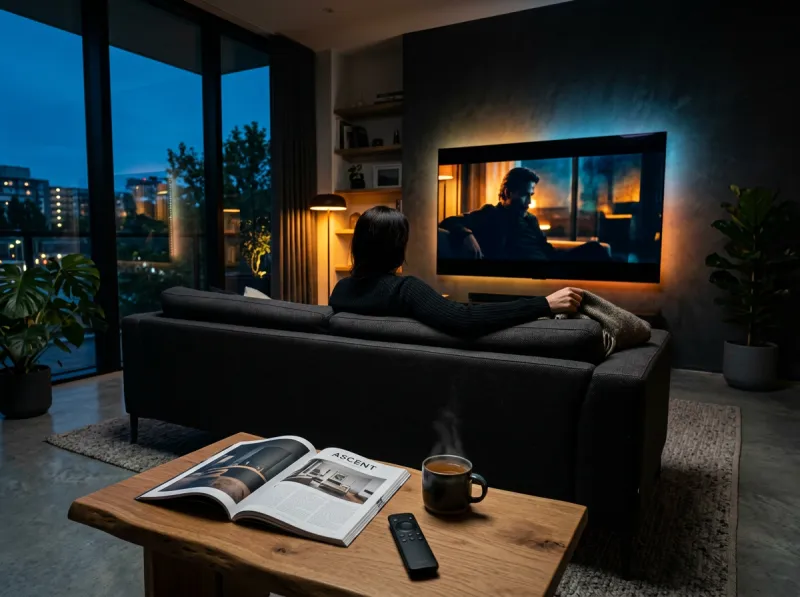
Photo source by SR Digital - Alinear Indonesia (Adobe FireFly – Gemini AI)
As streaming platforms continuously fund limited mini-series with budgets rivaling major studio blockbusters—while securing A-list directors and actors—the line separating television from the big screen becomes incredibly blurred. This landscape forces conventional cinemas and international film festivals to redefine their unique value proposition, all while the limited narrative format continues to prove itself as a much more fluid and relevant medium for capturing the complexities of modern life.
Viewing Time Management as an Act of Mindful Recreation
For urban residents, maintaining absolute control over media consumption hours is a modern luxury. The mini-series format inherently supports flexible yet controlled viewing habits, effectively preventing the binge-watching fatigue often tied to long-form shows running for dozens of hours. Audiences can easily complete an entire story arc over the course of a few evenings or a single weekend, leaving them with a clean sense of narrative closure.
This flexibility transforms the act of watching into a measured form of mental recreation. Without being tethered to draining, long-term viewing commitments, audiences still receive substantial, intellectually challenging content. The mini-series beautifully respects the natural rhythm of modern life, offering premium entertainment that moves in perfect harmony with a balanced lifestyle.

Photo source by SR Digital - Alinear Indonesia (Adobe FireFly – Gemini AI)
"The mini-series wins the hearts of modern viewers because it respects our time; it delivers feature-film depth without demanding months of commitment."
Storytelling in the Age of Instant Information
The longevity of this trend highlights that the quality of an audio-visual work is no longer measured by how long it can hold an audience hostage in front of a screen, but rather by how intense of a narrative impact it leaves within a concise framework. Limited formats force creators to return to the core mechanics of powerful storytelling: focus, efficiency, and sharp execution.
In a fast-moving world, the capacity of a format to convey profound messages compactly is a remarkable aesthetic achievement. The mini-series is not a mere compromise between cinema and network television; it is the evolution of storytelling most prepared to meet the future of digital lifestyles.
"The true genius of a mini-series is its courage to end the story at its absolute peak, leaving a lasting impression on the viewer's mind instead of stretching episodes out for the sake of mere analytics."
Photo source by SR Digital - Alinear Indonesia (Adobe FireFly – Gemini AI)
WRAP-UP!
The entertainment industry's equivalent of a curated open space—The Return of Mini-Series—proves that precision in duration and depth of content are the primary drivers in captivating contemporary audiences. Through an efficient six-to-eight-episode structure, this format delivers mature story resolution without sacrificing plot complexity. Powered by adaptive digital platform distribution and production values on par with the silver screen, the mini-series firmly cements its place as the narrative format most aligned with the wellness and time-management needs of modern society.
To optimize your next viewing experience, select a curated mini-series with a maximum length of eight episodes for this coming weekend. Allocate your viewing time in measured blocks—such as two episodes per evening—to maintain cognitive focus and properly appreciate the visual details of the cinematography. Turn off smart device notifications during playback to create an intimate, distraction-free environment, and take a few moments after the final credits roll to reflect on the plot resolution before diving into critic reviews on digital platforms to fuel your cultural discussions.
Looking to feature your brand and business through Alinear Indonesia’s Smart Publication & Smart Activation? Share your experience and consult with us today. Click here!



![Alinear Indonesia [Brand/Business Registration] Smart Publication & Smart Activation](https://www.alinear.id/assets_web/images/qr-codes/3e23e7dab43d2e72854ba48a3a09cf75.jpg)