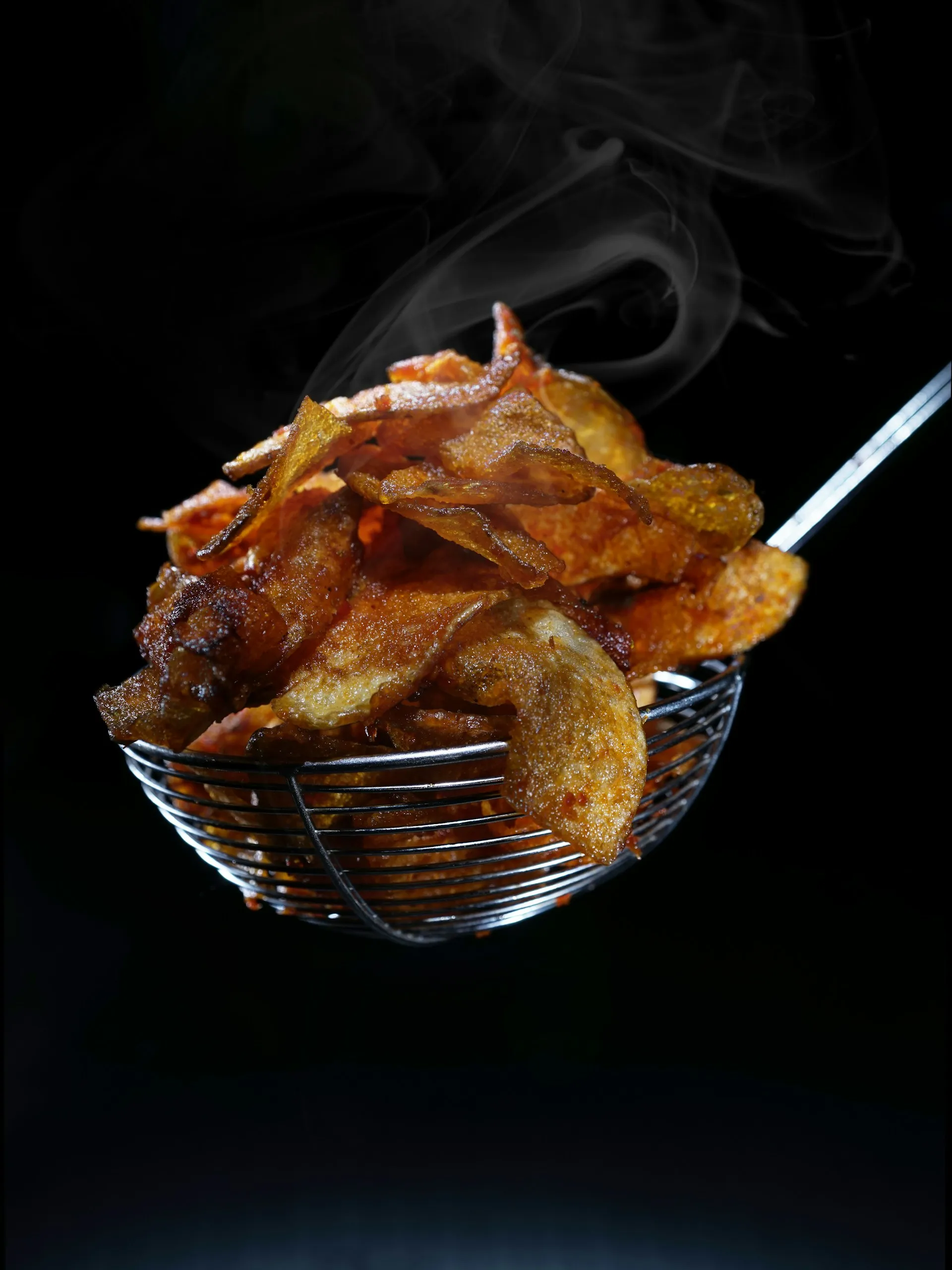

Photo by Ario Suhodo on Unsplash
The global culinary landscape is experiencing an intense transformation in how contemporary demographics perceive and interact with heat. For decades, global tabletops have been dominated by conventional, vinegar-stabilized fluid hot sauces—homologous mixtures prioritizing immediate acidity and linear capsaicin spikes. While these traditional hot sauces deliver a quick, unmistakable shock to the sensory system, their fluid nature often saturates the palate, masking the delicate subtleties of the underlying dish. This aggressive profile has triggered a noticeable exhaustion among elite epicurean explorers who prioritize depth over sheer chemical heat.
This sensory fatigue has cleared a rapid path for the mainstreaming of The Smoked Chili Crisp. This oil-suspended, texture-driven phenomenon disrupts legacy assumptions by completely avoiding uniform liquid states. Rejecting simple acidic preservation, this gourmet innovation balances structural crunch, rich essential oils, and deep aromatic complexity. Its market success marks a clean departure into a culinary era where capsaicin is no longer utilized as a blunt instrument of tongue endurance, but as a multi-layered textural canvas designed to elevate a primary dish while respecting its core flavor identity.
The critical variable distinguishing premium Smoked Chili Crisp from standard chili oils is the introduction of controlled artisan wood-smoking to the solid elements prior to oil immersion. Before encountering the hot oil bath, select dried peppers, crushed garlic, and shallots are subjected to a rigorous, low-and-slow cold smoking cycle using professional woods like hickory, applewood, or mesquite.
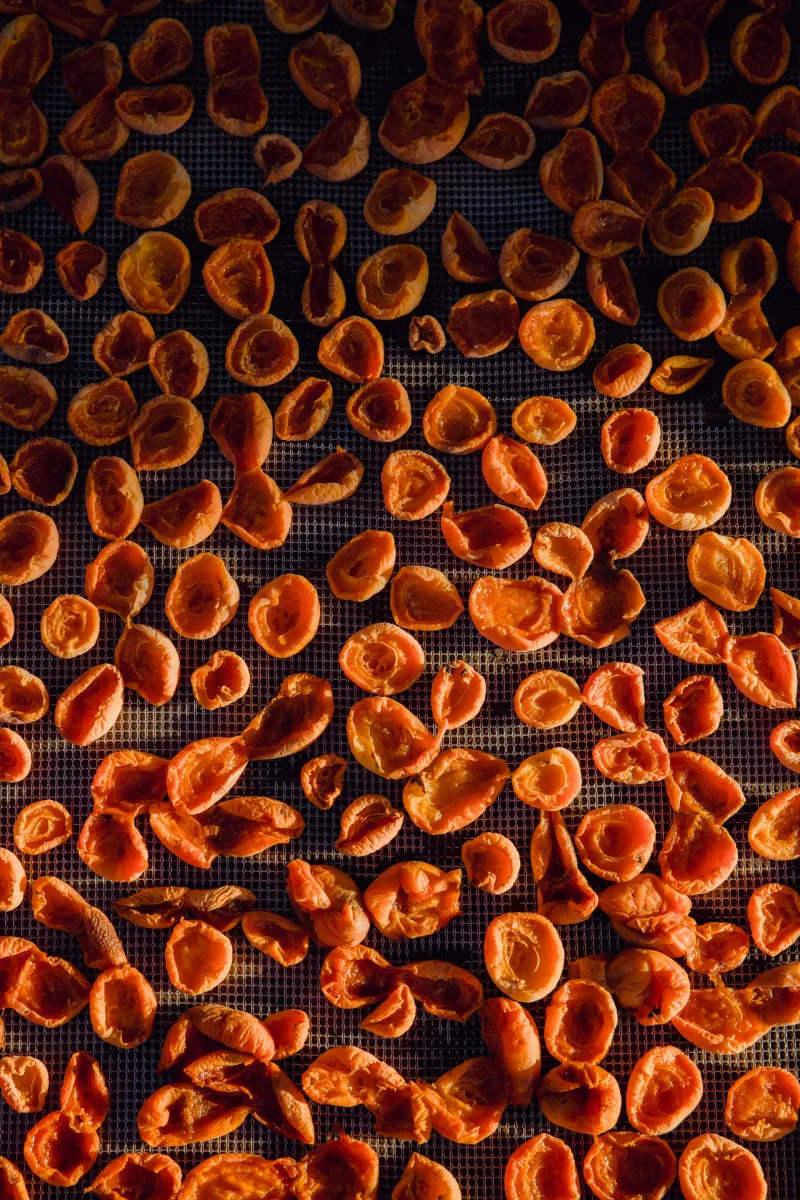
Photo by Jason Leung on Unsplash
On a molecular level, this technique traps volatile guaiacol and syringol smoke phenols securely inside the lipid-rich seeds and cellular fibers of the pepper. When these smoked solids are flash-fried under micro-calibrated thermal limits within premium neutral oil, the remaining internal moisture flashes off immediately, creating a durable, hyper-crisp structure that resists oil saturation. The resulting sensory experience unfolds in a calculated three-dimensional sequence: an immediate, highly satisfying auditory crunch that discharges savory allium notes, followed by a blooming capsaicin wave, and capped by a lingering, deeply elegant hardwood smoke finish at the back of the palate.
Because of its unique physical structure, this smoky lipid suspension effortlessly crosses traditional culinary boundaries. It has completely outgrown its heritage classification as an exclusively East Asian table accompaniment, operating instead as a fluid flavor broker across international high-end menus.
When drizzled over traditional, hand-pulled oriental wheat noodles, the Smoked Chili Crisp anchors the clear, savory broth with a heavy, aromatic core. Yet, the true potential of the condiment manifests when deployed across heavy Western compositions—such as wood-fired sourdough pizzas or rich, egg-and-cheese-bound pastas. The infused smoke phenols and volatile oils act as a sophisticated palate cleanser, effortlessly slicing through dense dairy fats and cheese matrices while introducing a startling, hyper-crisp contrast that changes the texture of every bite.
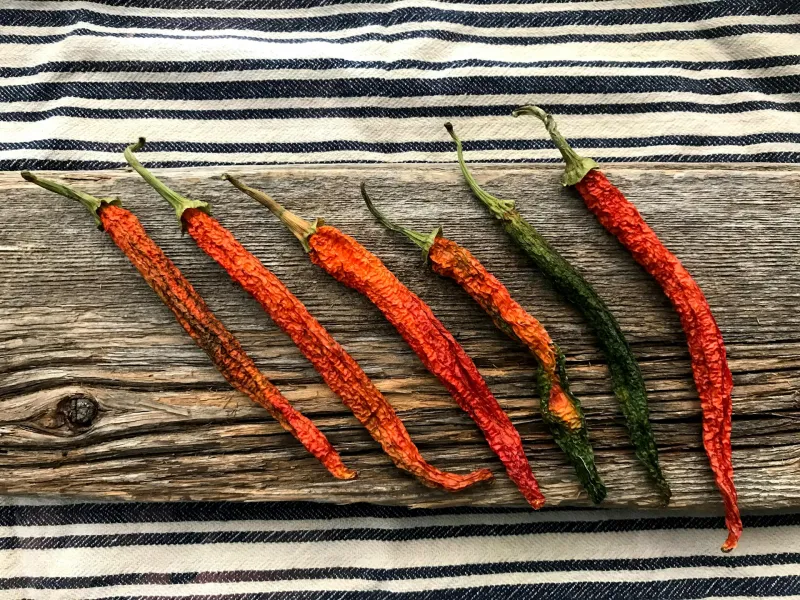
Photo by Krista Bennett on Unsplash
The institutional rise of this premium condiment is deeply tied to the commercial F&B sector's growing commitment to responsible, high-efficiency kitchen management [Circular Kitchen: Zero-Waste Restaurants]. In contemporary kitchens operating under progressive environmental frameworks, the production of an house-crafted Smoked Chili Crisp serves as an elegant solution for upcycling pristine, underutilized organic ingredients.
Garlic trimmings bypassed during primary prep, clean shallot outer layers, and the stems of fresh, aromatic kitchen herbs are systematically diverted from waste streams and placed inside the kitchen's smoking chambers for dehydration. When fried, these upcycled aromatics yield an intensely concentrated savory profile that far outpaces generic commercial baselines. By institutionalizing this circular workflow, modern restaurants do more than merely eliminate organic trash hauled to landfills; they manufacture a high-margin, artisanal house asset that defines the brand’s proprietary flavor profile.
"The Smoked Chili Crisp proves that the future of capsaicin is no longer a juvenile race up the Scoville scale, but a mature appreciation of acoustic texture matched with real wood smoke."
As the gourmet consumer goods market moves to industrialize and mass-distribute smoked chili oils, long-term market authority will belong exclusively to brands that protect real process integrity. True wood-smoking requires an uncompromising investment of time, human curation, and temperature monitoring—a reality that directly conflicts with corporate processing frameworks that lean on cheap, chemical liquid smoke additives to reduce factory overhead.
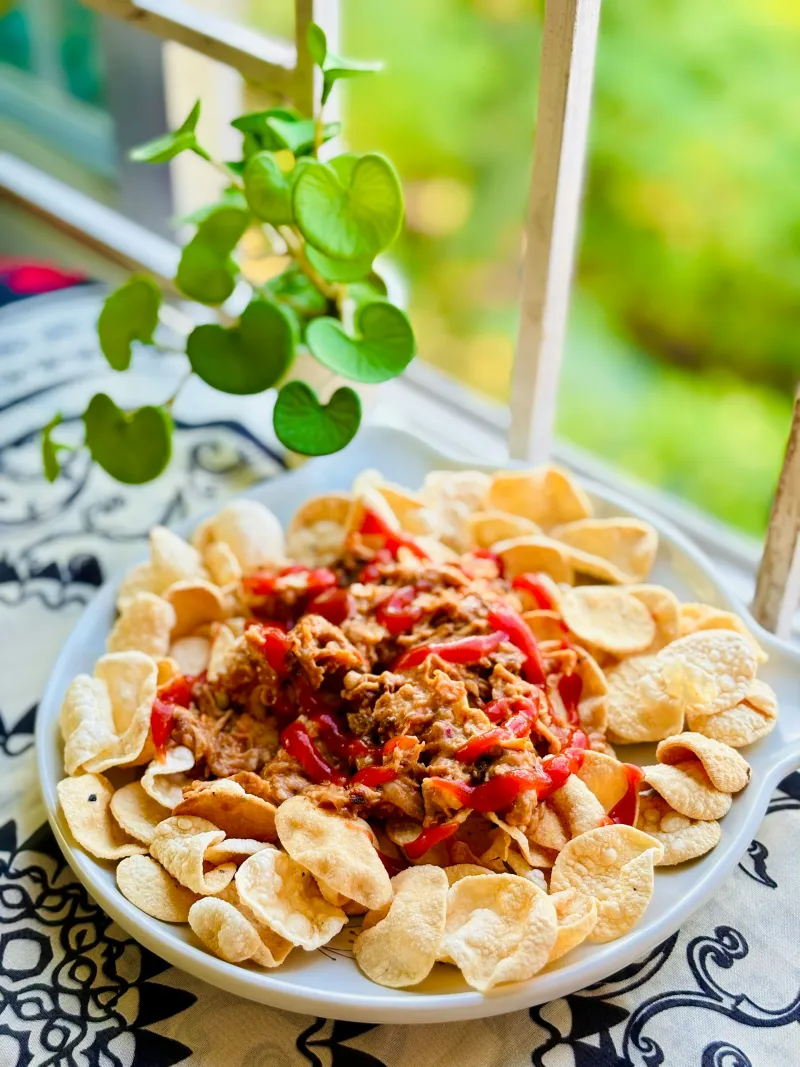
Photo by Jasmin Shultana on Unsplash
By explicitly rejecting synthetic chemical flavorings and adhering to slow, authentic fire craft, artisan producers of Smoked Chili Crisp confirm an eternal culinary truth: true sensory depth cannot be engineered through synthetic shortcuts. Inside the crimson glow of each glass jar lies a contemporary culinary blueprint—one that honors bold flavor exploration, champions responsible closed-loop kitchen metrics, and sets an uncompromised standard for the global evolution of modern food culture.
"When the crisp crunch of artisanal chili oil embraces the ethos of a circular kitchen, a simple jar does more than elevate a dish—it defines the exact parameters of responsible culinary luxury."
WRAP-UP!
The adoption of The Smoked Chili Crisp across modern b2c retail and high-end restaurant systems highlights a sophisticated urban demographic that values complex textures and process transparency. By merging advanced smoke sciences with cross-menu utility, this premium condiment effectively expands its operational scope beyond traditional boundaries. Its natural alliance with sustainable kitchen metrics like [Circular Kitchen: Zero-Waste Restaurants] confirms that the elite tier of the F&B sector will continue to be dominated by innovations that satisfy human sensory desires while actively respecting the ecosystem's structural boundaries.
Expand your culinary horizons this evening; introduce a teaspoon of genuine, small-batch Smoked Chili Crisp to a premium cheese plate or your morning soft-boiled eggs to observe how hardwood smoke phenols instantly transform basic proteins into a complex gourmet experience.
Looking to feature your brand and business through Alinear Indonesia’s Smart Publication & Smart Activation? Share your experience and consult with us today. Click here!
![Smart Publication+ 3.0: Build Authority. Drive Growth. [Technical Specification]](https://www.alinear.id/assets_web/images/qr-codes/bd48cb0acb2d9586570edb8a7303cee1.jpg)