


Photo source by Alinear Indonesia Docs. (Adobe FireFly – Gemini AI)
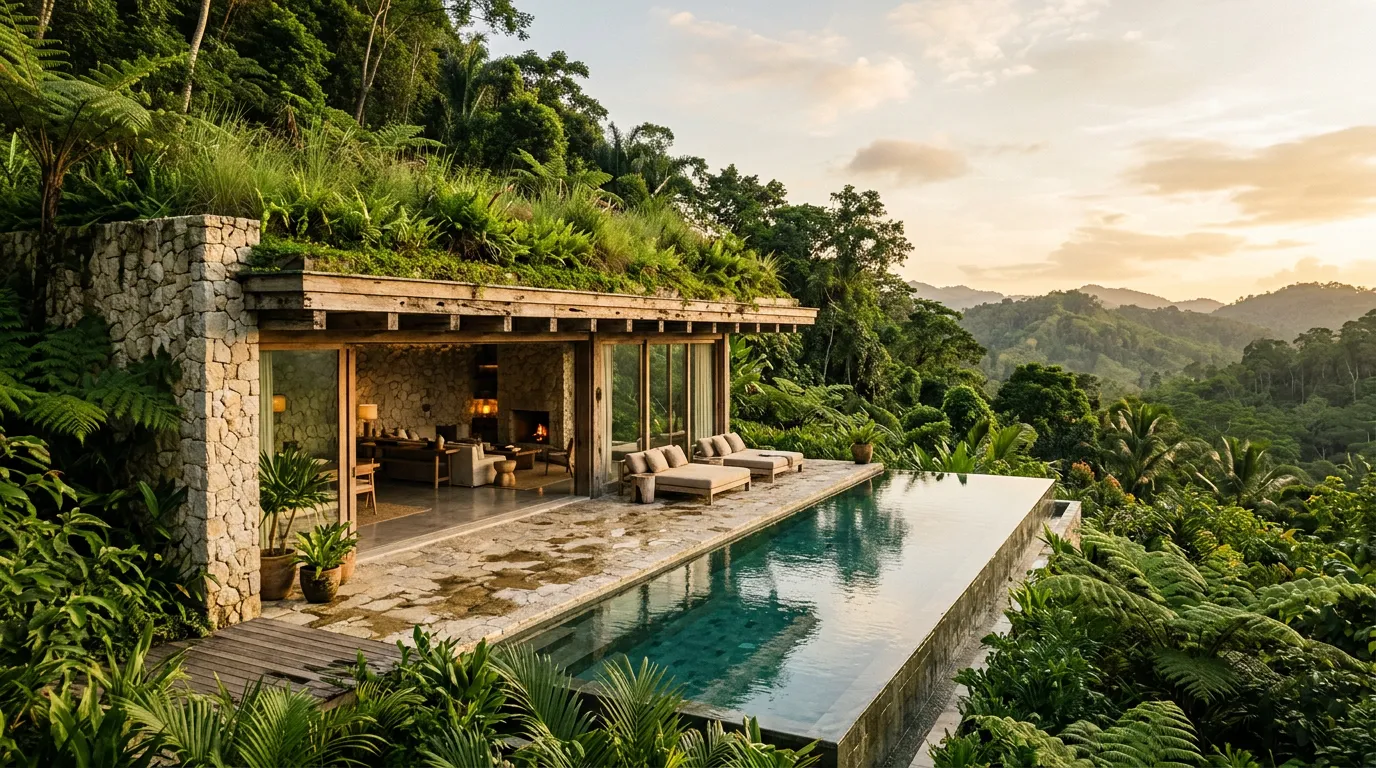
Luxury resort design in tropical regions has long been dominated by massive vertical structures built prominently along coastlines or atop ridges. This conventional approach frequently sacrifices the integrity of the original landscape, creating sharp visual contrasts and disrupting local ecosystems. Furthermore, buildings entirely exposed to intense tropical solar radiation require massive amounts of mechanical energy to maintain comfortable internal temperatures—a distinct contradiction to modern sustainability principles.
These ecological and aesthetic limitations are driving spatial designers to reverse architectural orientation. Instead of building upward to challenge nature, the focus has shifted toward integrating structural volume beneath the earth's surface. This architectural evolution redefines luxury not through what appears grand from a distance, but through how a space can elegantly disappear into the native topography: Quiet Luxury Aesthetics: Mode Minimalis.
The core of subterranean architectural engineering relies on utilizing existing hillside contours as the primary structural shell. This process avoids massive land flattening, applying instead precision excavation methods that follow the natural curves of the earth. The reinforced concrete structures forming the roofs and walls of the villas are engineered specifically to withstand the lateral and vertical pressures exerted by the surrounding soil mass.
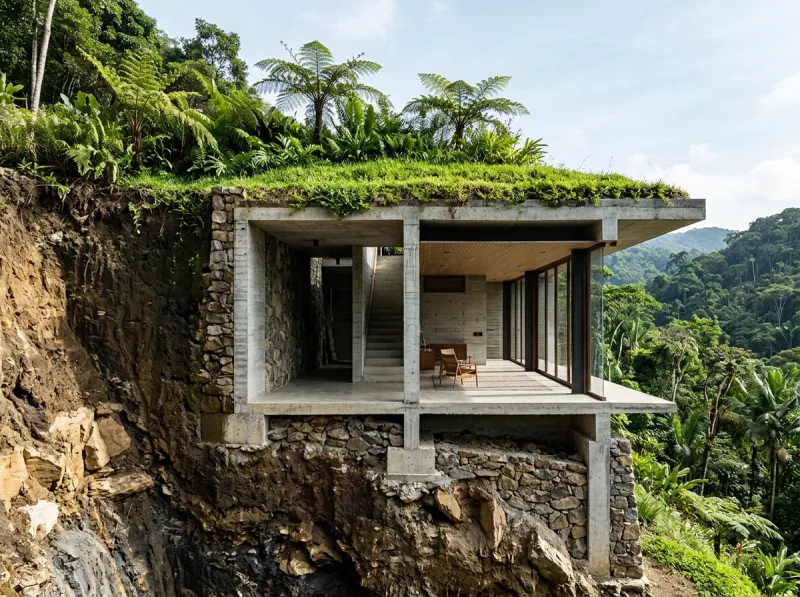
Photo source by Alinear Indonesia Docs. (Adobe FireFly – Gemini AI)
Once the primary structure is secured, the topsoil layer is restored over the roof of the building (green roof) and replanted with endemic native vegetation. This approach ensures that from both aerial and horizontal viewports, the resort remains virtually invisible, preserving the continuous visual flow of the green landscape while providing optimal rainwater catchment functionality.
From an environmental performance perspective, the primary advantage of subterranean structures is the utilization of the earth's high thermal mass. Soil acts as a highly effective natural insulator that dampens extreme external temperature fluctuations. In hot tropical climates, subsurface soil temperatures remain stable and significantly lower than the ambient air temperature above ground.
By embedding the majority of the building's walls into the hillside, villa interiors gain a constant passive cooling effect. Solar heat is absorbed by the earth layer before it can penetrate the living spaces, maintaining a consistently cool indoor environment without a heavy reliance on mechanical air conditioning (AC) systems. This reduction in energy consumption directly lowers operational overhead while providing exceptional acoustic insulation from external noise.
The interiors of these subterranean villas are curated to reinforce the sense of a natural sanctuary through an honest, understated material palette. Internal walls that do not interface directly with the earth are clad in rough-cut local stone, combined with matte-finished exposed concrete floors and unpolished timber elements.
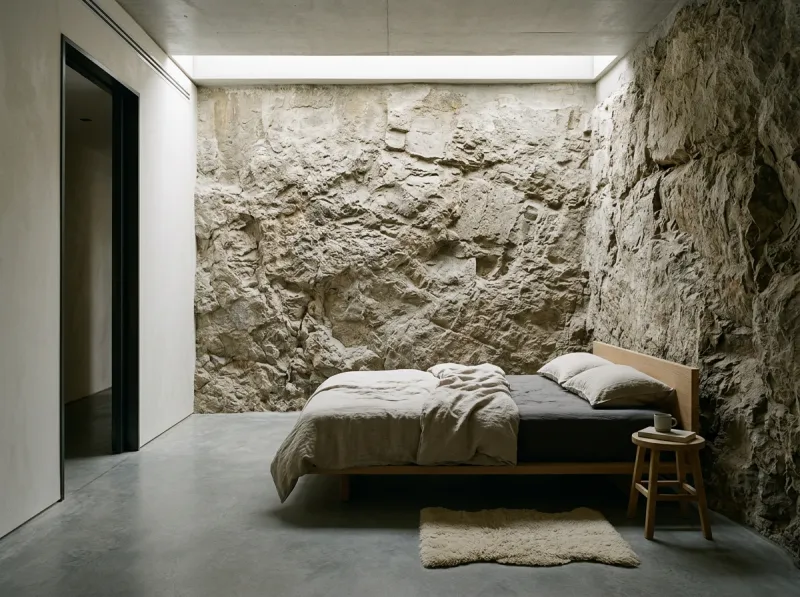
Photo source by Alinear Indonesia Docs. (Adobe FireFly – Gemini AI)
"True modern luxury no longer shouts toward the skyline; it chooses to blend elegantly within the embrace of the earth."
The design deliberately leaves portions of the original bedrock uncovered during excavation exposed in specific corners, such as in the bathrooms or micro-meditation spaces. The interaction between the cool texture of natural stone, strategic natural light introduced through skylights, and low-profile furniture layouts creates an atmosphere of intimate, serene luxury free from artificial pretense.
Looking at the long-term projections of the high-end travel industry, the implementation of subterranean resort models reflects an evolution in mature consumer preferences. Modern premium travelers no longer seek traditional, high-consumption luxury symbols; instead, they desire experiences offering total isolation, peace of mind, and a genuine commitment to ecosystem preservation.
By combining calculated structural engineering with a deep respect for native topography, earth-sheltered architecture proves that commercial living spaces can be constructed in complete harmony with nature. This format sets a new benchmark for tropical architecture where the boundary between human intervention and the earth's landscape dissolves entirely, delivering an enduring, sustainable sanctuary.
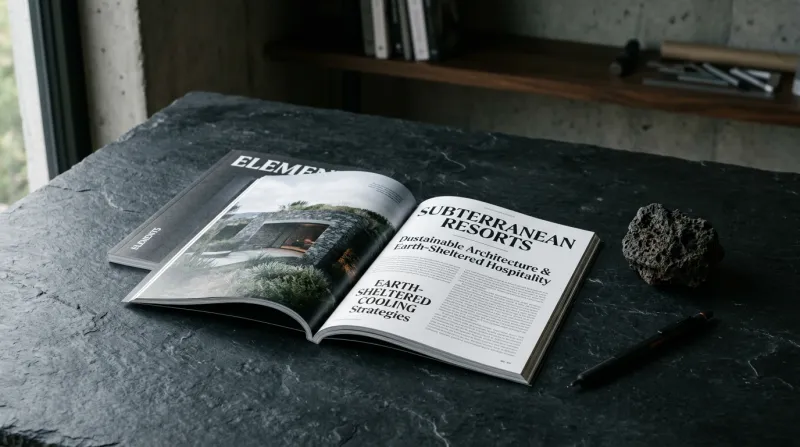
Photo source by Alinear Indonesia Docs. (Adobe FireFly – Gemini AI)
"Subterranean architecture demonstrates that by respecting native topography, we can design spaces that are naturally cool and emotionally intimate."
WRAP-UP!
The transition toward subterranean structures offers an innovative solution within the tropical luxury accommodation industry. By utilizing earth mass as a natural thermal shield and minimizing visual impacts on the landscape above, this resort model successfully aligns premium comfort with strict ecological principles. This approach affirms that the future of premium travel architecture lies in a design's ability to adapt and merge with the earth's natural contours, delivering a private, sustainable, and profoundly meaningful stay experience.
Evaluate your investment portfolio or upcoming travel plans; seek exclusive destinations that implement embedded landscape architecture, experience the natural comfort of subterranean sanctuaries, and observe how minimalist design pairs perfectly with tropical ecosystem stability.
Looking to feature your brand and business through Alinear Indonesia’s Smart Publication & Smart Activation? Share your experience and consult with us today. Click here!



![Alinear Indonesia [Brand/Business Registration] Smart Publication & Smart Activation](https://www.alinear.id/assets_web/images/qr-codes/3e23e7dab43d2e72854ba48a3a09cf75.jpg)