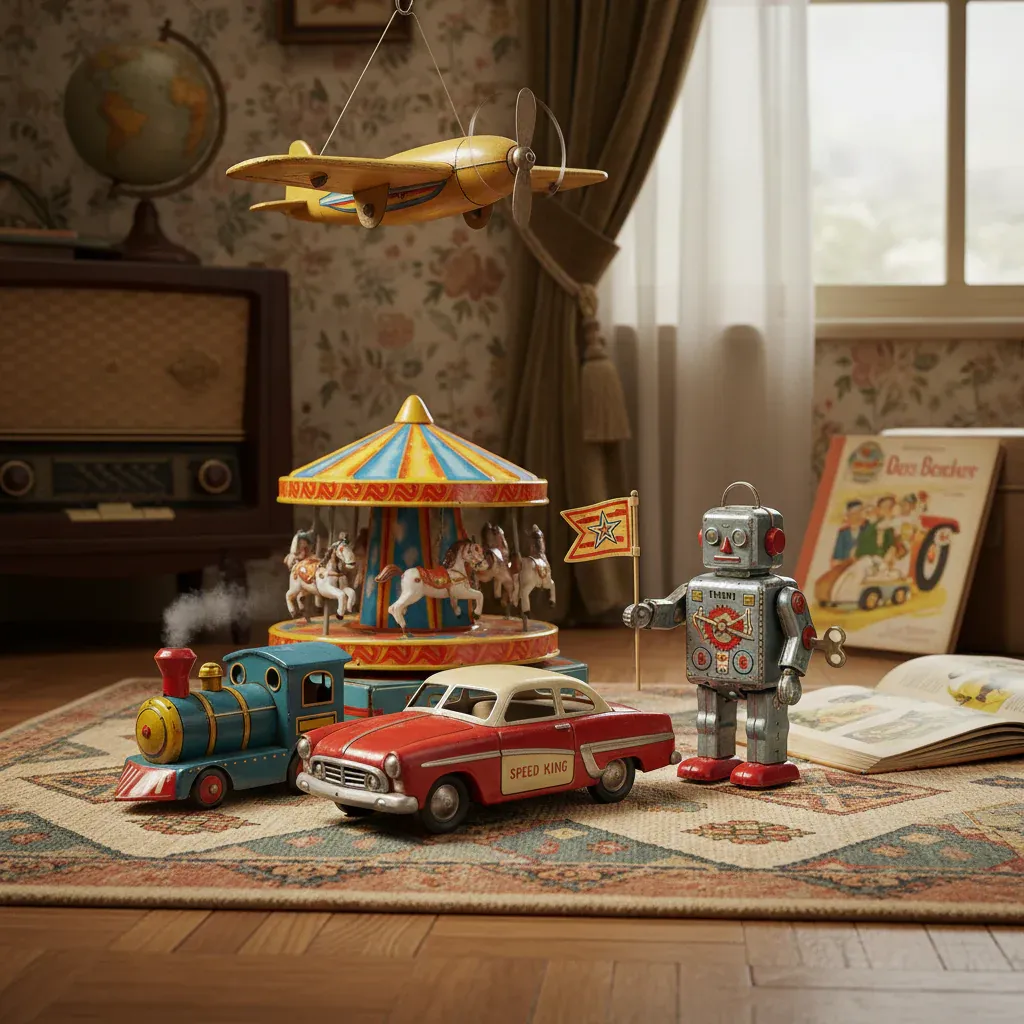

Photo source by DT Collectable Toys (Web)
The contemporary luxury pop culture market is experiencing profound fatigue driven by material standardization. The global collectible landscape is oversaturated with injection-molded PVC, clinical vinyl figures, and mass-market digital resin replicas. While these modern production methods deliver exact structural precision, the final products frequently feel sterile, devoid of weight, and detached from human artisanship. The flawless, textureless surfaces of modern industrial plastics offer no friction, creating an emotional void for sophisticated urban professionals who seek objects containing historical friction and narrative depth.
This sensory vacuum has triggered a powerful corrective shift within elite collecting circles: The Tinplate Toy Renaissance. This movement elevates original mechanical sheet-metal toys produced during the mid-20th century far above their original play value. Rather than treating these metal works as mere retro playthings, the modern design sector values them as legitimate industrial sculptures. Placing a vintage metal artifact on a modern executive desk is no longer a casual display of nostalgia; it is a clear statement rejecting digital conformity, celebrating instead raw materiality stamped with an authentic temporal patina.
The foundational brilliance of a vintage tinplate toy lies in the harmony between early commercial graphic arts and pure mechanical engineering, completely unassisted by digital microchips or disposable chemical batteries. During the golden era of production, sheet-metal manufacturing relied on complex zinc lithography techniques, where oil-resistant color plates pressed vivid illustrations directly onto thin sheets of rolled steel before the metal was stamped, cut, and folded by hand-operated industrial presses.
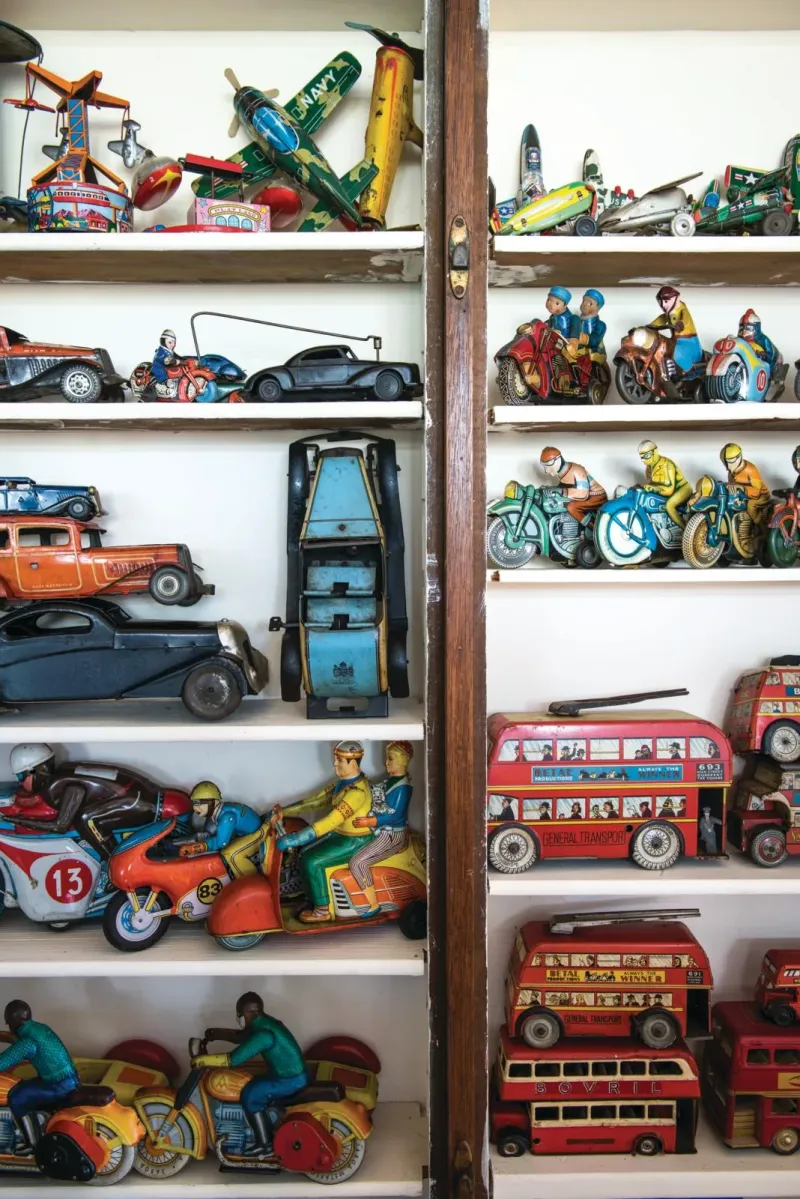
Photo source by Homes & Antiques (Web)
Mechanically, these objects are propelled by an intricate, self-contained heart known as clockwork mechanics. The collector interacts with the object by turning an external brass winding key, compressing an internal high-carbon steel leaf spring. Upon release, this stored potential energy discharges precisely through a network of miniature brass or steel gears, translating raw tension into rhythmic, highly acoustic movements: a lithographed robot walking with mechanical friction while throwing internal flint sparks, or a space-age racing car accelerating with a clear, analog metallic hum. This structural independence from batteries ensures an operational lifespan that easily outlasts modern smart hardware.
Within elite metropolitan workspaces, the desktop configuration (desk setup) has transcended simple operational ergonomics, evolving into a highly visible canvas for personal identity and design literacy. Within this context, tinplate toys serve as potent visual anchors. Their naive retro graphics, bold primary color compositions softened by natural aging (patina), and geometric space-age silhouettes introduce vital warmth and organic texture to environments otherwise dominated by cold, monochrome aluminum monitor arms and minimalist glass surfaces.
On premium executive desks, these mechanical objects are increasingly paired with other historical analog tools, such as curated [Vintage Camcorders - Gen Z's]. The structural dialogue between the printed sheet-metal surfaces of a vintage robot and the heavy, textured magnesium bodies of legacy handheld video gear creates an intellectual sanctuary celebrating the zenith of 20th-century industrial design. This visual pairing projects clear design authority, indicating that the occupant values tactile complexity, mechanical honesty, and an era when engineering projects were rendered with physical pens rather than automated software code.

Photo source by Homes & Antiques (Web)
The structural scaling of this trend has catalyzed a robust micro-economy within the luxury antiquarian market. The financial valuation of a rare tinplate toy is no longer tethered to its historical retail baseline, but is dictated by maker scarcity (such as legendary post-war Japanese houses like Nomura, Masudaya, or Horikawa), the preservation state of the exterior lithography, and the presence of original illustrated cardboard packaging.
"On an executive desk governed by invisible digital algorithms, the rhythmic tick of a vintage clockwork tin toy is a powerful reminder that true design brilliance requires physical, mechanical reality."
This reality has fostered an elite network of specialized archivists and restoration masters across major global capitals. Restoring a mid-century sheet-metal work requires extreme technical discipline: safely neutralizing micro-oxidation without stripping the original oil-based lithograph inks, and re-calibrating internal gear teeth to ensure flawless clockwork energy release. A certified, masterfully restored tinplate specimen now commands investment-grade authority on the global art market, experiencing steady value appreciation as a new generation of wealth recognizes these toys as finite monuments of pop culture history.
Evaluating the long-term path of premium hobbies, The Tinplate Toy Renaissance reveals itself as far more than a passing decorative fad. As the global workspace deepens its reliance on invisible artificial intelligence algorithms and simulated virtual realities, the human psychological need to touch, wind, and visibly comprehend physical mechanical systems will become intense.

Photo source by Bonhams Cars (Web)
A clockwork toy offers a vital, grounding reality buffer. Every rotation of the heavy brass key and every subsequent click of a steel foot against a solid hardwood desk celebrates the beautiful limitations of the physical world. By actively collecting, documenting, and protecting these metal kinetic sculptures, contemporary tastemakers preserve a critical chapter of human mechanical ingenuity. Even as our civilizations race into a fully digital future, an essential part of the modern consciousness will always choose to return to the honest, rhythmic heartbeat of the ancient spring.
"Curating legacy handheld camcorders alongside mid-century space robots is not a superficial design choice; it is a monument of respect built by a modern professional for an era when industrial tools possessed genuine soul."
WRAP-UP!
The expansion of The Tinplate Toy Renaissance demonstrates that a collectible asset secures its ultimate value when it fulfills the human desire for tactile friction and authentic material history. Through the integration of self-sustained clockwork movements and traditional zinc lithography, these vintage objects have broken free from their original retail origins to sit securely alongside modern fine art. Their aesthetic alignment with adjacent analog movements like the cultivation of a [Vintage Camcorders - Gen Z's] emphasizes that the most compelling contemporary spaces are those that masterfully balance tomorrow's speed with yesterday's design integrity.
Upgrade your creative space immediately; secure a verified, original mid-century mechanical tinplate artifact from a trusted antiquarian house, place it within your primary sightline, and integrate the ritual of winding its mechanism during cognitive breaks to restore deep mental focus.
Looking to feature your brand and business through Alinear Indonesia’s Smart Publication & Smart Activation? Share your experience and consult with us today. Click here!
![Smart Publication+ 3.0: Build Authority. Drive Growth. [Technical Specification]](https://www.alinear.id/assets_web/images/qr-codes/bd48cb0acb2d9586570edb8a7303cee1.jpg)