


Photo source by Alinear Indonesia Docs. (Adobe FireFly – Gemini AI)
Within the traditional hierarchy of high-end watch collecting, attention has historically gravitated toward the elements that shout the loudest: complex mechanical movements, heavy platinum cases, or rare factory serial numbers stamped across the dial. However, as the global market becomes saturated with liquid capital—allowing anyone with a substantial bank account to acquire identical reference numbers within hours—conventional symbols of luxury are losing their mystique.
The apex tier of watch enthusiasts is moving into a far more intimate, intellectual phase of curation. They are no longer content with displaying a watch exactly as it left the factory floor; instead, they alter its visual narrative with historical context. This is where The Vintage Chrono-Strap Archival emerges as the ultimate differentiator between financial power and true intellectual taste. Fitting an investment-grade timepiece with an authentic, decades-old handmade strap is no longer an accessory choice—it is a quiet declaration of independence from commercial homogeneity.
The fundamental allure of a leather strap produced in the 1960s lies in a single word that holds sacred weight among antique scholars: Patina. Patina on premium leather is not decay; it is a live biographical ledger of the material's existence. Decades of atmospheric oxidation, exposure to sunlight, and contact with the natural oils of previous wearers accumulate to produce deep gradients of amber, honey, and scorched bronze that possess an extraordinary visual depth.
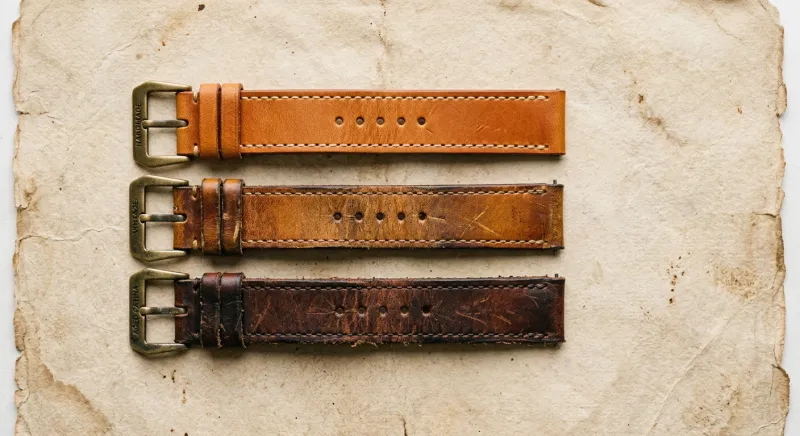
Photo source by Alinear Indonesia Docs. (Adobe FireFly – Gemini AI)
Modern manufacturing technology, despite the implementation of laser distressing and chemical weathering (faux-patina), consistently fails to replicate this organic honesty. Mid-century European artisans utilized slow vegetable-tanning processes involving oak bark and chestnut extracts that lasted for months. This slow method left the fibrous structures of the hides completely intact and breathable, allowing the strap to record the passage of time in a manner that synthetic or fast-tanned modern leather simply cannot mimic.
The most compelling design development within this archival subculture is the rise of subversive pairing—the deliberate act of mounting a half-century-old strap onto a cutting-edge modern timepiece.
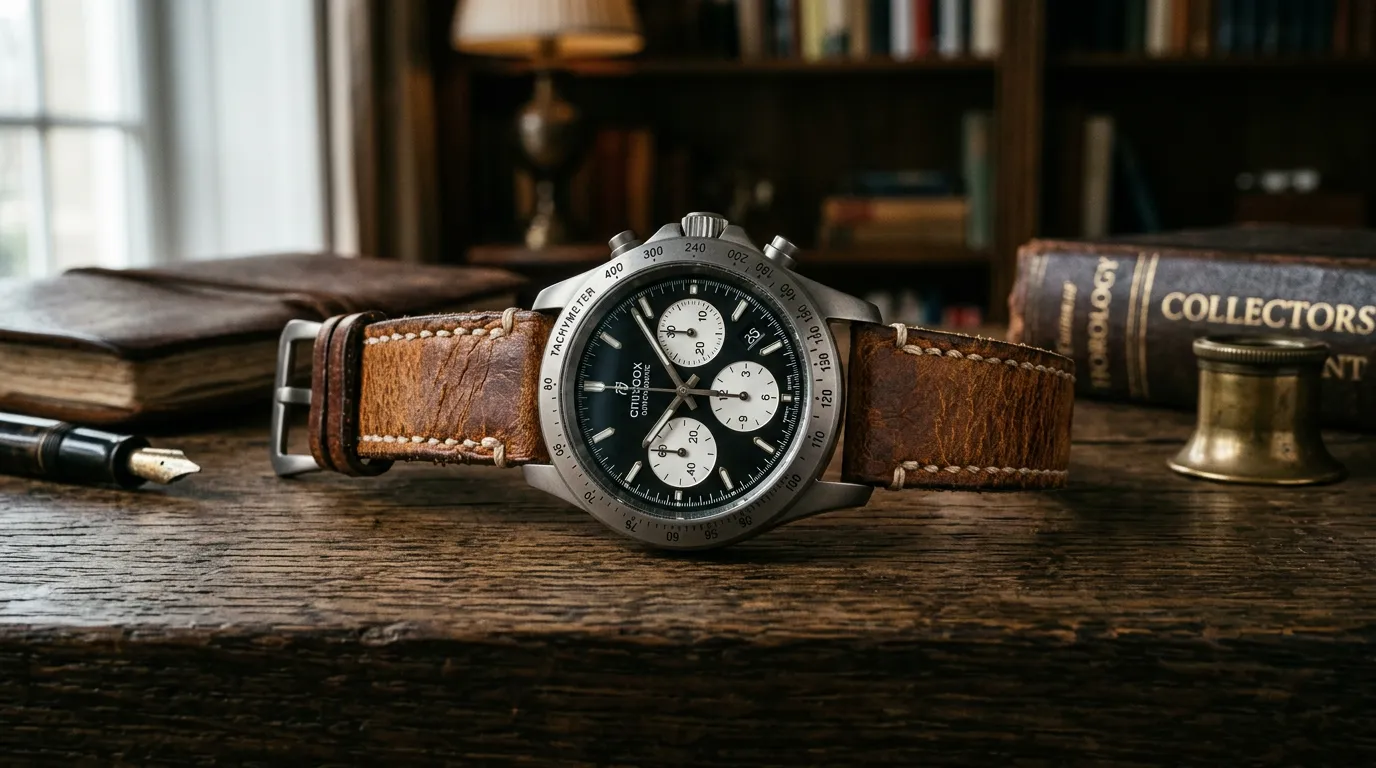
Consider a modern, hyper-precise chronograph encased in matte grey grade-5 titanium or laboratory-engineered black ceramic, paired with a 1965 French calfskin strap showing natural creasing and deep caramel tones. The resulting visual tension is striking. The weathered leather instantly softens the sterile perfection of modern luxury materials, injecting organic warmth into an otherwise cold piece of engineering. This design vocabulary signals that the owner understands contemporary innovation, yet anchors their personal style in deep historical reverence.
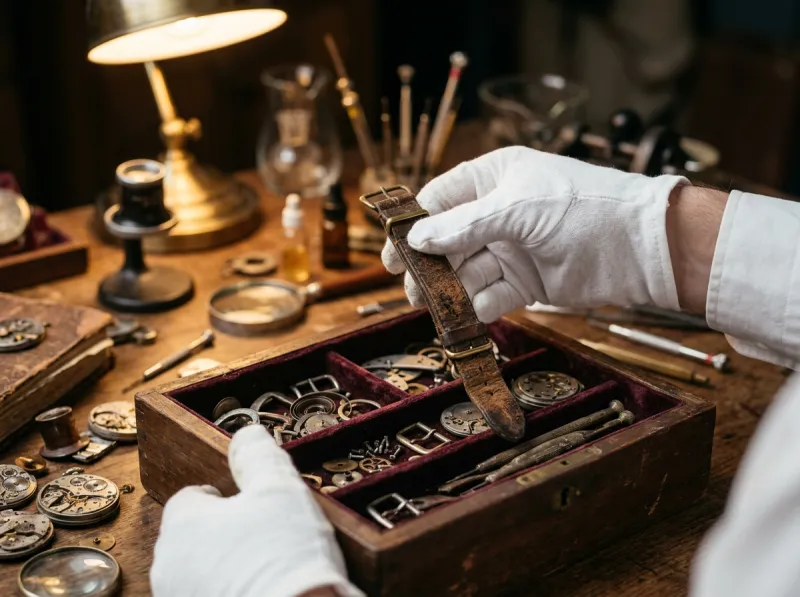
Photo source by Alinear Indonesia Docs. (Adobe FireFly – Gemini AI)
Securing a structurally sound, investment-grade vintage strap is an architectural quest requiring immense patience. These straps are not displayed in illuminated showcases within high-end shopping malls. They are uncovered in weathered wooden crates held by multi-generational artisanal families in Florence, Paris, or small Swiss communes near Geneva—often resting alongside remnants of military surplus or forgotten equestrian tack.
"The ultimate luxury of a time-built horological piece no longer stops at the ticking precision of its movement; it is found in the warmth of the history wrapped around your wrist."
Collectors will dedicate months to corresponding with independent antiquarians and bidding in private auctions just to win a piece of leather measuring less than 20 cm in length. Its economic valuation is completely decoupled from the cost of the material; instead, it is driven by the extreme scarcity of the hand-stitched saddle craftsmanship that has survived the elements across decades.
Ultimately, the pursuit of The Vintage Chrono-Strap Archival shifts the paradigm of how modern individuals project social status. In an era where material wealth is easily displayed, the ability to curate rare, understated details becomes the primary currency of high society.
An archival leather strap is a form of luxury that remains invisible to the uninitiated onlooker from a distance, yet it ignites profound conversation among true connoisseurs in private circles. It sends a quiet, unmistakable signal: that you possess the time to study history, the taste to select imperfections, and the soul to appreciate the beautiful scars left behind by time on the face of raw leather.
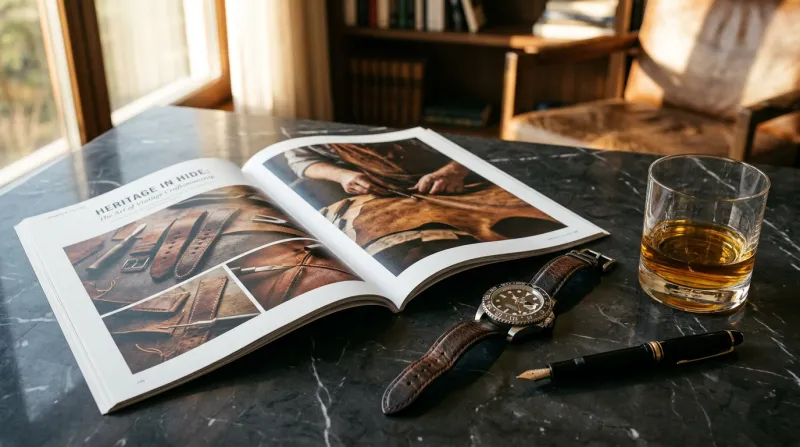
Photo source by Alinear Indonesia Docs. (Adobe FireFly – Gemini AI)
"Modern factories can turn out millions of watch components a day, but they cannot manufacture a single hour of honest, slow-aged leather patina."
WRAP-UP!
The rise of The Vintage Chrono-Strap Archival confirms that the vanguard of luxury hobbyist culture will always gravitate toward imperfect authenticity. Successfully marrying contemporary watch engineering with the inimitable texture of aged leather demonstrates that an object’s value is dictated by its narrative depth. This subculture elevates watch collecting from a hobby of acquisition to a profound exercise in spatial art and cultural intelligence.
Expand your approach to timepiece curation beyond the boundaries of standard watch cases; invest time into sourcing accessory components that hold genuine historical authenticity, establish relationships with independent leather archivists, and employ the concept of subversive modern-vintage pairing to inject undeniable character into your collection.
Looking to feature your brand and business through Alinear Indonesia’s Smart Publication & Smart Activation? Share your experience and consult with us today. Click here!



![Alinear Indonesia [Brand/Business Registration] Smart Publication & Smart Activation](https://www.alinear.id/assets_web/images/qr-codes/3e23e7dab43d2e72854ba48a3a09cf75.jpg)