



Photo by Jannes Jacobs on Unsplash
Within the spectrum of human behavior, a psychological phenomenon routinely triggers public confusion: the condition where a hostage or abuse victim displays empathy, affection, or even a drive to protect the person inflicting harm. Popular narratives tend to oversimplify this response as a character flaw or irrational compliance. Aligning with the behavioral sociology critiques curated by The Atlantic, this viewpoint ignores the complexity of the human brain when facing existential threats.
Identified as Stockholm Syndrome, modern psychology recognizes this condition not as a formal clinical psychiatric diagnosis, but as a defense mechanism activated by the subconscious mind. When rational logic perceives no escape route, the brain re-engineers emotional perception to mitigate the perpetrator's anger and preserve basic survival.
Historical Roots and the Anatomy of Psychological Triggers
The term originates from a bank hostage crisis in Stockholm, Sweden, in August 1973. Over a six-day standoff, hostages developed close emotional ties with the armed robbers, later refusing to testify against them in court and even fundraising for their legal defense post-release.

Photo by Priscilla Du Preez 🇨🇦 on Unsplash
Experts identify four primary pillars triggering the activation of Stockholm Syndrome:
–– Existential Threat: Victims find themselves trapped where perpetrators hold absolute control over life and death.
–– Perception of Small Kindness: Amidst terror, minor gestures (e.g., providing food or permitting restroom use) are perceived as immense kindness.
–– Information Isolation: Victims are cut off from outside perspectives, making the abuser’s viewpoint the sole reality.
–– Perceived Inability to Escape: The brain concludes that physical resistance invites certain death.
The Subconscious Survival Loop
The formation of this emotional bond runs linearly through forced psychological adaptation.
Subconsciously, the victim's mind processes a simple calculation: "If I make the abuser like and understand me, they will not destroy me." The resulting empathy acts as an emotional shield designed to soften potential threats from the controlling party.
Trauma Bonding in Urban Relationships
Although born from kidnapping incidents, similar dynamics frequently appear in everyday life, particularly within Domestic Violence (DV) cases and toxic romantic partnerships.
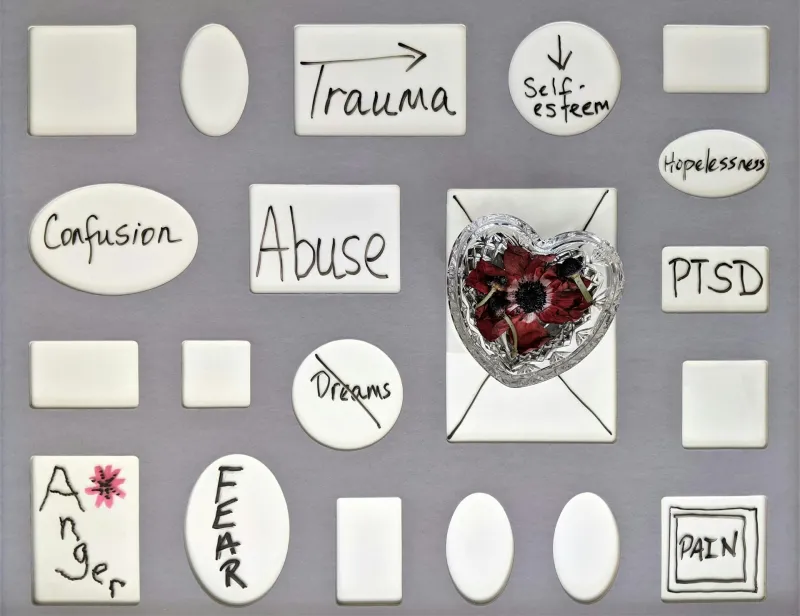
Photo by Susan Wilkinson on Unsplash
"Stockholm Syndrome is not proof of a victim's affection for crime, but proof of how extraordinarily the human brain fights to engineer empathy in order to preserve life."
Victims subjected to repeated gaslighting and physical abuse often become trapped in a trauma-bonding cycle. Manipulation phases interspersed with periods of "remorse and kindness" from the abuser forge deep emotional dependencies. Victims frequently justify abusive behavior, reject family interventions, and resist leaving hazardous relationships because their brains have grown accustomed to interpreting minor acts of kindness as proof of genuine love.
Restoring Awareness and Sustained Recovery
Healing an individual from the impacts of Stockholm Syndrome demands a structured approach free from social judgment and victim-blaming. Criticizing victims for "staying with their abuser" only deepens their emotional isolation.
Recovery requires trauma-informed psychological therapies, such as Cognitive Behavioral Therapy (CBT). Through CBT, survivors learn to recognize that past empathy functioned as a natural survival adaptation rather than a sign of emotional weakness. Rebuilding personal boundaries and establishing safe communal spaces serve as vital keys to guiding them back toward independent, healthy reality.

Photo by Toa Heftiba on Unsplash
"Judging victims trapped in abusive relationships reflects a profound failure to understand trauma; true recovery begins when we offer unconditional safe spaces, not criticism."
WRAP-UP!
Stockholm Syndrome represents a complex manifestation of human psychological defense under extreme terror and isolation. Understanding this trauma-bonding dynamic remains vital for society to dismantle victim-stigma and focus on providing proper recovery support.
For families, advocates, or mental health professionals managing these cases, experts advise avoiding aggressive confrontations regarding the victim's feelings, gently introducing psychoeducation concerning trauma bonds, and facilitating specialized therapy sessions to restructure safety patterns and personal autonomy.
Looking to feature your brand and business through Alinear Indonesia’s Smart Publication & Smart Activation? Share your experience and consult with us today. Click here!



![Alinear Indonesia [Brand/Business Registration] Smart Publication & Smart Activation](https://www.alinear.id/assets_web/images/qr-codes/3e23e7dab43d2e72854ba48a3a09cf75.jpg)