

Photo by Rishabh Pammi on Unsplash
For over a century, the core contract of cinema remained fundamentally unchanged: audiences sat in dark rooms, willingly surrendering their agency to consume a fixed, linear narrative pre-determined by a filmmaker. This passive relationship defined the emotional architecture of storytelling. However, the maturation of global digital infrastructure has introduced a profound evolution in viewer behavior, shifting the audience from distant observers into active directors of their own visual entertainment.
The emergence of interactive cinema marks a structural departure from traditional filmmaking boundaries. Global streaming platforms are moving beyond rigid, single-axis timelines to experiment with adaptive choose-your-own-adventure narrative matrices. Powered by optimized playback engines, modern content delivery can now construct highly personalized viewing paths, fundamentally altering how entertainment properties capture long-term consumer focus.
Re-Engineering the Writers' Room
Transitioning a cinematic project into an adaptive ecosystem demands a complete overhaul of traditional screenwriting structures. The classic three-act screenplay template is replaced by vast, complex narrative trees consisting of interconnected choice nodes, parallel character arcs, and multiple conditional conclusions.
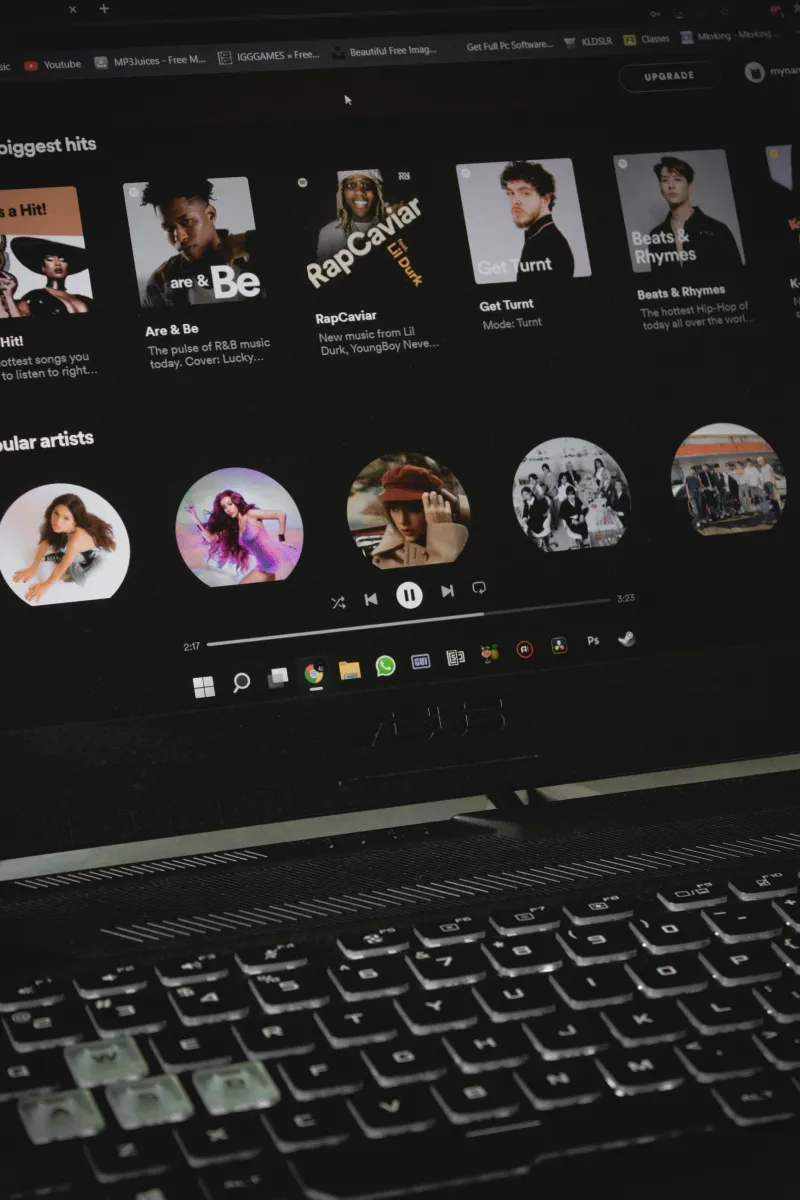
Photo by Ainur Iman on Unsplash
This format complicates the structural engineering of the narrative. A single decision point—such as a character choosing between two routes or revealing a hidden truth—requires the creative team to write, shoot, and render entirely distinct subsequent realities. Writers must maintain emotional consistency and logical continuity across dozens of potential storylines, ensuring that no matter which permutation a viewer selects, the narrative retains its thematic depth and pacing integrity.
Seamless Choice Execution
The true differentiator of modern interactive media is the complete elimination of visible technical barriers. Early iterations of interactive video suffered from noticeable latency, pausing the action awkwardly while waiting for a user input to load. Today's streaming platforms utilize advanced predictive buffering algorithms to create fluid, uninterrupted narrative handoffs.
As a viewer approaches a narrative choice point, the content delivery system quietly pre-loads the initial seconds of all possible video paths in the background. When the choice is made via a remote, mouse, or touch screen, the player transitions to the chosen path instantly, avoiding dropped frames or loading loops. This technical fluidity ensures that real-time storytelling feels entirely cinematic, preserving immersion while granting the user total agency over character fates and structural outcomes.
Photo by Samuel Regan-Asante on Unsplash
Balancing Consumer Agency with Artistic Vision
The rise of consumer-driven narratives has triggered intense debate within the global film community regarding the preservation of artistic intent. Traditionalists, often associated with prestige international festival circuits, argue that true cinema requires a definitive, uncompromising directorial voice [The Death of Cinema? Festival vs OTT]. From this perspective, leaving structural plot points to audience whim risks turning a cohesive work of art into a hollow, gamified novelty.
Conversely, champions of interactive formats view this evolution as an expansion of creative capability rather than a limitation. They argue that designing a high-quality branching universe requires deeper directorial skill, forcing creators to build multi-layered realities that reveal new nuances upon repeat viewings. This collision of philosophies demonstrates that interactive streaming does not necessarily signal the decline of traditional cinema, but rather introduces a distinct, highly sophisticated medium that operates on an entirely different set of sensory rules.
Hyper-Personalization and Audience Longevity
From a business standpoint, adaptive narratives offer unparalleled consumer data and engagement potential. Every choice selected by a global audience provides studios with real-time analytics on viewer preferences, character popularity, and moral thresholds. These insights allow production companies to de-risk future projects by identifying precisely what narrative choices resonate most with specific demographics.

Photo by Declan Sun on Unsplash
"Interactive cinema dismantles the historical wall between creator and consumer, turning the screen from a distant mirror into a responsive playground where every choice carries consequence."
Furthermore, interactive features naturally encourage high replay rates. A viewer who finishes one version of a movie is highly incentivized to return to the beginning to explore alternate choices, effectively multiplying the consumption value of a single production. As streaming technology continues to merge with real-time rendering software, the future points toward a hyper-personalized landscape where the boundary between cinema, gaming, and interactive art completely dissolves, creating an unshakeable bond between the viewer and the screen.
"The brilliance of an adaptive narrative rests not in giving the viewer total freedom, but in ensuring that every alternate pathway tells a meaningful story that the director meticulously designed."

WRAP-UP!
The dawn of the interactive cinema era represents a major milestone in digital entertainment design. By merging complex non-linear screenwriting with advanced real-time streaming infrastructure, adaptive media transforms film from a passive pastime into an immersive, participatory experience. As technology continues to evolve, the studios that master this delicate balance of artistic vision and audience agency will lead the next generation of global entertainment.
The next time you encounter an interactive title on your streaming dashboard, pay close attention to how choice indicators are integrated into the framing, and consider how each decision alters the thematic tone of the story.
Looking to feature your brand and business through Alinear Indonesia’s Smart Publication & Smart Activation? Share your experience and consult with us today. Click here!