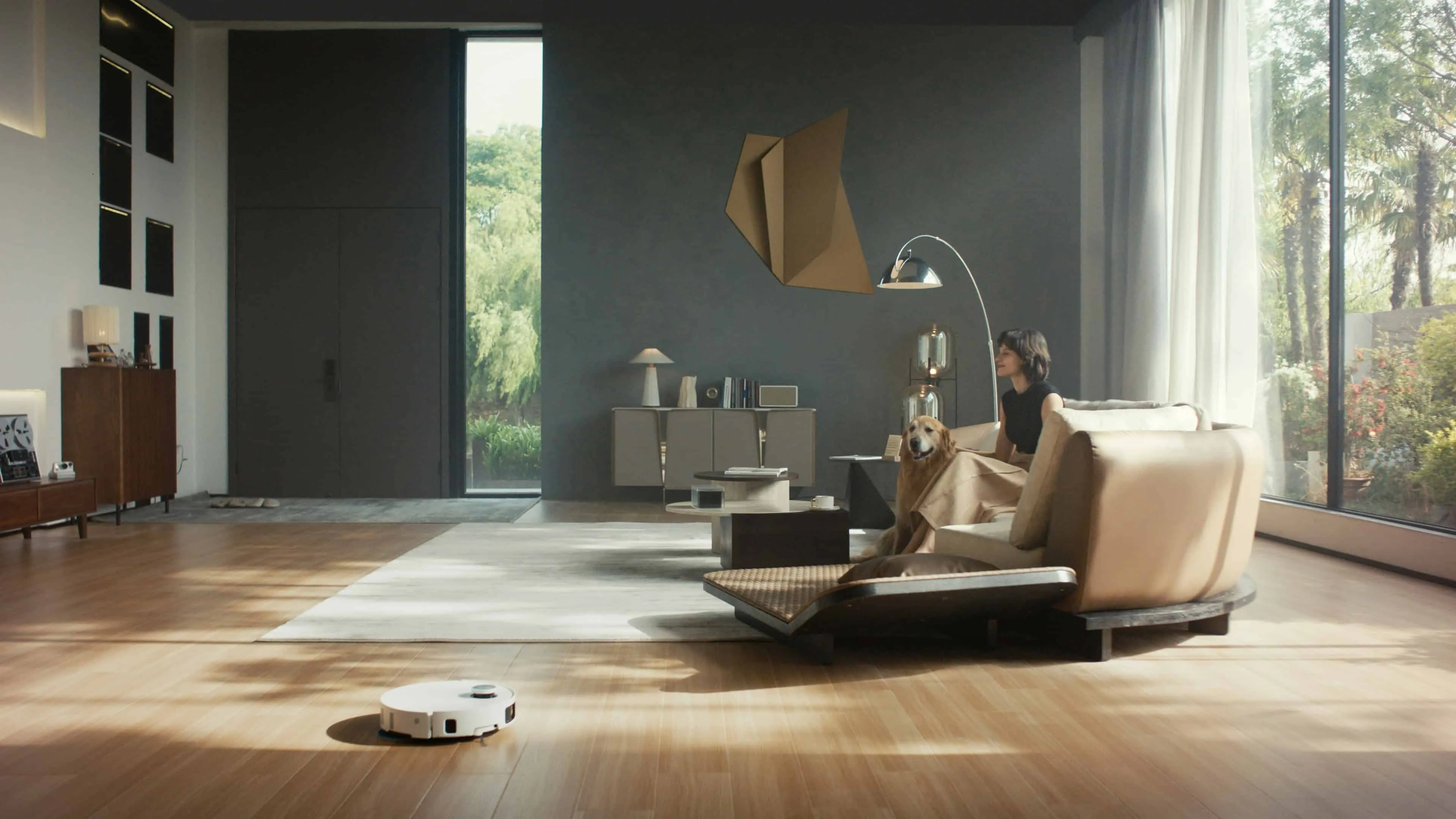

Photo by Dreame Vacuum Cleaner on Unsplash
In contemporary interior design, minimalism extends far beyond a visual aesthetic; it operates as a structural philosophy prioritizing tranquility, expansive layouts, and the complete elimination of visual clutter. Simultaneously, modern living requires spaces to maximize efficiency through smart home ecosystems. Friction often arises when conventional automation hardware arrives with bulky chassis, tangled adaptors, and exposed black cables that break the pure, continuous lines of an architectural envelope.
The ultimate challenge for the modern homeowner is capturing the convenience of digital efficiency without sacrificing visual serenity. In response to this dilemma, the intersection of design and engineering has generated Invisible Tech. This paradigm shifts our relationship with domestic hardware: technology no longer functions as an overt ornament, but instead embeds itself organically into the very fabric of building materials and custom millwork.
Curating Invisible Tech: Flush-Mount Interfaces and Stealth Controls
The journey toward an automated, aesthetic interior begins by eliminating prominent control points on the wall. Standard plastic switch plates grouped in high-traffic corridors frequently disrupt the visual continuity of a surface. To mitigate this, transition to flush-mount smart switches designed to sit perfectly level with the drywall or blend directly behind natural finishes like wood veneer and marble panels.
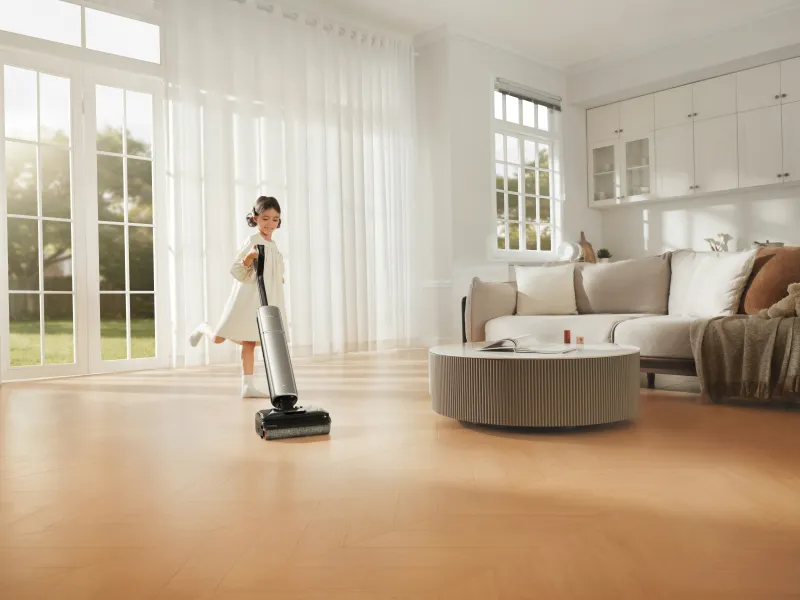
Photo by Dreame Vacuum Cleaner on Unsplash
Advanced control interfaces utilize inductive or proximity sensor mechanics, allowing entire wall surfaces or integrated countertops to act as invisible tactile keypads. A user simply taps a specific zone on a timber finish to trigger custom lighting scenes, leaving no mechanical button exposed to the eye. This reduction in visual noise preserves minimalist purity while creating a magical, intuitive interaction framework.
Architectural Smart Lighting: The Atmospheric Impact of Concealed Sources
Illumination functions as the soul of minimalist design, and smart lighting technology offers absolute flexibility to recalibrate room atmospheres instantly. However, the core principle of minimalist smart integration is simple: display the light effect, conceal the source. Avoid visible track systems or prominent bulb fixtures that pierce the continuity of the ceiling line.
Utilize concealed smart linear LED strips embedded within architectural coves, beneath floating millwork, or along recessed baseboard profiles. By leveraging wireless communication protocols like Zigbee or Thread, these hidden fixtures adjust their color temperature dynamically alongside the human circadian rhythm—shifting from an energetic cool white at midday to a soothing warm amber at dusk—all without a single exposed cable breaking the view.
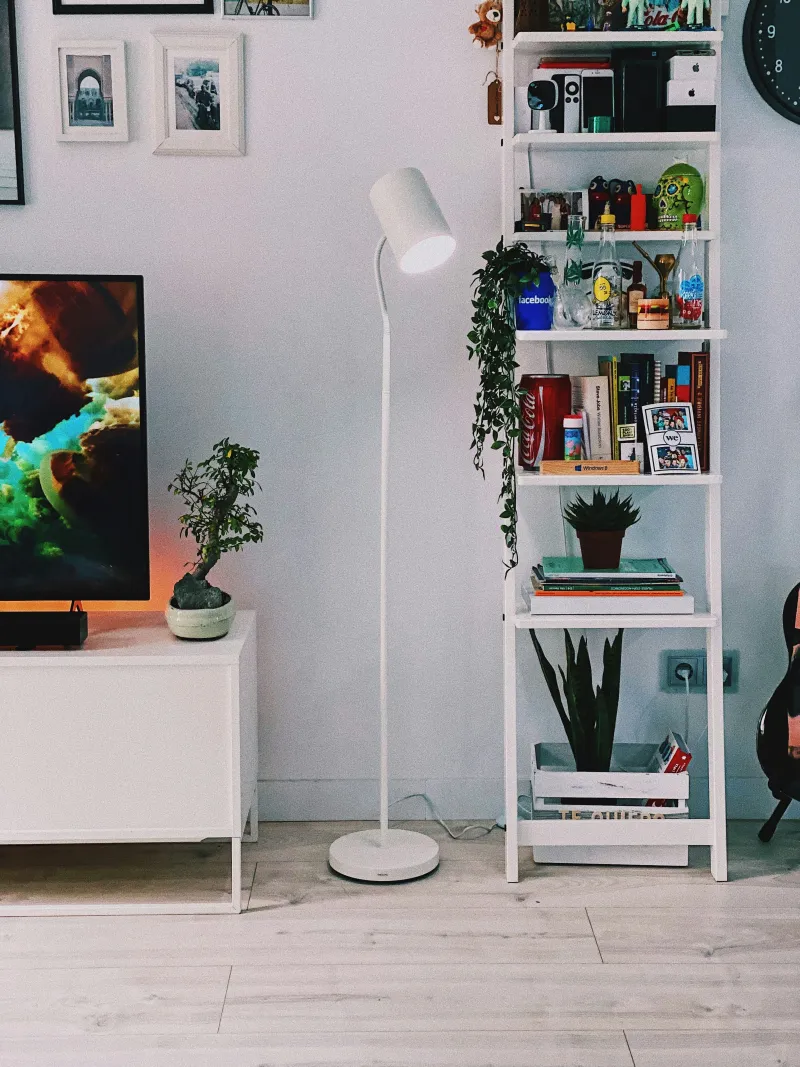
Photo by Álvaro Bernal on Unsplash
Hidden Audio and Smart Hubs: Removing Hardware Footprints From View
Smart speakers and home automation hubs are frequent contributors to surface-level wire clutter on media consoles. To satisfy minimalist principles, the physical form of these devices should be removed from view entirely. High-end audio manufacturers and interior architects frequently collaborate to implement architectural in-wall and in-ceiling speakers, plastered over with specialized acoustic paint or wallpaper that remains completely acoustically transparent.
By moving technology into structural elements, spaces remain free of messy charging cables. Voice assistants retain optimal sensitivity to vocal commands—locking doors, modulating climate control, or streaming audio—yet their presence is experienced purely as a function, rather than an uncoordinated physical object occupying space.
Spatial Relevance: Intelligent Solutions for Compact Micro-Apartments
The invisible technology framework achieves its highest utility when applied to high-efficiency compact living spaces [Compact Living: Micro Apartments]. In spatial footprints with restricted volume, every square centimeter is vital; any layer of visual clutter immediately compounds the perception of confinement.

Concealed wireless smart home integration acts as a spatial solver, reducing the need for massive physical furniture pieces. Micro smart motion sensors can be hidden in subtle corners to automate hallway illumination, removing the requirement for wall switches entirely. Integrated smart thermostats blend into centralized climate grilles. The functional efficiency of these wireless ecosystems allows tightly proportioned homes to maintain elite utility while preserving a sense of openness, air circulation, and minimalist calm.
"The finest smart home technology within a minimalist interior is not hardware that captivates the eye with futuristic styling, but systems experienced purely through effortless function while remaining completely unseen."
Blueprint Protocol: Tactical Integration Planning from Day One
Successfully execution of a stealth smart home relies entirely on early, meticulous planning. Attempting to retrofit smart devices into an interior after renovations conclude often results in unrefined visual compromises. Impeccable invisible tech must be integrated during the architectural blueprint design phase.
Engage interior designers and smart systems integrators early to map dedicated conduit pathways, assign hidden utility closets for core automation panels, and detail precise wall recesses for flush sensor placements. Ensure the home's wireless infrastructure is reinforced with a robust mesh Wi-Fi network distributed behind structural panels, allowing all smart components to communicate smoothly without external antennas or uncoordinated supplementary wiring breaking the home's aesthetic flow.
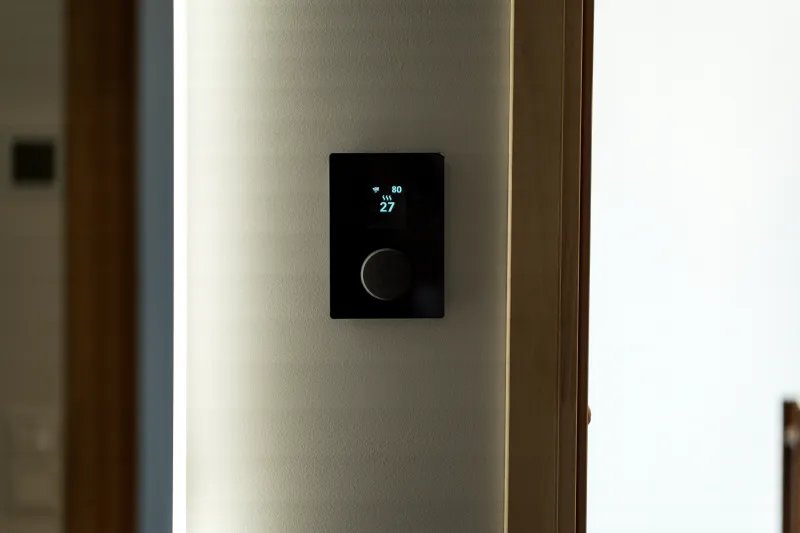
"Digital minimalism is the art of concealing advanced engineering behind clean architectural lines, transforming a living space into a sanctuary that is simultaneously intelligent and serene."
WRAP-UP!
Harmonizing smart home capability with minimalist aesthetics is a seamless reality in modern design. By prioritizing invisible tech hardware, hidden architectural illumination, and planning utility pathways during early blueprint phases, modern living environments can achieve peak intelligence without losing their minimalist soul. The secret rests on a commitment to prioritizing functional essence while hiding the physical footprint of technology to preserve spatial peace.
Before acquiring your next smart device, analyze its architecture: verify if it offers robust wireless connectivity and a form factor capable of being integrated directly into your current millwork or wall cavities.
Looking to feature your brand and business through Alinear Indonesia’s Smart Publication & Smart Activation? Share your experience and consult with us today. Click here!