

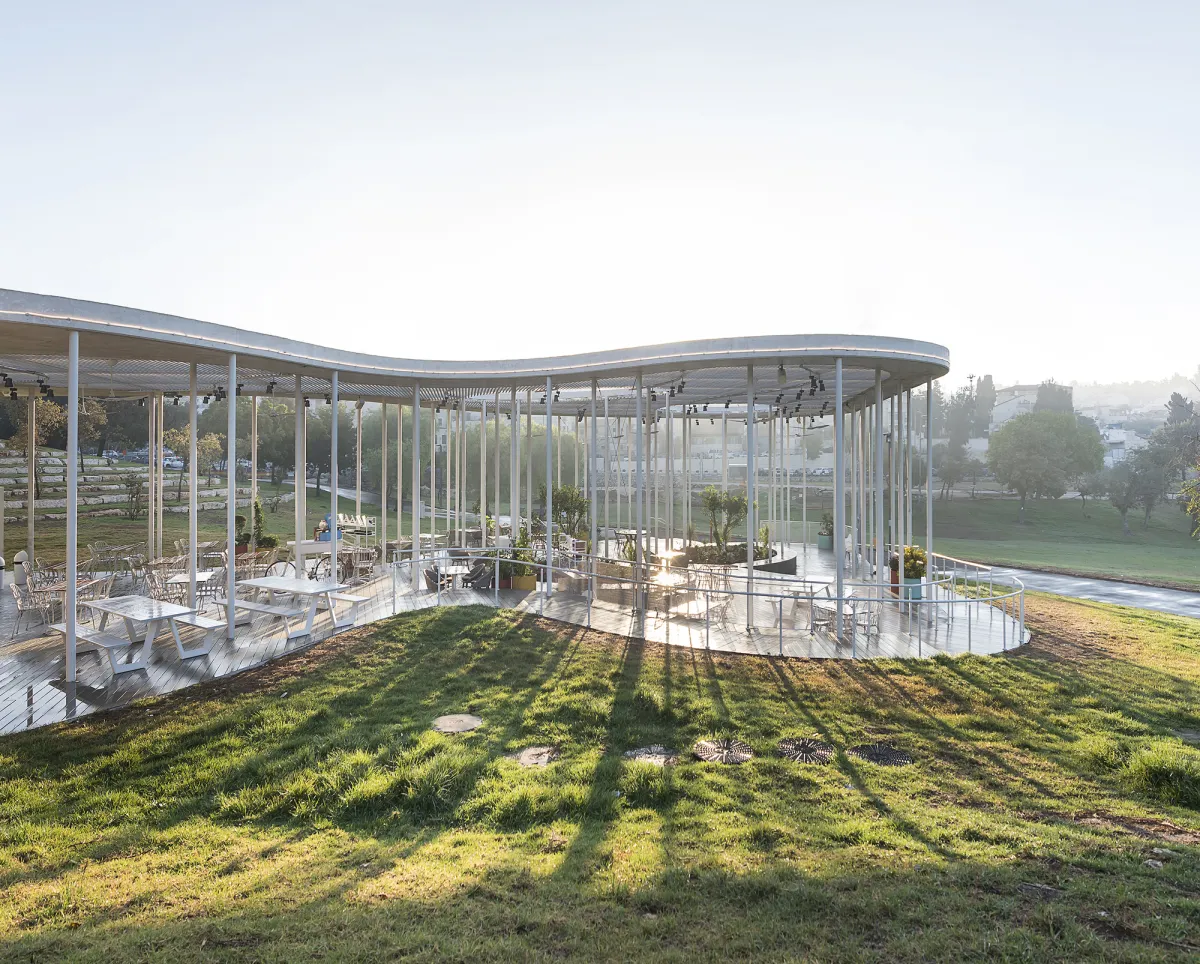

Photo source by Inhabitat (Web)
The independent coffee industry is entering a new evolutionary phase where sensory excellence must coexist with environmental accountability. Historically, lifecycle assessments of coffee commodities have focused heavily on upstream agricultural practices, such as farming frameworks. However, downstream retail environments—specifically the preparation and service phases—absorb electricity on a massive scale.
The continuous operation of industrial beans roasters, high-wattage water boilers inside espresso machines, and non-stop climate control systems to maintain guest comfort generates a significant carbon footprint. Addressing this systemic energy demand, the concept of Solar-Powered Cafés offers a tactical solution. Creative hospitality entrepreneurs are moving past superficial green-marketing taglines, choosing instead to re-engineer their internal power supply architecture to establish clean, self-sustaining businesses.
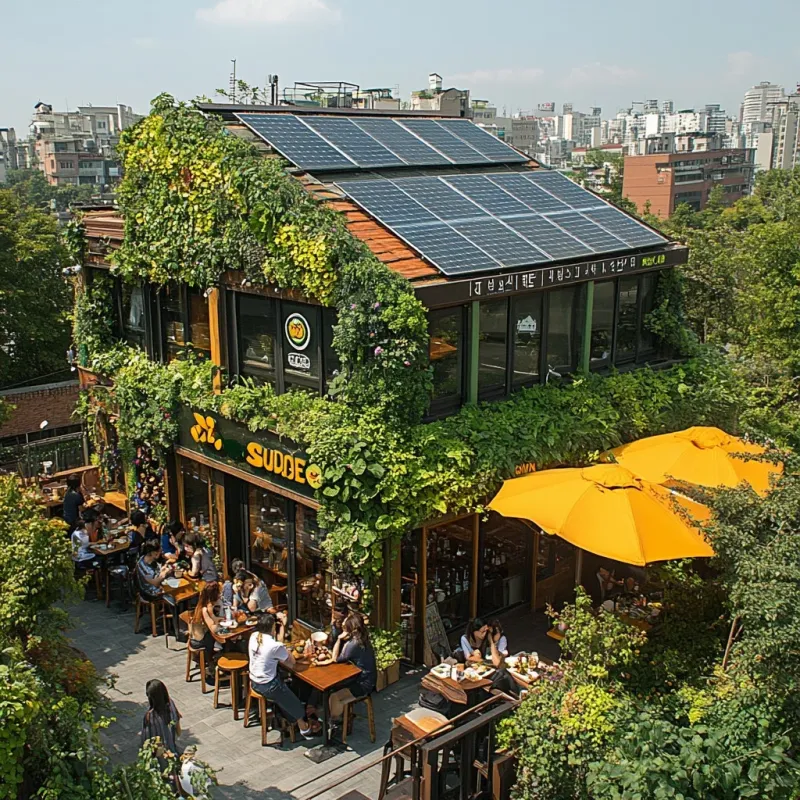
Photo source by StockCake (Web)
Green Circuit Architecture: How Solar Power Drives the Coffee Bar
Implementing a solar-powered cafe relies on the integration of photovoltaic panel systems strategically mounted on building roofs to harvest daily solar radiation. This energy is instantly converted through professional inverters and directed straight into the cafe's internal electrical matrix.
This clean, localized current is directed specifically toward powering three high-load pillars of modern coffee operations:
•• High-Compression Espresso Machines and Boiler Elements
The water heating and extraction systems are among the most volatile energy drains in a cafe. Utilizing solar energy stabilized by modern inverters allows espresso machines to maintain precise water temperatures and bars of pressure without placing sudden demands on the municipal power grid.
•• Next-Generation Electric Bean Roasters
Roasting raw green coffee beans requires highly stable and accurate heat management over precise periods. Substituting grid power with solar-generated electricity during the roasting phase demonstrates that delicate flavor profiles can be achieved using green circuits.
•• Eco-Climate Control and General Utilities
Guest comfort within the cafe footprint is maintained by climate control systems powered by dedicated solar storage batteries. This setup guarantees that operations run smoothly and cleanly, preserving a comfortable ambient temperature even during overcast periods.
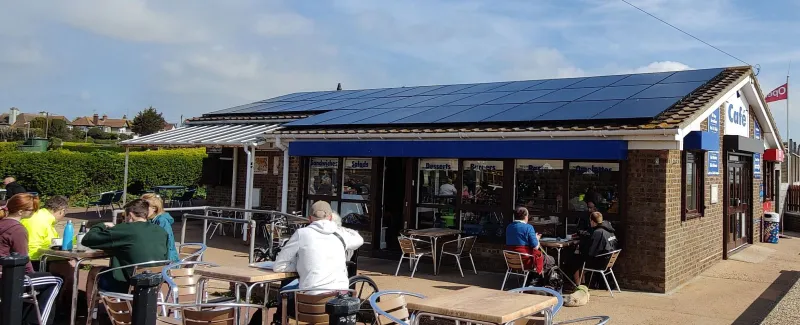
Photo source by Greensward Cafe (Web)
Utility Overhead Reductions and Premium Brand Differentiation
From a managerial accounting perspective, the initial capital allocation for solar panel installations delivers clear, long-term economic returns. Drastic reductions in monthly utility bills free up operational capital, allowing management to invest in premium, fair-trade specialty beans.
Beyond optimizing overhead, this decarbonization framework serves as a powerful brand differentiator in a saturated hospitality market. Modern consumers, particularly progressive urban professionals, actively favor establishments with a transparent commitment to environmental responsibility. Serving a high-quality cup produced with minimal carbon output fosters genuine customer retention and elevates a brand's reputation as a pioneer in urban sustainability [Botanical Coffee Mocktails: The New Cafe Aesthetic].
"A masterfully brewed cup of coffee is no longer judged solely by its bean curation score, but by how clean the energy was that extracted its flavors."
Evaluating Coffee Excellence Through Clean Energy Foundations
The highest standard of coffee quality is no longer confined to palate-based metrics alone; it is inherently tied to the purity of the energy that brought it to life.
"Harnessing daylight to run a high-compression espresso machine represents the ultimate alignment between modern culinary craft and the natural cycles that provide our raw materials."
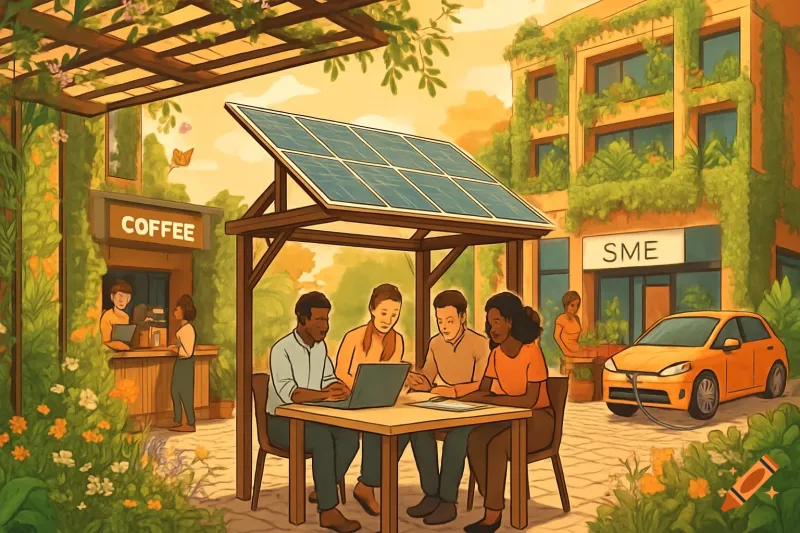
Photo source by Craiyon (Web)
WRAP-UP!
The movement toward Solar-Powered Cafés sets a high benchmark for a responsible, future-proof food and beverage sector. By integrating rooftop solar setups with modern bar equipment, hospitality operators successfully lower utility expenses while curbing operational carbon emissions. This transition proves that green technologies can integrate seamlessly with lifestyle-driven businesses, offering an elevated coffee experience that is premium, clean, and ecologically beneficial.
For coffee shop owners, restaurant operations managers, and hospitality investors, the immediate practical goal is conducting a technical structural audit of your commercial property's roof and daylight exposure. Engage a licensed solar engineering firm to calculate the total daily electrical load of your espresso setups and primary appliances. Begin the energy transition systematically—perhaps by migrating the primary bar circuit to solar arrays first—and display these carbon-reduction metrics on your digital menus or social touchpoints to build deeper value alignment with your customer base.
Looking to feature your brand and business through Alinear Indonesia’s Smart Publication & Smart Activation? Share your experience and consult with us today. Click here!



![Alinear Indonesia [Brand/Business Registration] Smart Publication & Smart Activation](https://www.alinear.id/assets_web/images/qr-codes/3e23e7dab43d2e72854ba48a3a09cf75.jpg)