
Photo by Tsuyoshi Kozu on Unsplash
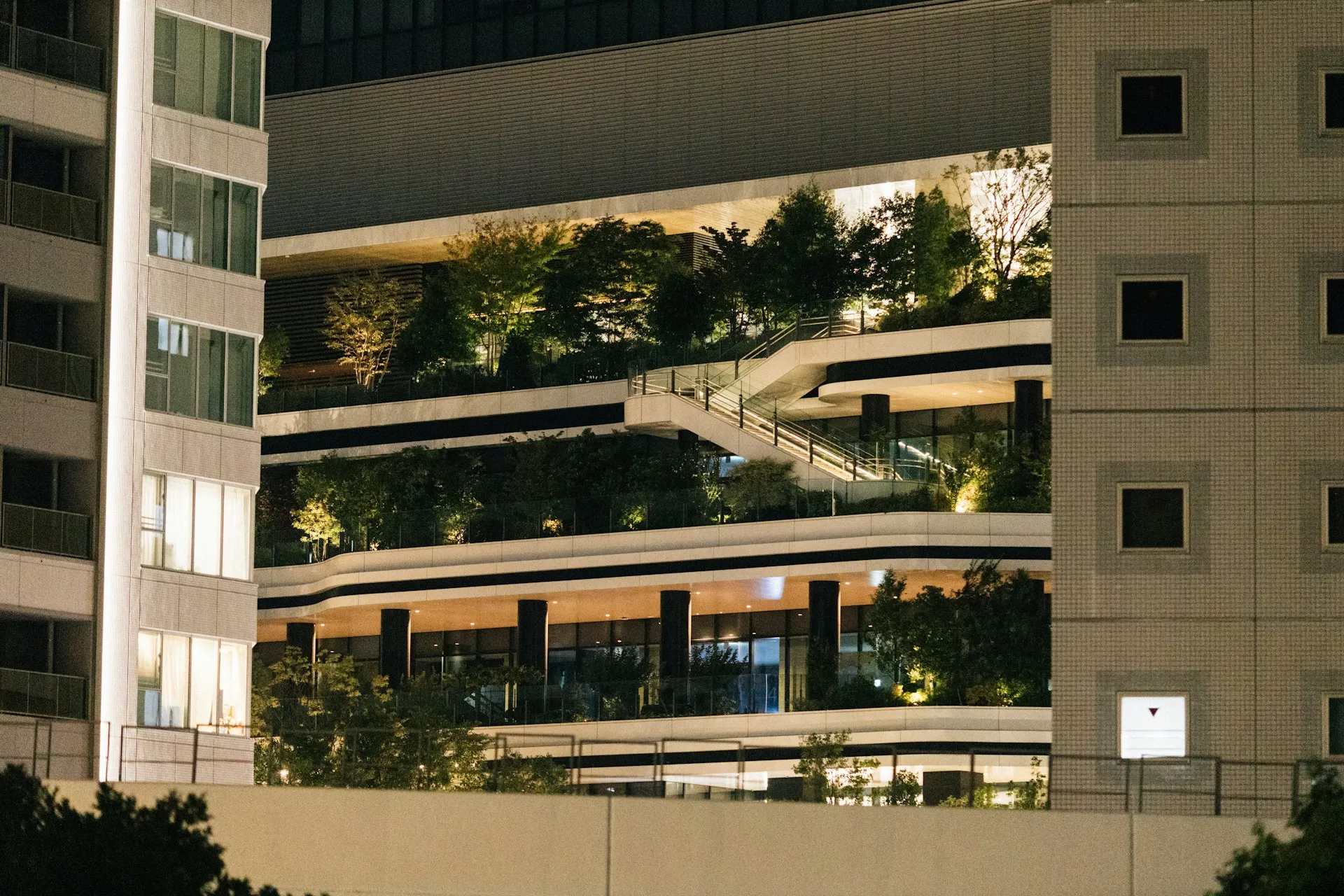
The growth of major metropolitan centers requires highly disciplined spatial utility. Commercial zone horizontal constraints frequently reduce traditional ground-level green spaces, which remain crucial to balancing urban mental focus. Addressing these density limits, modern landscape design parameters shift their perspective upward, reclaiming open air spaces that were previously underutilized.
High-rise building roofs, historically restricted to mechanical housing and HVAC utility, are transformed into active biological platforms. This structural adjustment moves past superficial decoration, operating instead as a functional cooling mechanism designed to lower regional urban heat metrics while introducing quiet decompression areas far removed from intense street-level tempos.
High-Altitude Ecosystem Engineering: Cultivating Forests Above Concrete Foundations
Developing self-sustaining botanical networks on upper skyscraper levels demands intricate civil and environmental planning. Design managers calculate detailed structural soil weights, source specific plant species capable of managing strong upper winds, and engineer multi-tiered irrigation frameworks.
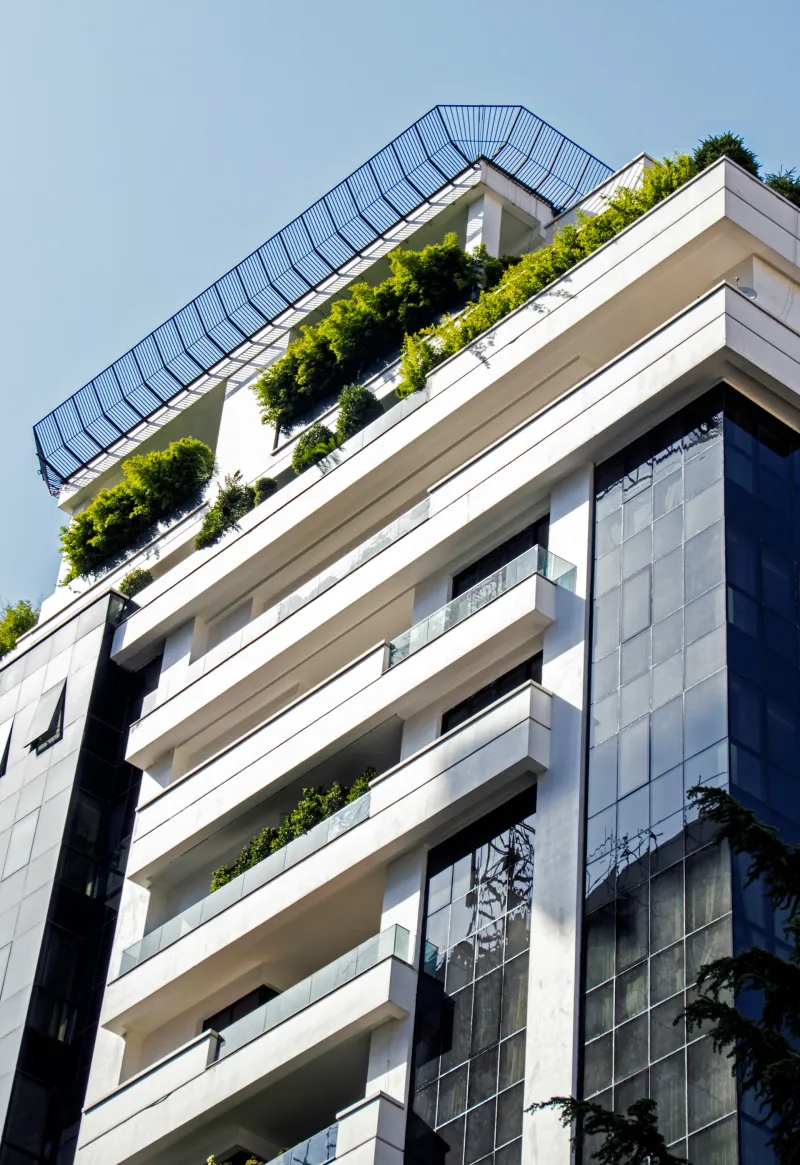
Photo by Shiva Mardahi on Unsplash
Video Source by Alinear Indonesia (YouTube)
Using specific regional vegetation varieties enables these high-altitude open parks to perform as miniature air purification centers, catching airborne particulate matter through natural biological processing. Navigating these elevated green spaces shares clear philosophical goals with low-impact transit movements along lower city avenues, such as emission-free transit frameworks [City Cycling Guides]. Both developments show an urban lifestyle transition prioritizing environmental health and air quality metrics; while lower cycling pathways offer independent mobility across roads without greenhouse gas output, vertical green platforms welcome travelers with clean air produced directly by engineered plant networks.
Sensory Deceleration: Framing Urban Horizons Through Biological Filters
Resting inside an elevated plant sanctuary introduces a clear sensory contrast to the asphalt levels below. Dense leaf coverage and recirculating water elements function as natural sound insulation, lowering corporate city audio outputs.
From these viewpoints, visitors look out over the spreading high-rise skyline without experiencing direct exposure to lower street emissions. The clean air output generated by active plant photosynthesis builds a regulated environment, supporting recovery and introducing an objective vantage point to view metropolitan design from a quiet, balanced platform.
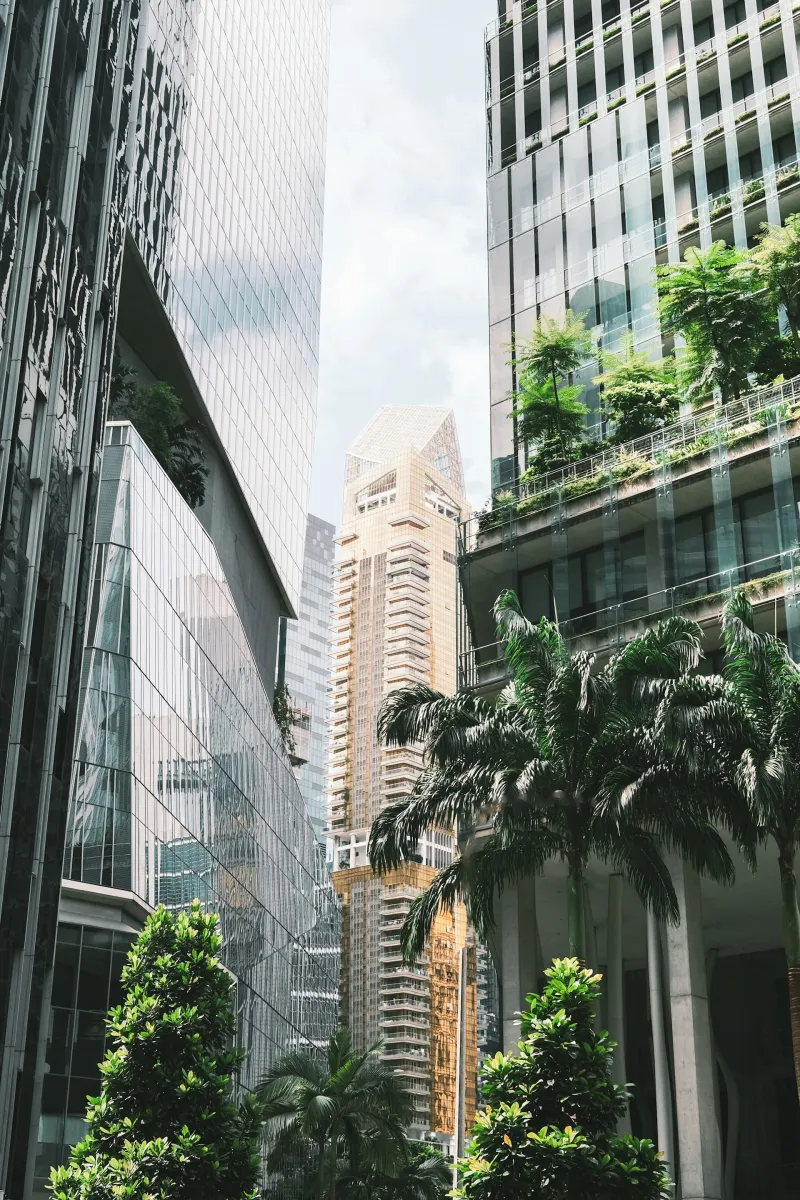
Photo by Marvin Tendies on Unsplash
Flora Curation Protocols and Eco-Architecture Literacy
The operational durability of a high-rise micro-forest depends on strict botanical curation protocols. These terraces serve a dual purpose: providing visual recreation while acting as educational platforms for urban biodiversity metrics.
Deploying native regional plants alongside automatic irrigation systems powered by recycled rainwater proves that technical management can operate alongside biological patterns. Consequently, these vertical parks develop into new urban habitats for local bird species and pollinators, recovering essential biological interactions displaced by initial concrete developments.
"The value of next-generation architecture is no longer quantified by how high a concrete structure cuts through the air, but by the complexity of the biological forest it supports on its roof."
Eco-Aesthetics as a Structural Standard
Looking at future high-density blueprints, the inclusion of Vertical Green Spaces transitions from an optional luxury amenity into a standard requirement for civil structural approvals. A city's capacity to navigate broader environmental adjustments relates directly to the volume of living biological infrastructure built into its grid.
Through consistent elevation-level plant integration, metropolitan centers shift away from basic concrete backdrops. The interaction of precise structural engineering, advanced landscape planning, and sustainable lifestyle priorities develops updated urban characteristics that are structurally resilient, functionally clean, and balanced for future generations.
Video Source by Alinear Indonesia (YouTube)
"When horizontal limits compress street execution, climbing up to a vertical green sanctuary confirms that environmental clarity can operate directly within a high-density grid."
WRAP-UP!
The execution of Vertical Green Spaces across modern skyscrapers demonstrates that real estate constraints do not prevent the development of public eco-sanctuaries. Using technical landscape methods to maintain elevated micro-forests yields measurable benefits, providing natural air processing and psychological deceleration from urban density. These elevated spaces complement low-impact transport models found at street level, like [City Cycling Guides], showing that future urban resilience relies on combining clean mobility channels with structured biological networks.
Plan a visit to an open high-rise development featuring a managed public terrace; observe the visual transition of the skyline during the late afternoon while evaluating the air movement produced by the vertical plant layouts.
Looking to feature your brand and business through Alinear Indonesia’s Smart Publication & Smart Activation? Share your experience and consult with us today. Click here!
![Smart Publication+ 3.0: Build Authority. Drive Growth. [Technical Specification]](https://www.alinear.id/assets_web/images/qr-codes/bd48cb0acb2d9586570edb8a7303cee1.jpg)